DIY GUIDE · CLEANING · CHECKED OCTOBER 2026
How to clean solar panels yourself — from the ground
An early morning. €10–€67 in a squeegee, cloths and a pole.
Ground-reach panels only: inspect, clean early and cool, soft tools and plain water, rinse top down, let them dry.
- Every step, start to finish
- Checked October 2026 — sources at the end
- Honest about when to call a pro
FIRST, THE HONEST ANSWER
Do it yourself, or get a cleaner?
Do it yourself if…
- The panels are on a ground mount, a shed, a carport or a low garage roof
- You can reach every part of them with a pole while both feet stay on the ground
- You can see dirt, bird droppings, pollen or salt on the glass and output has dropped
- The panels, frames and cables look undamaged
Get a pro if…
- The panels are on the roof of the house — any storey
- Reaching them would mean a ladder, standing on a roof, or leaning a ladder on a gutter or a conservatory
- There is a crack in the glass, a scorch mark, a loose cable or a damaged frame
- Moss or lichen has grown in under the frame edge and needs more than a soft brush
Safety first
- Damaged panels can give a lethal shock through leakage current, and the risk is higher when they are wet. Inspect first and never wet or touch a cracked or scorched panel.
- Keep your feet on the ground. The HSA says ladders are for short, light work only, not for 30 minutes or more in one position, and not to lean a ladder on a surface such as a gutter or glass that cannot take the weight.
- Never stand, walk, lean or kneel on a panel, and do not drop anything on one; the maker warns this can cause visible and hidden damage.
- Look up before you raise a long pole — the HSA's cleaning guidance flags overhead cables and a ladder or pole acting as a conductor.
- Do not touch the inverter, isolators or cabling; anything electrical is for your installer or a Registered Electrical Contractor.
- Wet ground round an array is slippery; wear shoes with grip and keep the hose coiled out of your path.
Stop here: Panels on the house roof, or any damaged panel
Roof-mounted panels are work at height. The HSA's ladder guidance limits ladders to short, light work where you can keep three points of contact, and not on a surface such as a gutter or glass that cannot bear the load; a pitched roof with glass panels is neither safe footing nor something you may stand on — the panel maker says never to stand, walk or lean on panels, and to use fall protection when working at height. A panel with cracked glass, scorching or loose cabling is an electrical danger: the maker warns of a lethal shock risk from leakage current, worse when wet. Leave roof arrays to a cleaner with proper access equipment or pure-water poles used from the ground, and electrical faults to your installer or a Registered Electrical Contractor. How to hire a solar panel cleaner →
| MATERIAL | COVERAGE | FOR THIS JOB |
|---|---|---|
| Clean water at the outside temperature | De-ionised is ideal; rainwater or tap water will do | A bucket or two, plus the hose |
| Mild biodegradable washing-up liquid | A few drops in a bucket, rinsed off at once | Only if water alone will not lift it |
| Isopropyl alcohol (optional) | Below 10% concentration, for stubborn marks only | A small amount on a cloth |
Is the clean worth it? The output check
36 m² of wall → 6 L for 2 coats. Buy about 6 L.
Drop in output ≈ (last year's daily average for this month − this year's) ÷ last year's × 100, compared on similar sunny days. Example: last June averaged 12 kWh a day, this June 10.5 kWh: (12 − 10.5) ÷ 12 × 100 ≈ 12.5%. A drop that size with visible dirt is worth a clean; a drop with clean glass is a fault to report to the installer.
Weather varies a lot from year to year in Ireland, so compare several sunny days, not one. If you have no monitoring, check the inverter display and the export meter.
SEAI calls panels effectively self-cleaning and says they may occasionally need a light clean so dirt, leaves and debris are not blocking sunlight. Its FAQ suggests considering a clean every few years, more often if you live near the sea or a main road. One panel maker's advice is to clean when you can see dirt on the glass. Check your monitoring app or meter first: a clear drop in output on sunny days compared with last year is the real sign.
The panel maker recommends water at the outside temperature, never cold water on hot glass or hot water on cold glass, because the sudden change can crack it. De-ionised water is best because it dries without spots; rainwater or tap water will do. Make sure there is no grit in the bucket or hose — grit is what scratches.
A soft sponge, a microfibre cloth or a soft, non-abrasive brush, on an extension pole for reach, is what the maker allows. It says pressure washers, steam cleaners, high-pressure hoses, knives, blades and metallic sponges are not permitted and will invalidate the warranty. A garden hose at ordinary domestic pressure is fine for rinsing.
For marks that water will not lift, a mild, biodegradable washing-up liquid can be used, rinsed off immediately with plenty of water. For stubborn marks after that, the same maker allows isopropyl alcohol at a concentration below 10%. It rules out acid or alkaline detergents completely — no glass cleaners with ammonia, no limescale removers.
Early morning, before the panels warm up. The maker notes that panels in use usually run around 20°C above the air temperature, and water on hot glass risks thermal shock and streaks. An overcast, still morning is ideal; never in the heat of the afternoon.
SEAI says your installer should give you an operation and maintenance manual and data sheets for the components. Read the cleaning section before you start: the maker of your panels may have its own rules, and following them keeps the warranty intact.
THE PART THAT DECIDES THE FINISH
Before you start — by where the panels are
Find where your panels are mounted. Only the first three are DIY jobs. If yours are any of the others, read the stop card and leave the cleaning to someone with the access equipment.
Ground-mounted array in the garden
Panels on a frame at or near ground level.
- Walk round the array and look for cracks, scorch marks, loose cables or damaged frames before any water goes near it
- Clear leaves and debris from the base and the frame
- Check the forecast for a cool, still morning
- Fill a clean bucket with water and let it stand outside to reach the air temperature
Panels on a shed, carport or garage roof
A single-storey outbuilding you can reach with a pole from the ground.
- Stand at each side and check you can reach the top edge with the pole without stretching
- Decide where you will stand on firm, level ground clear of the drip line
- Look for overhead cables before you raise a long pole
- Inspect the panels from the ground with binoculars or a phone camera on zoom
Panels near the sea or a busy road
Salt spray, diesel film and dust build up faster.
- Expect to clean more often than the every-few-years guide
- Rinse well first to lift salt and grit before anything touches the glass
- Mix a very mild washing-up liquid solution for the traffic film
- Plan an extra rinse, as soap left behind attracts more grime
Panels with bird droppings or lichen spots
Patches that block whole cells and cut output.
- Soak the patch with clean water from the hose and leave it to soften
- Have a soft sponge ready; never scrape with anything hard
- Wear gloves; droppings carry bacteria
- Check the frame edge for growth that has crept under the seal
Panels on the roof of the house
Pitched or flat roof, any storey.
- Do not climb up, and do not lean a ladder against the gutter or glass to reach them
- Check your monitoring to see whether output has really dropped
- Call your installer or a cleaner with proper access equipment
- Ask whether they use pure-water poles from the ground
A cracked or damaged panel
Broken glass, scorching, a dangling cable or a bent frame.
- Do not touch it, and do not wet it
- Keep children and pets away from the array
- Photograph it from a distance
- Contact your installer; this is an electrical fault, not a cleaning job
THE JOB
How to clean ground-reach solar panels, in order
Check the panels and the access
15 minUse the surfaces section above to confirm your panels are a ground-reach job. Walk round the array and look closely, from the ground, for cracked glass, scorch marks, loose or chewed cables and damaged frames. The panel maker warns that damaged panels can give a lethal shock through leakage current, and that the risk is higher when they are wet. If you see damage, stop here.
- Use a phone camera on zoom for the panels you cannot see directly
- Check the area for overhead cables before you lift a pole
- Note the inverter reading so you can compare afterwards
Mistake to avoid: Hosing a panel with a hairline crack. Water and a damaged panel together are the shock risk.
Pick a cool, still morning
5 minPlan the clean for early morning before the sun warms the glass, or a dull, still day. The maker says to clean panels only when they are cool, because they run well above the air temperature in use and water on hot glass can crack it. Let a bucket of water stand outside for a while so it is at the air's temperature, and rinse the bucket first so there is no grit.
- Never clean in the afternoon sun
- Skip windy days; the pole is hard to control and water blows back
- Frost: wait until it has gone naturally, never pour warm water on it
Mistake to avoid: Cleaning at lunchtime in summer. Cold water on hot glass risks a crack and dries in streaks.
Rinse the loose dirt off first
10 minStand on firm ground clear of the drip line and rinse the panels with the garden hose at normal pressure, starting at the top edge and letting the water run down the whole surface. The maker says a standard garden hose at domestic pressure can be used to apply as much water as needed. This lifts grit and dust before anything touches the glass, so nothing gets dragged across it.
- Aim the water down the panel, never up under the frame edge
- Rinse a bird dropping and leave it to soften before you touch it
- Keep the spray off the junction boxes and cables behind
Mistake to avoid: Wiping a dusty panel dry. The grit acts like sandpaper on the glass and its coating.
Wipe with a soft sponge or brush
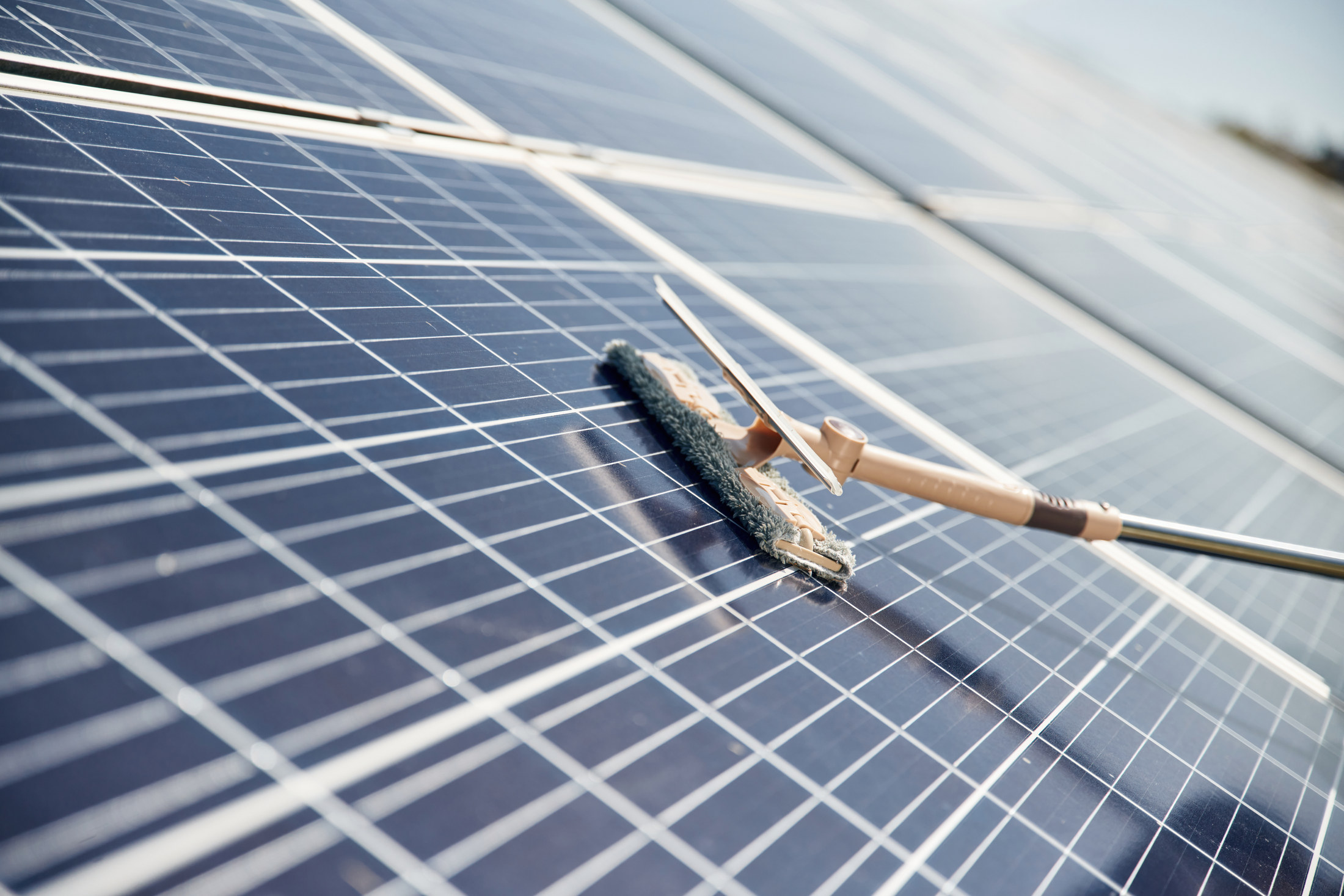
20 minFit the soft sponge, microfibre pad or soft brush to the pole and wipe lightly over the glass from top to bottom, working across the panel in overlapping strokes. Let the tool's own weight do the work and do not press: the maker says to avoid putting pressure on the panel surface. Rinse the head in clean water often so you are not carrying grit back onto the glass.
- Light, even strokes; the panel is not built for pressure in one spot
- Turn the sponge often and rinse it in the bucket
- Work in rows so you do not miss a strip
Mistake to avoid: Leaning on the pole to scrub a mark. Point pressure can crack cells you cannot see, and the maker warns of visible and hidden damage.
Use a drop of washing-up liquid only if needed
10 minIf water and a soft wipe leave marks — traffic film, pollen, a stain from droppings — add a few drops of mild, biodegradable washing-up liquid to a fresh bucket of water and wipe the marked area gently. Rinse immediately and thoroughly. Only if marks still remain does the maker allow a little isopropyl alcohol below 10% concentration on a cloth. Never an acid or alkaline cleaner.
- Use as little soap as you can
- Rinse each patch before it dries
- No glass cleaner, limescale remover or anything with ammonia
Mistake to avoid: Using household glass cleaner. Many contain ammonia or alcohol at strengths that can harm the coating and the frame seals.
Rinse from the top down
10 minRinse every panel thoroughly with clean water, starting at the highest point of each and working down, until all the loosened dirt and any soap have run off. If soiling remains after rinsing, the maker's advice is to repeat the gentle clean rather than reach for something stronger.
- Pure or rain water rinses without spots
- Check the bottom edge of each panel; dirty water pools there
- Rinse the frame too, where grime collects
Mistake to avoid: Leaving soap on the glass. It dries to a film that holds dust and cuts output more than the dirt did.
Let them dry, or squeegee gently
15 minThe maker's preferred way is to let the panels air-dry. If you want them spot-free, wipe them dry with a chamois or a rubber squeegee with a plastic frame on the pole, from the top downwards, watching that no grain of grit gets dragged across the glass. Keep the pressure light throughout.
- Wipe the squeegee blade after each stroke
- Never use a squeegee with a metal channel on panel glass
- If in doubt, simply let them dry
Mistake to avoid: Squeegeeing a panel with grit still on it. One trapped grain draws a scratch all the way down the glass.
Check the output and note it
5 minLater in the day, or on the next sunny day, compare the inverter or app reading with the one you noted before. Write down the date of the clean and the result. If output is still well down on clean glass, the problem is not dirt; it may be shading from growth that has crept over the array, or a fault for the installer. SEAI notes the inverter is the most common point of failure.
- Compare like with like: similar sunny days
- Check whether a hedge or tree has grown into the panels' sun
- Report any fault lights on the inverter to the installer
Mistake to avoid: Assuming low output is always dirt. A failing inverter or a bypassed string looks the same on the bill.
Clean and store the kit
10 minRinse the sponge, brush head and squeegee in clean water and let them dry. Keep the panel kit separate from your car, window and patio kit, because a grit-loaded brush from the drive will scratch the panels next time. Empty the bucket onto a lawn or flower bed rather than an outside drain.
- Label the panel brush so it is used for nothing else
- Store the pole retracted and dry
- Diary the next check for a year's time
Mistake to avoid: Using the patio brush on the panels next time. It carries the grit that scratches the glass.
The mistakes that damage panels
- Using a pressure washer, steam cleaner or high-pressure hose
- Cleaning hot panels in sunshine with cold water
- Scrubbing with anything abrasive, or pressing on the glass
- Using household glass cleaner or limescale remover
- Climbing onto a roof or leaning a ladder on a gutter to reach panels
Stop here and get a solar panel cleaner
- The panels are on the roof of the house, at any height
- You would need a ladder to reach them, or to lean one on a gutter, a conservatory or glass
- A panel is cracked, scorched or has a loose cable
- Output is down and the glass is already clean — that is a fault for the installer
| WHAT YOU SEE | WHY, AND THE FIX |
|---|---|
| Streaks or spots after cleaning | Hard water or soap dried on the glass. Rinse again with clean, ideally rain or de-ionised water, early in the day, and let them air-dry or squeegee gently from the top down. |
| Output is no better after cleaning | Dirt was not the problem. Check for new shading from trees or hedges, look at the inverter for fault lights, and contact the installer. |
| Bird droppings will not shift | They need soaking. Wet the patch and leave it to soften, then wipe gently with a soft sponge and a drop of washing-up liquid, and rinse. |
| A film reappears quickly | Soap was left on the glass, or traffic and salt film is heavy where you live. Rinse more thoroughly and expect to clean more often near the sea or a main road. |
| Lichen spots on the glass edge | Soak and wipe gently with a soft sponge; do not scrape. Growth under the frame edge needs a professional. |
| Moss growing on the back of the panels | Usually not a concern, the maker says. Clear it only by hand or with a soft sponge, and do not spray treatments on the backsheet. |
| A hairline crack you had not noticed | Stop. Keep it dry, keep people away and call the installer; a cracked panel is an electrical fault. |
| The inverter shows a fault after cleaning | Water may have reached a connector, or the fault was already there. Do not open anything; contact the installer. |
WHAT YOU SAVE
What it costs to do it yourself
| Microfibre cloths, pack of four | €1.49 |
|---|---|
| Mild washing-up liquid | €0.99 |
| Rubber window squeegee, long handle | €8 |
| Telescopic extension pole (only for shed or carport arrays) | €56 |
| Total | €10–€67 |
| DIY total | €10–€67 |
Guide prices compiled by the Locufy team from published Irish and UK provider price lists and 2026/27 cost guides. Updated 2026.
If your panels are on a ground mount you need only the cloths, the soap and the hose you already have. A pole is the bigger cost, worth it only if the panels sit on an outbuilding roof you can reach from the ground.
RATHER NOT?
Solar panel cleaners near you, with prices shown
The ones who cover your area, nearest first, with one score from every review. No account needed to look.
Or post the job free and let them come to you.
Check your monitoring now and then. SEAI suggests a clean every few years for most homes; clean again when you see dirt or the output on sunny days drops.
Trim back trees and hedges that start to shade the array; SEAI warns that shadows reduce output, especially from objects near the panels.
Rinse water with a little biodegradable soap can go onto the lawn. A damaged or old panel is electrical waste: it goes to a WEEE drop-off point or your local civic amenity site, which mywaste.ie lists, never the general bin — your installer will usually take it back.
Rinse and dry the sponge, brush and squeegee and keep them only for the panels.
Cleaning solar panels you can reach from the ground: questions people ask
SEAI suggests considering a clean every few years, more often near the sea or a main road. Rain cleans most panels; clean when you can see dirt on the glass or output on sunny days falls.
No. The panel maker we checked says pressure washers, steam cleaners and high-pressure hoses are not permitted and invalidate the warranty. A garden hose at normal pressure is fine.
Water at the air's temperature, a soft sponge, microfibre cloth or soft brush, and if needed a few drops of mild biodegradable washing-up liquid, rinsed off straight away.
Not safely. Roof panels are work at height, and you must never stand or lean on panels. Use a cleaner with access equipment or pure-water poles worked from the ground.
The Locufy price guide puts professional solar panel cleaning at €80–€250 per job, typically €140. Larger and harder-to-reach roof arrays cost more.
It can. The maker notes dirt does not harm the panels but build-up over time affects performance. Compare your output on similar sunny days to see whether it is worth a clean.
MORE GUIDES
More DIY guides
Sources — checked October 2026
- REC — quick guide to cleaning solar panels
- SEAI — frequently asked questions on solar PV: cleaning and maintenance
- SEAI — a homeowner's guide to solar PV: operation and maintenance
- HSA — using ladders safely
- HSA — cleaning work at height (ladders): risk assessment
- MyWaste.ie — electrical items (WEEE)
- B&Q Ireland — price check: telescopic poles and squeegees, October 2026
- Mr Price — price check: microfibre cloths, October 2026
- Mr Price — price check: washing-up liquid, October 2026