DIY GUIDE · CLEANING · CHECKED OCTOBER 2026
How to spring-clean your home yourself
A weekend, room by room. €17–€19 in cloths, a duster and products.
The yearly list: high dusting, walls, behind appliances, presses, filters, frames, curtains, mattresses.
- Every step, start to finish
- Checked October 2026 — sources at the end
- Honest about when to call a pro
FIRST, THE HONEST ANSWER
Do it yourself, or get a cleaner?
Do it yourself if…
- The home is kept reasonably clean week to week and needs its yearly catch-up
- You can give it a weekend, or spread it over a few evenings
- You have a stepladder for the high jobs and someone to help move furniture
- The house is sound — no leak or spreading mould
Get a pro if…
- You want it done in one day while you are out
- High ceilings, stairwells or chandeliers need access equipment
- There is mould or damp beyond small patches
- Moving heavy furniture and appliances is not safe for you
Safety first
- Use a stepladder on firm, level floor, not a chair, and stay off the top two steps; the HSA's ladder guidance also says not to overreach.
- Switch off and unplug appliances, lights and the extractor fan before cleaning them.
- Never mix cleaning products; the HSA warns bleach with ammonia, toilet cleaners or drain cleaners gives off a harmful gas.
- Get help to move furniture and appliances, and bend your knees when you lift.
- Wear gloves; the HSA notes cleaning products are a common cause of dermatitis.
- If you find mould over large areas, stop and read the mould guide before cleaning it.
| MATERIAL | COVERAGE | FOR THIS JOB |
|---|---|---|
| Multi-surface cleaner | As the label says | One bottle |
| Limescale remover | Acid-resistant surfaces only | One bottle |
| Kitchen degreaser | For the hood, filters and splashback | One bottle |
| Bicarbonate of soda | A tablespoon in half a litre of lukewarm water for the fridge | A small tub |
How long the spring clean takes
Hours ≈ bedrooms × 1.5 + bathrooms × 1.5 + kitchen 3 + living rooms × 1.5 + hall, stairs and windows 2. Example: a three-bedroom house with two bathrooms and one living room: 4.5 + 3 + 3 + 1.5 + 2 = 14 hours — a weekend for one person, or a long Saturday for two.
Wardrobe sorting is the wild card: give each wardrobe an hour, and stop when the hour is up.
Cobwebs, the tops of wardrobes, door frames, picture rails and lampshades collect a year's dust. Use an extendable duster or a damp cloth from a stepladder — the HSE notes a damp cloth stops dust spreading the way dry dusting does. Switch lights off and let bulbs cool before you touch them.
Wash marks around switches and handles, along skirting boards and up the stairs with a little mild detergent in warm water and a barely damp cloth, testing a hidden patch of paint first. Matt paint polishes if scrubbed, so dab rather than rub.
This is when you pull things out. Wash the hood's metal grease filters — one hood maker soaks them in warm water with detergent and degreaser — and replace carbon filters, which cannot be washed. Clean the dishwasher filter, wipe the washing machine door seal fold, and give the fridge a bicarbonate wash and its drain hole a flush, as the makers describe. One washing machine maker suggests a machine cleaner every three months; spring is a good reminder.
Empty each press and wardrobe, wipe it inside and let it dry before refilling. After winter, look for mould on the back walls of wardrobes on outside walls. The HSE advises against storing clothes in damp cupboards or packing them too tightly; spring is the time to thin them out to the charity bag.
Clean the inside glass, the frames and the drainage slots, and work the hinges. One Irish window maker recommends cleaning uPVC frames with water and mild detergent at least once a year and putting an acid-free oil, petroleum jelly or silicone lubricant on hinges and locks once a year — a spring clean is that once.
Rotate and air mattresses, wash or clean curtains as their labels allow, vacuum the sofa under the cushions, and wash cushion covers and throws where labelled. The HSE suggests regular cleaning of curtains, cushions and upholstery for anyone with a dust mite allergy. Each has its own guide on this site.
THE PART THAT DECIDES THE FINISH
Preparing each room — by what it hides
Before the weekend, walk through each room and note the jobs below. Gather what you need for each so you are not stopping halfway.
Bedrooms
Wardrobes, mattresses, under the bed, curtains.
- Strip the bed and check the mattress label for rotate or turn
- Empty one wardrobe at a time onto the bed: keep, wash, charity
- Look at the back wall of each wardrobe for mould
- Take curtains down only if their label allows washing; otherwise vacuum them in place
Kitchen
Behind appliances, inside presses, filters.
- Clear the worktops and empty the fridge into cool bags
- Find the hood filter type: metal mesh to wash, carbon to replace
- Pull the cooker or fridge out only if it slides freely, with help
- Have the oven guide to hand if the oven is on the list
Bathroom
Shower head, sealant, extractor fan, under the bath.
- Unscrew the shower head for descaling if it comes off by hand
- Check the sealant round the bath and shower for mould or gaps
- Isolate the extractor fan before removing its cover
- Clear out the bathroom press of old products
Living rooms and hall
Sofa, curtains, light fittings, radiators, skirting.
- Lift the sofa cushions and empty the gaps
- Switch radiators off so they are cool for dusting
- Clear the hall of coats and shoes that have piled up over winter
- Note marks on walls to wash
Windows and frames
Glass, frames, seals, drainage slots, hinges.
- Brush cobwebs and grit off frames before any water
- Have mild detergent, a squeegee and a lint-free cloth
- Have an acid-free lubricant for the hinges and locks
- Only clean outsides you can reach from the ground
Outside the back door
Bins, the porch, mats, the patio.
- Empty and wash the bins after collection day
- Shake out door mats and wash the porch floor
- Note the patio for its own clean on a dry day
- Gather old paint, batteries and chemicals for a civic amenity run
THE JOB
How to spring-clean, in order
Make the list and air the house
30 minUse the surfaces section above to write a list for each room. Open every window to let the winter air out; the HSE's advice on mould is a dry, well-ventilated home. Put the first wash on — bedding, throws, cushion covers that are labelled washable — so the machine works while you do. Gather the kit into a caddy.
- Start at the top of the house and work down
- Do the highest jobs first in each room
- Keep a charity bag and a bin bag in every room you work in
Mistake to avoid: Starting without a list. You end up redoing the weekly clean and skipping the jobs that make it a spring clean.
High dusting, room by room
2 hoursIn each room, start at the ceiling. Take cobwebs from corners and cornices, then dust light fittings — switched off and cool — curtain poles, picture rails, the tops of wardrobes and door frames, with the extendable duster or a damp cloth. Stand on a stepladder only on firm floor, off the top two steps, and move it rather than reaching. Vacuum what falls before it is walked through the house.
- Lay an old sheet on beds and sofas to catch dust
- Wipe lampshades with a lint roller
- Wipe the tops of picture frames and mirrors on the way down
Mistake to avoid: Dusting high after cleaning lower surfaces. The year's dust lands on everything you have just done.
Wash walls, doors and skirting
1.5 hoursWith a bucket of warm water and a little mild detergent, wipe marks round light switches, door handles and the stair wall, then the skirting boards and door faces. Test a hidden patch of paint first, use a barely damp cloth, and dab marks on matt paint rather than scrubbing. Dry with a clean cloth as you go.
- Work from the bottom of a wall upwards so drips land on clean paint
- Change the water when it greys
- Vacuum the skirting before you wipe it
Mistake to avoid: Scrubbing a scuff on matt emulsion. It leaves a shiny patch that shows more than the mark did.
Wardrobes, presses and drawers
3 hoursEmpty one at a time. Sort as you go into keep, wash, charity and bin. Vacuum the inside, wipe it with warm water and a little multi-surface cleaner and let it dry with the door open before putting things back. Look at the back panels on outside walls for mould. The HSE's advice is to avoid packing clothes too tightly or keeping them in damp presses, so leave room for air.
- An hour per wardrobe, then stop
- Put a moisture absorber in any press that smelt damp
- Bag the charity items and put them in the car straight away
Mistake to avoid: Refilling a press while it is damp. Clothes come out smelling musty within weeks.
Kitchen: behind, inside and the filters
3 hoursSwitch off and unplug the hood and wash its metal filters; one hood maker soaks them in warm, soapy water with degreaser for about 10–15 minutes, then brushes, rinses and air-dries them, and says carbon filters are replaced, not washed. Empty and bicarbonate-wash the fridge and flush its drain hole. Clean the dishwasher filter and the washing machine seal. With help, slide out appliances that move freely and clean behind and under them.
- Check appliance manuals before pulling anything out
- Vacuum the back of the fridge only if the manual says it is safe, with it unplugged
- Empty and wipe every press, as in the bedrooms
Mistake to avoid: Dragging a fridge or cooker out on its own. You can damage the floor, the pipes or your back.
Bathroom: shower head, sealant, fan
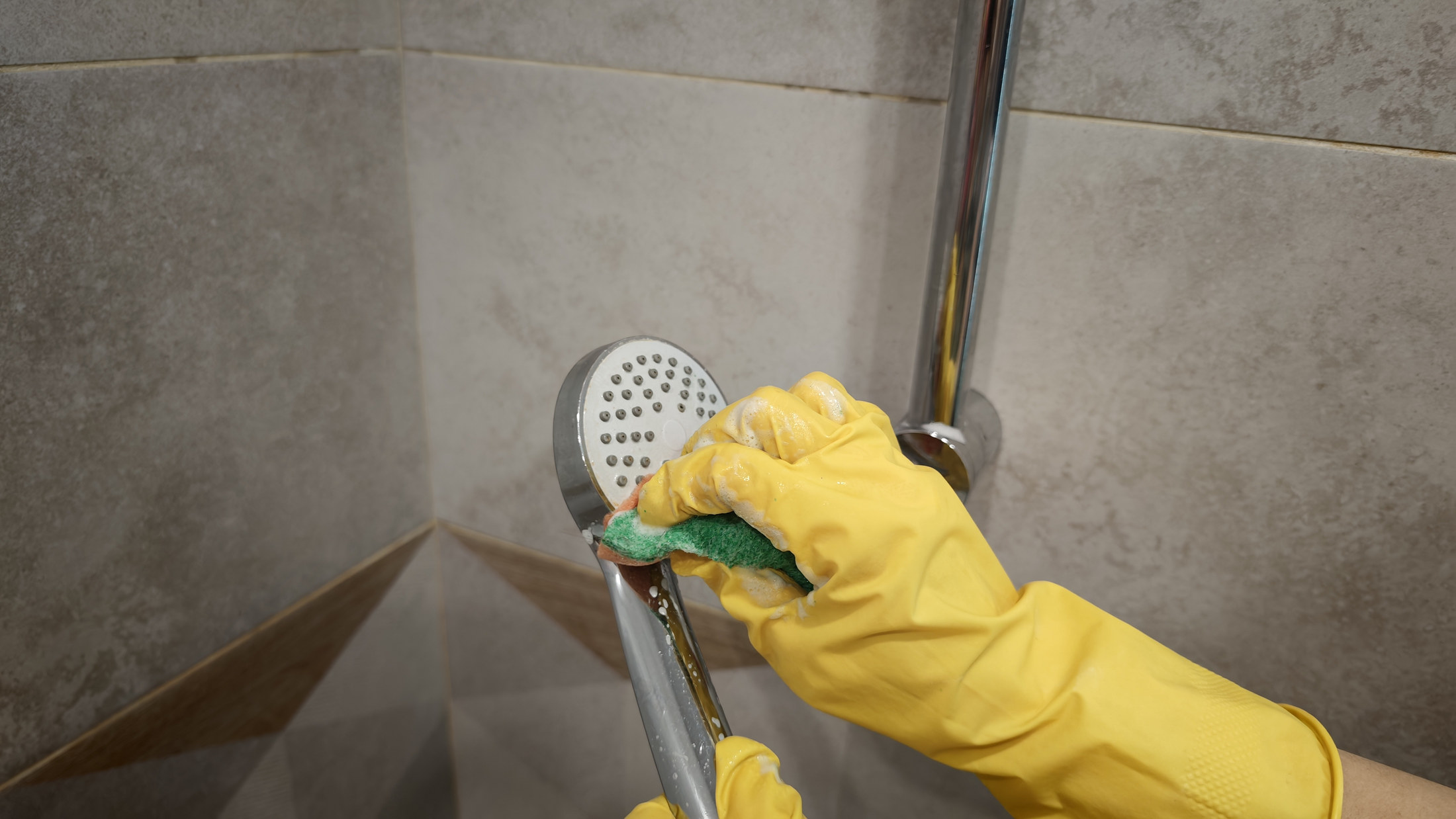
1.5 hoursSoak the shower head in descaler made up as its label says and descale taps on acid-resistant surfaces, rinsing well. Isolate the extractor fan, take off its cover, wash it and dry it before refitting. Check the sealant: mould on the surface can be cleaned as the mould guide sets out; mould under the surface means the sealant needs replacing. Clear out old products from the bathroom press.
- Never use bleach in the same session as a descaler
- Run the shower briefly after refitting the head
- Write down any reseal or repair job for later
Mistake to avoid: Leaving a soaking shower head in descaler for hours. Follow the label time; longer can damage the finish.
Windows, frames and hinges
2 hoursClean the inside glass with water and mild detergent, squeegee and dry the edges. Wash uPVC frames with water and a mild household detergent, as one Irish window maker recommends at least yearly, and wipe glass cleaner off the gaskets. Clear the drainage slots. Put a little acid-free oil, petroleum jelly or silicone lubricant on hinges and locking points — the same maker says once a year — and work each window open and shut.
- Never oil the balance channels of sliding sash windows
- Do the outsides only from the ground or if the window opens inwards
- Note any misted sealed unit
Mistake to avoid: Spraying a general-purpose oil over the hinges. Excess attracts grit, and some oils harm seals.
Soft furnishings and mattresses
2 hoursVacuum the sofa, under the cushions and the frame with the upholstery tool, and wash covers only where their labels allow. Vacuum the mattresses, seams first, rotate them end to end and leave them uncovered with the window open while you finish the room. Vacuum curtains in place or wash them as their labels allow; the curtain guide covers which can go in the machine.
- Air mattresses for a few hours before remaking the beds
- Rotate sofa seat cushions so wear spreads
- Shake rugs and mats outside
Mistake to avoid: Washing lined curtains in the machine. They shrink and pucker; see the curtain guide.
Floors, bins and the waste run
2 hoursFinish each room with the floors: vacuum edges, under furniture you moved and behind radiators, then mop hard floors with the right cleaner, barely damp on laminate and wood. Empty and wash the bins. Then sort the waste: charity bags to a charity shop, textiles to a textile bank, old electricals and bulbs to a WEEE drop-off, and old paint and chemicals to a civic amenity site that accepts household hazardous waste.
- Work from the far rooms back to the front door
- Rinse bins with hot water and a little detergent, and let them dry in the sun
- Check mywaste.ie for what your local site takes
Mistake to avoid: Putting old curtains and clothes in the general bin. They belong in a textile bank or a charity shop.
The mistakes that waste a spring clean
- No list, so it turns into a long weekly clean
- Dusting high after cleaning low
- Refilling wardrobes and presses while still damp
- Moving heavy appliances alone
- Mixing bleach and descaler in the bathroom
Stop here and get a spring cleaning service
- High ceilings, stairwells or fittings you cannot reach safely from a stepladder
- Appliances that are built in or too heavy to move safely
- Mould beyond small patches, or damp you cannot explain
- You need the whole list done in a day
| WHAT YOU SEE | WHY, AND THE FIX |
|---|---|
| Mould on the back of a wardrobe | Condensation on a cold outside wall. Clean small patches as the mould guide says, move the wardrobe a little off the wall and keep it less packed. |
| The hood still smells of grease | Carbon filters need replacing, not washing; metal filters may need a second soak. |
| Shiny patches on the walls after washing | Matt paint was rubbed too hard. Touch up with the same paint once dry; dab next time. |
| Windows stiff even after oiling | Grit in the mechanism. Clean it out first, then lubricate, and work the window several times. |
| Dust settles again within days | Dry dusting or a clogged vacuum filter. Use a damp cloth and clean the filter. |
| The house smells musty after winter | Moisture built up with windows closed. Air daily, run extractors after cooking and showers, and dry clothes outside where you can. |
| The fridge drain hole overflows | Food is blocking it. Flush it with the bicarbonate mix as the fridge maker suggests and empty the drip tray. |
| Too many bags of stuff to get rid of | Sort into charity, textiles, electrical and hazardous, and book a car run to the civic amenity site rather than overfilling bins. |
WHAT YOU SAVE
What it costs to do it yourself
| Microfibre cloths, two packs of four | €2.98 |
|---|---|
| Flexible duster | €3.99 |
| Multi-surface cleaner | €1.29–€1.49 |
| Limescale remover | €1.99–€3.99 |
| Degreaser | €2.99–€3.49 |
| Scrubbing brush | €1.49 |
| Refuse sacks | €1.99 |
| Total | €17–€19 |
| DIY total | €17–€19 |
Guide prices compiled by the Locufy team from published Irish and UK provider price lists and 2026/27 cost guides. Updated 2026.
Replacement carbon filters for a recirculating hood and a washing machine cleaner are extra and depend on your appliances. Most of the rest is kit you already have for the weekly routine.
RATHER NOT?
Spring cleaners near you, with prices shown
The ones who cover your area, nearest first, with one score from every review. No account needed to look.
Or post the job free and let them come to you.
Open windows regularly through the year; condensation in winter is what brings the mould back.
Clothes and curtains to a textile bank or charity shop; electricals and bulbs to a WEEE drop-off; paint, chemicals and aerosols to a civic amenity site that accepts household hazardous waste — mywaste.ie lists them all.
Clear out old and unlabelled bottles, and keep the rest upright, capped and out of children's reach.
Spring and autumn are the natural times; add the jobs to the monthly list in the regular cleaning guide so the next one is lighter.
Spring-cleaning the jobs the weekly clean misses: questions people ask
The jobs the weekly clean skips: high dusting and light fittings, walls and skirting, inside presses and wardrobes, behind appliances, hood and dishwasher filters, window frames and hinges, curtains, mattresses and the bins.
About fourteen hours for a three-bedroom house by the plan above — a weekend for one person, or a long day for two.
At the top of the house, and at the ceiling of each room: high dusting first, floors last, one room finished before the next.
Once a year, according to one Irish window maker, with an acid-free oil, petroleum jelly or silicone lubricant — and not on the balance channels of sliding sash windows.
The Locufy price guide puts a professional spring clean at €150–€500 per visit, typically €280. Larger homes and inside appliances cost more.
Spring suits Ireland well because you can open windows to air the house after winter. Autumn works too, before the heating season; twice a year keeps each one shorter.
MORE GUIDES
More DIY guides
Sources — checked October 2026
- Bosch — how to clean cooker hood filters
- Bosch — cleaning your washing machine: machine cleaner every three months
- Beko — how to clean a fridge freezer
- Munster Joinery — care and maintenance: uPVC frames and hinges
- HSE — preventing allergic rhinitis: damp dusting, wardrobes, mould
- HSA — using ladders safely
- HSA — Safety in Contract Cleaning: incompatible chemicals and dermatitis
- MyWaste.ie — curtains and textiles
- MyWaste.ie — electrical items (WEEE)
- MyWaste.ie — household hazardous waste
- Mr Price — price check: microfibre cloths, October 2026
- Mr Price — price check: dusters, October 2026
- Mr Price — price check: multi-surface sprays, October 2026
- Mr Price — price check: limescale removers, October 2026
- Mr Price — price check: degreasers, October 2026
- Mr Price — price check: scrubbing brushes, October 2026
- Mr Price — price check: refuse sacks, October 2026