DIY GUIDE · CLEANING · CHECKED OCTOBER 2026
How to deep-clean a kitchen and bathroom yourself
A day for a kitchen and a bathroom. €10–€22 in descaler, degreaser, brushes and pads.
Hood filters, fridge, dishwasher, machine seal, then scale and grout — the right product for each.
- Every step, start to finish
- Checked October 2026 — sources at the end
- Honest about when to call a pro
FIRST, THE HONEST ANSWER
Do it yourself, or get a cleaner?
Do it yourself if…
- The kitchen and bathroom are in everyday use and simply overdue a thorough clean
- Appliances are working and you have their manuals or the model numbers
- You can ventilate both rooms while you work
- You are happy to unplug appliances and take out filters and shelves
Get a pro if…
- There is heavy mould, a leak under a sink or a smell from the drains that cleaning does not fix
- Grout has crumbled out or sealant has come away — that is a regrout or a reseal
- The home has been left uncleaned for a long time and you want it done in one visit
- You have breathing problems and cannot be around cleaning products for hours
Safety first
- Never mix cleaning products. The HSA warns that bleach in contact with ammonia, toilet cleaners or drain cleaners gives off a harmful gas.
- Dilute exactly as the label says and keep products in their own labelled bottles; the HSA's guidance is to follow the maker's dilution and store chemicals securely.
- Wear gloves; the HSA notes detergents, bleaches and cleaning fluids are a common cause of dermatitis. Safety glasses help when you spray overhead.
- Unplug or isolate every appliance before you reach inside it, and keep water away from sockets.
- Ventilate. If your eyes sting or you cough, leave the room and let it air.
- Wet floors are slippery; keep children and pets out until they are dry.
| MATERIAL | COVERAGE | FOR THIS JOB |
|---|---|---|
| Limescale remover | On acid-resistant surfaces only, left no longer than its label says | One bottle |
| Kitchen degreaser | Sprayed, left a few seconds, wiped with a hot damp cloth | One bottle |
| Grout or tile cleaner | Diluted as the label says | One bottle |
| Bicarbonate of soda | Half a litre of lukewarm water with a tablespoon, for the fridge, by one maker's guide | A tablespoon |
How long the deep clean takes
Time ≈ kitchen units × about 15 minutes + appliances × about 30 minutes + bathroom fittings × about 15 minutes. Units are each cupboard-and-drawer section; fittings are each bath, basin, toilet and shower. Example: a kitchen of 8 units with 4 appliances (hood, fridge, dishwasher, washing machine) and a bathroom with 4 fittings: 8 × 15 + 4 × 30 + 4 × 15 = 120 + 120 + 60 = 300 minutes, about five hours, plus floors.
Soaks run alongside other work, so they do not add to the total. A neglected kitchen can double the unit time.
A deep clean needs four things: a degreaser for the kitchen, a limescale remover for taps, showers and kettles, a mild detergent for almost everything else, and a grout or tile cleaner. The HSA's guidance for cleaners is to dilute exactly as the maker says, keep products in their labelled containers and never mix incompatible chemicals. Carry the products room to room in a box so nothing gets left beside something it should not meet.
One degreaser maker's directions are to spray, leave it a few seconds, then wipe with a cloth soaked in hot water, repeating if needed. On stainless steel it says to spray onto the cloth first, not the steel. Hood filters go into warm, soapy water with degreaser; the hood maker suggests about 10–15 minutes.
Descalers are acids, which is why they dissolve scale and why they damage stone. One maker of a foam descaler says to leave it on for at most 5 minutes, then rinse or wipe, not to let it dry, and not to use it on marble, other calcareous natural stone or anything not acid-resistant, with care on coloured sanitary ware. Granite or quartz worktops, marble windowsills and limestone tiles get a stone-safe cleaner instead.
A grout cleaner and a stiff small brush lift the grey from cement grout. For tile floors, one tile cleaner maker uses a small measure dissolved in a bucket of lukewarm water and a well wrung-out mop, left to dry on its own without rinsing. Mould in the grout and sealant is its own job; see the mould guide.
No abrasive cream on stainless steel, enamel or acrylic baths; no wire wool on anything you want to keep shiny; no bleach at the same time as a descaler or toilet cleaner. The HSA warns that bleach in contact with toilet cleaners, drain cleaners or ammonia gives off a harmful gas. One appliance maker also rules out chlorine-based cleaners on ovens.
Start the soaks first — hood filters, fridge shelves, shower head — so they work while you do the rest. Then go top to bottom and dry before wet: cupboard tops and lights, then wall tiles and fronts, then worktops, then appliances, then sinks and sanitaryware, and floors last so they catch everything that falls.
THE PART THAT DECIDES THE FINISH
Preparing each surface — by what it is made of
Find the surfaces in your kitchen and bathroom below and do their preparation before the products come out. The rule is always the same: check what it is, then test on a hidden spot.
Stainless steel: hob, sink, hood, appliance fronts
Brushed or polished steel that shows every smear.
- Find the direction of the grain; you will wipe along it
- Have the degreaser ready to spray onto a cloth, not the steel
- Keep abrasive pads and creams away from it
- Black or coated stainless: mild soapy water only, as one maker advises
Worktops: laminate, wood, granite, quartz
The surface you prepare food on.
- Clear everything off, including the kettle and toaster
- Check what the worktop is; natural stone and wood are damaged by descalers and harsh cleaners
- Plan to use mild detergent and a damp cloth on stone and wood
- Oiled wood: note any dry patches to re-oil once clean and dry
Ceramic and porcelain tiles and grout
Splashbacks, bathroom walls, floors.
- Rinse the walls with warm water to soften soap scum
- Check the grout: crumbling or missing grout needs regrouting, not scrubbing
- Test the grout cleaner on a low corner for colour change
- Natural stone tiles such as limestone or travertine: no acid descaler
Chrome taps, shower heads and screens
Scale-prone fittings and glass.
- Unscrew the shower head and tap aerators if they come off by hand
- Lay a towel in the sink so small parts do not go down the drain
- Read the descaler's label for chrome and for coloured or gold finishes
- Squeegee the shower screen first to see where the scale really is
Enamel, acrylic and ceramic sanitaryware
Baths, basins and toilets.
- Acrylic baths scratch; plan on a soft sponge only
- Put the toilet cleaner away if you will use bleach anywhere in the room
- Run the extractor fan or open the window
- Check the sealant round the bath and basin for mould or gaps
Appliances that come apart
Cooker hood, fridge, dishwasher, washing machine.
- Find the model numbers and manuals online
- Switch off and unplug each before you start on it
- Empty the fridge into cool bags and keep them somewhere cool
- Clear the dishwasher and run the washing machine empty first if it smells
THE JOB
How to deep-clean a kitchen and bathroom, in order
Set up and start the soaks
30 minUse the surfaces section above to identify each surface and its rule. Open the windows. Switch off and unplug the cooker hood and slide out its metal grease filters; the hood maker suggests about 10–15 minutes in warm, soapy water with some degreaser added, then a soft brush. Unscrew the shower head and tap aerators into a bowl of descaler solution made up as its label says.
- Check whether your hood filters are dishwasher safe; some are
- Carbon recirculating filters cannot be washed — they are replaced
- Set a timer for each soak
Mistake to avoid: Leaving the descaler soak for hours. The label time is the limit; longer can pit chrome and damage seals.
Empty and clean the fridge
40 minUnplug the fridge and pack the food into cool bags. Take out shelves, drawers and racks and wash them in the sink with a sponge and washing-up liquid; the manual says which are dishwasher safe. One fridge maker's method is half a litre of lukewarm water with a tablespoon of bicarbonate of soda, wiped over the inside and the door seal with a soft cloth, then dried. Clear the drain hole at the back and flush it with the same mix so it runs to the drip tray.
- Throw out anything past its date before it goes back
- Do the door seal folds with a cloth over a blunt knife
- Glass shelves: let them reach room temperature before hot water touches them
Mistake to avoid: Using a strong cleaner inside the fridge. It leaves a smell and taste on food, and the maker's mild bicarbonate solution does the job.
Degrease the high and greasy surfaces
45 minWork top to bottom. Wipe the top of wall units, the hood body and the splashback with degreaser: spray, leave it a few seconds, then wipe with a cloth soaked in hot water, repeating on heavy grease. On stainless steel, spray onto the cloth first and wipe along the grain. Rinse the filters from their soak, scrub out the mesh and leave them to air-dry — the maker says no hairdryer or direct heat.
- Stand on a stepladder, not a chair, for the tops of units
- Wipe light fittings only when switched off and cool
- Change the hot-water cloth often; grease just moves around otherwise
Mistake to avoid: Spraying degreaser straight onto stainless steel. It runs, streaks and leaves marks along the grain that are hard to buff out.
Clean inside the presses and drawers
40 minEmpty one press at a time. Vacuum crumbs out of the corners and the hinges, then wipe inside with warm water and mild detergent, and dry with a clean cloth before anything goes back. Wipe the fronts and handles, where grease and fingerprints build up, with the degreaser on a cloth. Check under the sink for any drip or damp patch.
- Line the cutlery drawer while it is empty if you like
- Wipe jars and bottles before they go back
- A damp patch under the sink is a leak to report or fix, not a stain
Mistake to avoid: Putting things back into damp presses. Moisture trapped behind closed doors smells and can swell chipboard shelves.
Do the dishwasher and washing machine
40 minFor the dishwasher, take out the bottom rack, unlock the filter unit at the base, unscrew the cylindrical filter and clean both parts under running water with a small brush, nothing abrasive, as the maker describes; refit until the arrows line up. For the washing machine, pull back the rubber door seal and wipe out the fold, where one maker says mould develops when the machine stands unused. Clean the detergent drawer in warm water.
- Wipe the dishwasher door edges and seal too
- Leave the washing machine door open after use from now on
- A machine cleaner run on an empty hot wash every few months keeps residues down
Mistake to avoid: Ignoring the dishwasher filter. Food builds up, the water does not drain, and the plates come out gritty.
Descale taps, shower and screens
40 minIn the bathroom, apply limescale remover to the scale on taps, the shower screen and tiles — on acid-resistant surfaces only — and leave it no longer than the label allows; for one foam it is a maximum of 5 minutes, without letting it dry. Work it with a soft brush round the tap bases, then rinse thoroughly and dry. Rinse the shower head and aerators from their soak, brush the nozzles and refit them.
- Keep descaler off natural stone, marble sills and brass
- Rinse everything you sprayed; acid residue keeps eating
- Squeegee the screen dry to see if any scale is left
Mistake to avoid: Leaving descaler on chrome while you do something else. It can dull the finish and attack the seals in the tap.
Scrub the grout and clean the sanitaryware
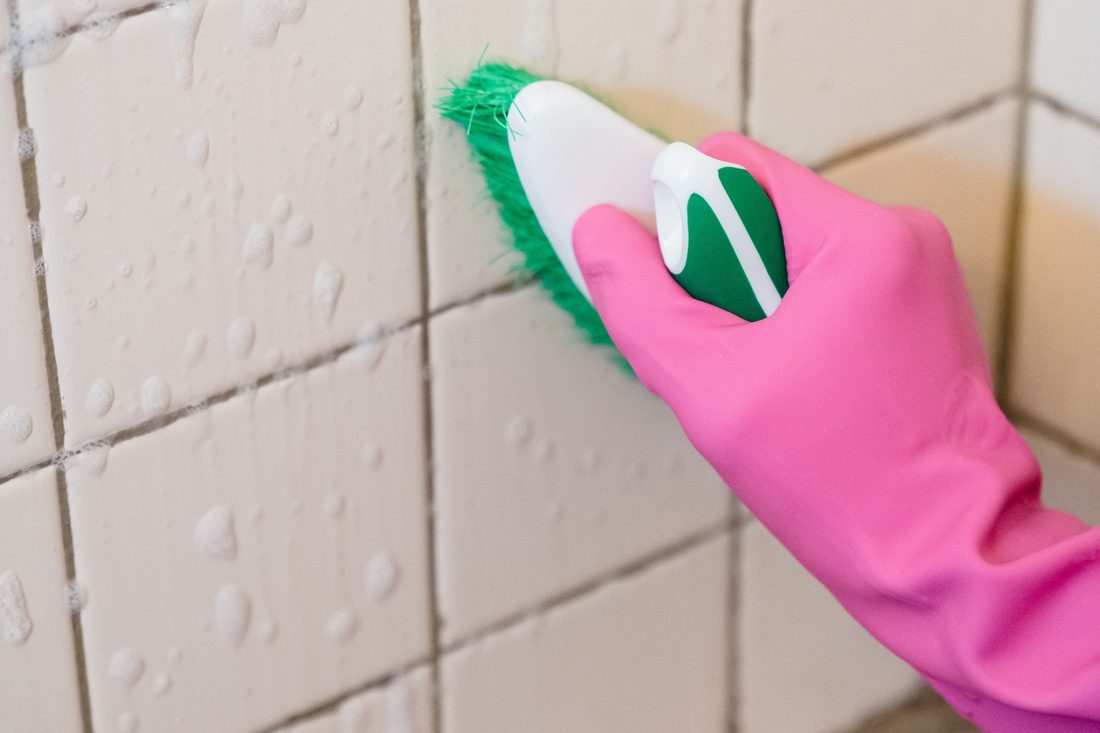
45 minApply the grout cleaner diluted as its label says and scrub along each grout line with a small stiff brush, then rinse the wall from the top down. Clean the bath and basin with a mild cream or detergent and a soft sponge, and the toilet last with its own cleaner and brush — never in the same session as bleach. Dry the tiles with a squeegee or towel so water spots do not form.
- Work in small sections so the cleaner does not dry on the grout
- Do the toilet with the separate gloves and cloth
- Look at the sealant: black that will not shift is under the surface
Mistake to avoid: Scrubbing grout with a wire brush. It scratches the tiles and wears the grout down, so it stains faster next time.
Worktops, sinks and the last wipe
30 minWipe worktops with warm water and a mild detergent, using a stone-safe cleaner on granite, quartz or marble and nothing harsh on wood. Clean the kitchen sink and taps, descaling the tap if needed. Put back the hood filters, fridge shelves and food, plug the appliances back in and check they run. Wipe switches, handles and the bin lid, which everyone touches.
- Dry stone and wood worktops straight away
- Re-oil a bare wood worktop once it is fully dry
- Run the dishwasher empty if you cleaned the filter
Mistake to avoid: Using the bathroom descaler on a stone worktop. It etches dull spots into the surface that will not polish out.
Floors last
30 minVacuum or sweep every floor, including under the kickboards and behind the toilet. Mop tiles with a small measure of tile cleaner in a bucket of lukewarm water and a well wrung-out mop, leaving it to dry without rinsing, as one maker advises; laminate gets a laminate cleaner and a barely damp mop. Keep everyone off until it is dry: the HSA warns that wet floors are a slip risk, and residue can make them slippery for longer.
- Mop yourself out of the room towards the door
- Change the mop water when it greys
- Wring the mop hard on laminate and wood
Mistake to avoid: Flooding a laminate floor with a wet mop. Water gets into the joints and the boards swell at the edges.
The mistakes that cause damage
- Mixing bleach with a descaler or toilet cleaner
- Descaler on natural stone, marble or anything not acid-resistant
- Abrasive pads on stainless steel, acrylic baths or enamel
- Washing carbon hood filters, which can only be replaced
- Over-wetting laminate and wood floors
Stop here and get a deep cleaning service
- There is extensive mould, a leak, or a drain smell that cleaning does not fix
- Grout has crumbled or sealant has lifted — the job is repair, not cleaning
- The kitchen or bathroom has been unused or neglected for a long time
- You cannot use cleaning chemicals because of asthma or skin problems
| WHAT YOU SEE | WHY, AND THE FIX |
|---|---|
| White marks came back on the taps within days | Hard water. Dry taps and the shower screen after use; descale little and often rather than waiting for a crust. |
| Dull patches on a stone worktop or sill | An acid cleaner etched it. It needs a stone specialist to polish; use stone-safe cleaners from now on. |
| The fridge still smells after cleaning | The drain hole or drip tray is the usual cause. Flush the drain hole with the bicarbonate solution and empty and wipe the drip tray. |
| Streaks on stainless steel | Cleaner sprayed straight on, or wiping across the grain. Spray onto the cloth and wipe along the grain, then buff dry. |
| The dishwasher leaves grit on plates | The filter is blocked or was not locked back in. Clean it under the tap and twist it until the arrows line up. |
| The washing machine smells musty | Mould in the door seal fold or detergent drawer. Wipe them out, run a hot empty wash with a machine cleaner and leave the door open after use. |
| Grout still looks grey | Dirt is deep in old, unsealed grout. Scrub again with grout cleaner; if it stays grey, a grout pen or regrouting is the fix. |
| The floor feels sticky after mopping | Too much floor cleaner or not enough water. Mop again with plain warm water and a well wrung-out mop. |
WHAT YOU SAVE
What it costs to do it yourself
| Limescale remover | €1.99–€3.99 |
|---|---|
| Kitchen degreaser | €2.99–€3.49 |
| Grout and tile cleaner, 1 litre (optional) | €8.65 |
| Scrubbing brush | €1.49 |
| Non-scratch scourers | €0.99–€1.49 |
| Microfibre cloths, pack of four | €1.49 |
| Rubber gloves | €1.49 |
| Total | €10–€22 |
| DIY total | €10–€22 |
Guide prices compiled by the Locufy team from published Irish and UK provider price lists and 2026/27 cost guides. Updated 2026.
Brushes, cloths and gloves last for months, so the next deep clean costs only the products. Washing-up liquid and bicarbonate of soda from the kitchen press do a surprising share of the work.
RATHER NOT?
Deep cleaners near you, with prices shown
The ones who cover your area, nearest first, with one score from every review. No account needed to look.
Or post the job free and let them come to you.
Squeegee the shower after use, wipe the hob after cooking, empty the dishwasher filter monthly and leave the washing machine door open.
Keep bleach away from descalers and toilet cleaners, all upright, capped, in their own bottles and out of children's reach.
Rinsed plastic bottles go in the recycling bin. Aerosol cans count as hazardous waste and go to a civic amenity site, as do unwanted strong cleaners; mywaste.ie lists the sites and local authority hazardous waste days.
Wash microfibre cloths hot, without fabric softener, keeping the toilet cloths separate. Rinse brushes and let them dry.
Deep-cleaning a kitchen and bathroom: questions people ask
Every few months for most homes, with the hood filters, fridge and dishwasher filter done in the same session. Weekly cleaning keeps the surfaces right in between.
No. Descalers are acids; one maker says not to use its foam on marble or other calcareous stone. Use a stone-safe cleaner and a damp cloth instead.
One hood maker soaks metal grease filters for about 10–15 minutes in a warm bath of mild detergent plus degreaser; then brush, rinse and air-dry them. Carbon filters cannot be washed and are replaced.
Clean the inside and seal with half a litre of lukewarm water and a tablespoon of bicarbonate of soda, then flush the drain hole at the back and empty the drip tray, as one fridge maker suggests.
The Locufy price guide puts a professional deep clean at €150–€550 per visit, typically €300. Larger homes, heavy build-up and inside appliances cost more.
Never. The HSA warns that bleach mixed with certain other cleaners, including toilet and drain cleaners, gives off a harmful gas. Use one product, rinse, then the next.
MORE GUIDES
More DIY guides
Sources — checked October 2026
- Bosch — how to clean cooker hood filters
- Bosch — cleaning a dishwasher filter
- Bosch — cleaning a washing machine door seal
- Beko — how to clean a fridge freezer
- HG — limescale remover foam spray: directions and surfaces
- HG — grease away: directions on stainless steel
- HG — tile cleaner: floor dilution
- HSA — Safety in Contract Cleaning: dilution, incompatible chemicals, dermatitis
- HSA — floor wet cleaning: slip risk
- MyWaste.ie — aerosols
- MyWaste.ie — chemicals and household hazardous waste
- Mr Price — price check: limescale removers, October 2026
- Mr Price — price check: degreasers and kitchen sprays, October 2026
- Mr Price — price check: brushes, scourers, cloths and gloves, October 2026
- Mr Price — price check: scourers, October 2026
- Mr Price — price check: microfibre cloths, October 2026
- Mr Price — price check: rubber gloves, October 2026
- B&Q Ireland — price check: grout and tile cleaners, October 2026