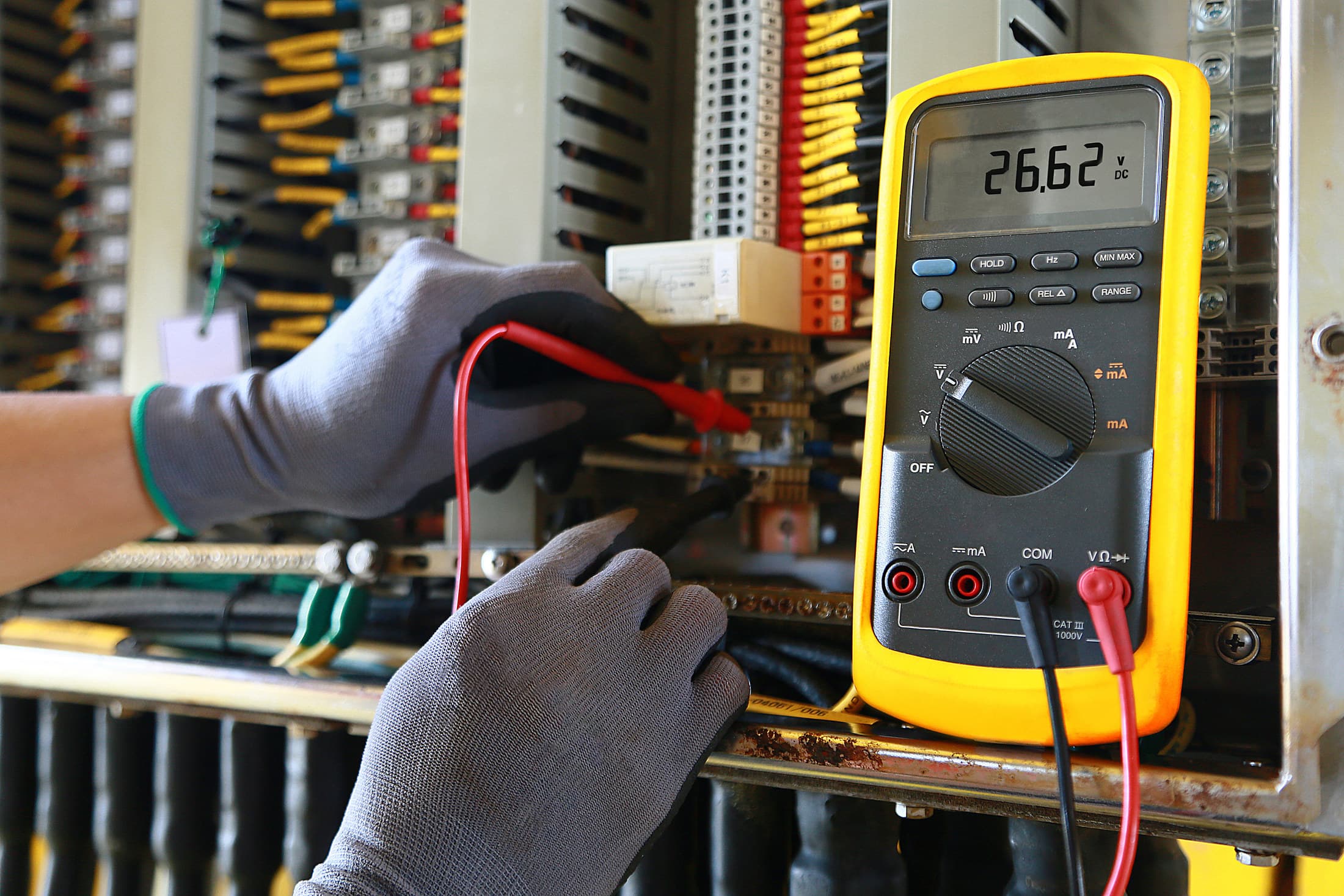
HOW TO HIRE · ELECTRICAL · CHECKED OCTOBER 2026
How to hire a fault-finding electrician in the UK
The checks, the questions and the paperwork.
Tripping RCD or dead sockets: the register check, the questions that separate a tester from a guesser, and how diagnosis should be priced.
- Search and compare — no account needed
- Nearest to you first
- One score from Google, Trustpilot and Locufy reviews
THE 60-SECOND VERSION
Hiring a fault-finding electrician in five steps
- Note what happens and whenWhich circuit trips, what was switched on, whether it is every time or now and then. It saves hours of testing.
- Check the registerIn England and Wales, search the business on the Registered Competent Person Electrical register before booking.
- Agree a diagnosis priceA fixed fee or a capped time for finding the fault, with the repair quoted once it is found.
- Ask for the fault in writingWhat was wrong, where, and how it was proved — not just 'sorted'.
- Get a certificate for any repairA repair that alters a circuit should come with a Minor Works Certificate and test results.
BEFORE YOU BOOK
Check before you book
Registered Competent Person Electrical
In England and Wales, tracing the fault and repairing it like for like is not notifiable; replacing the consumer unit or adding a circuit because of it is. For the notifiable parts of tracing the fault, an electrician registered with a government-authorised scheme (NICEIC or NAPIT, say) signs off compliance with the Building Regulations; without one, building control must be notified before work starts and inspects for a fee.
Look up the business name on the register; it takes a minute and should come before tracing the fault. electricalcompetentperson.co.uk →
Electrical Installation Certificate
Once the fault is fixed, the circuit should be tested to BS 7671; a repair that alters it is recorded on a Minor Works Certificate. Where tracing the fault is notifiable, a Building Regulations compliance certificate follows from the scheme — within 8 weeks in England according to gov.uk, and arranged within 30 days in Wales according to the Welsh Government.
Before you pay for tracing the fault, ask for the certificate with its test results. gov.wales →
Building warrant (Scotland) and Northern Ireland
Scotland has no competent person register for electricians: tracing the fault must meet building standard 4.5, which means wiring to BS 7671, and some work, such as rewiring a flat, needs a building warrant that the owner applies for. Northern Ireland's building regulations set no Part P-style notification for home wiring, so tracing the fault there carries no notification step.
For a Scottish home, ask the electrician whether tracing the fault needs a building warrant and whether they are an approved certifier of construction. gov.scot →
Insurance and trader status
Before tracing the fault, confirm the public liability insurance and its limit. You have Consumer Rights Act 2015 protection because the provider is a trader; and if tracing the fault is agreed in your home or online, the Consumer Contracts Regulations 2013 usually let you cancel within 14 days, except for made-to-measure goods and the part of the work you asked them to start early.
See the insurance certificate before you confirm tracing the fault; the Locufy profile shows the trader and ID-checked badges.
VAT
HMRC puts electrical fault finding and the repair that follows at the standard rate of 20%; once a trader's taxable turnover passes £90,000 it must register, charge the 20% and list it apart from the price of the work.
Ask for the VAT number, and look for VAT as its own line on both the diagnosis charge and the repair price. gov.uk →
A good answer: By testing, not swapping parts: isolating circuits one by one, an insulation resistance test, and checking appliances that might be tripping the RCD.
A good answer: A clear fee for attending and the first hour or so of testing, and a call to you before the time runs past it.
A good answer: A good electrician will tell you so and stop the clock; they should not rewire anything to cure a faulty kettle.
A good answer: Yes, for anything beyond a small fix. Concealed wiring in walls or floors can mean lifting boards, which needs your agreement.
A good answer: Yes, with the scheme named and an entry on the register, in case the repair turns into notifiable work.
A good answer: The circuit, the fault, how it was proved, and any test readings — something the next electrician can read.
A good answer: An honest answer: intermittent faults can hide; a good electrician tells you what to note if it happens again.
Getting the quote right
- A diagnosis fee or capped time for tracing the fault
- The hourly rate if the fault takes longer, with a call before it does
- The repair quoted separately once the fault is known
- Who actually attends — the electrician tracing the fault, employed or subcontracted — and the business's VAT number, with VAT at 20% shown as its own line
- Parts itemised by type and price
- Any lifting of floors or opening of walls agreed in advance, with who makes good
Walk away if
- A diagnosis on the phone: 'it'll be your board, it needs replacing'
- No test meter in sight, just parts swapped until the trip stops
- An open-ended hourly rate with no cap on the hunt
- Refuses to write down what the fault was
- Not on the competent person register in England or Wales, yet proposing a new consumer unit
What a fault-finding electrician costs: £80–£250 per job
Fault finding is usually priced as a fee for attending and a set period of testing; the repair is quoted separately once the fault is found. Electrical Fault Finding price guide →
Guide prices compiled by the Locufy team from published Irish and UK provider price lists and 2026/27 cost guides. Updated 2026.
KNOW WHAT TO LOOK FOR? NOW FIND ONE
Fault-finding electricians near you, with the badges that matter shown
ID checked, trader status and one score from every review — on the card, before you message anyone. Nearest first. No account needed to look.
Or post the job free and let them come to you.
- HistoryThe electrician asks what trips, when, and what was in use; the pattern points to the circuit.
- Isolate circuit by circuitCircuits and appliances are disconnected one at a time to narrow the fault down.
- TestInsulation resistance, continuity and polarity tests locate the fault in the cable or the accessory.
- Repair or quoteA small fix is done with your agreement; a larger one is priced before work starts.
- Prove and recordThe repaired circuit is tested, the RCD checked, and the fault written up for you.
- Nuisance tripping
- An RCD cutting out with no obvious cause, often a faulty appliance or damp.
- Insulation resistance
- A test of whether cable insulation is sound; a low reading points to damage or moisture.
- Intermittent fault
- A fault that comes and goes, usually the slowest kind to trace.
- Polarity
- Whether line and neutral are connected the right way round.
- Minor Works Certificate
- The record of a repair or alteration to an existing circuit.
- Earth leakage
- Current escaping to earth, which an RCD is designed to detect.
AFTER
When the job is done
Hiring a fault-finding electrician: questions people ask
Repairs and like-for-like replacements are not notifiable in England and Wales. If the fix becomes a new circuit or a replacement consumer unit, a scheme electrician self-certifies it, or building control is told before work starts.
A Minor Works Certificate where an existing circuit was altered, with test results; a written fault report in any case.
£80–£250 a job, typically around £120. The fee usually covers attending and the first hour of testing, with the repair quoted on top. See the Electrical Fault Finding price guide for the detail, then search your postcode above to compare fault-finding electricians nearby.
Often a faulty appliance, water getting into an outdoor fitting, or damaged cable. Unplug everything and reset; if it still trips, leave it off and call an electrician.
Unplugging appliances is fine. Taking covers off sockets or the consumer unit is not; leave the testing to an electrician.
You should still get a written note of what was tested and ruled out, and a fair charge for the time agreed.
MORE GUIDES
More hiring guides in electrical
Fault-finding electricians near you
Sources — checked October 2026
- gov.uk — Approved Document P: electrical safety in dwellings (England)
- Registered Competent Person Electrical register
- gov.uk — building work, replacements and repairs to your home (England)
- gov.wales — building regulations: electrics
- gov.scot — Building Standards Technical Handbook 2022 (domestic), standard 4.5 electrical safety
- gov.uk — building regulations: when you do not need approval
- Consumer Rights Act 2015, section 49 — reasonable care and skill
- Consumer Rights Act 2015, section 54 — what you can ask for when a service falls short
- Consumer Contracts Regulations 2013, regulation 30 — the 14-day cancellation period
- Consumer Contracts Regulations 2013, regulation 28 — contracts the cancellation right does not cover
- Consumer Contracts Regulations 2013, regulation 36 — services started within the cancellation period
- Civil Procedure Rules Part 26 — the small claims track limit (England and Wales)
- Scottish Courts and Tribunals — making a claim under simple procedure
- nidirect — the small claims process (Northern Ireland)
- Buildings and construction (VAT Notice 708) — 2.1 Construction services: work to an existing building is normally standard-rated
- GOV.UK — VAT rates
- GOV.UK — Register for VAT: when to register