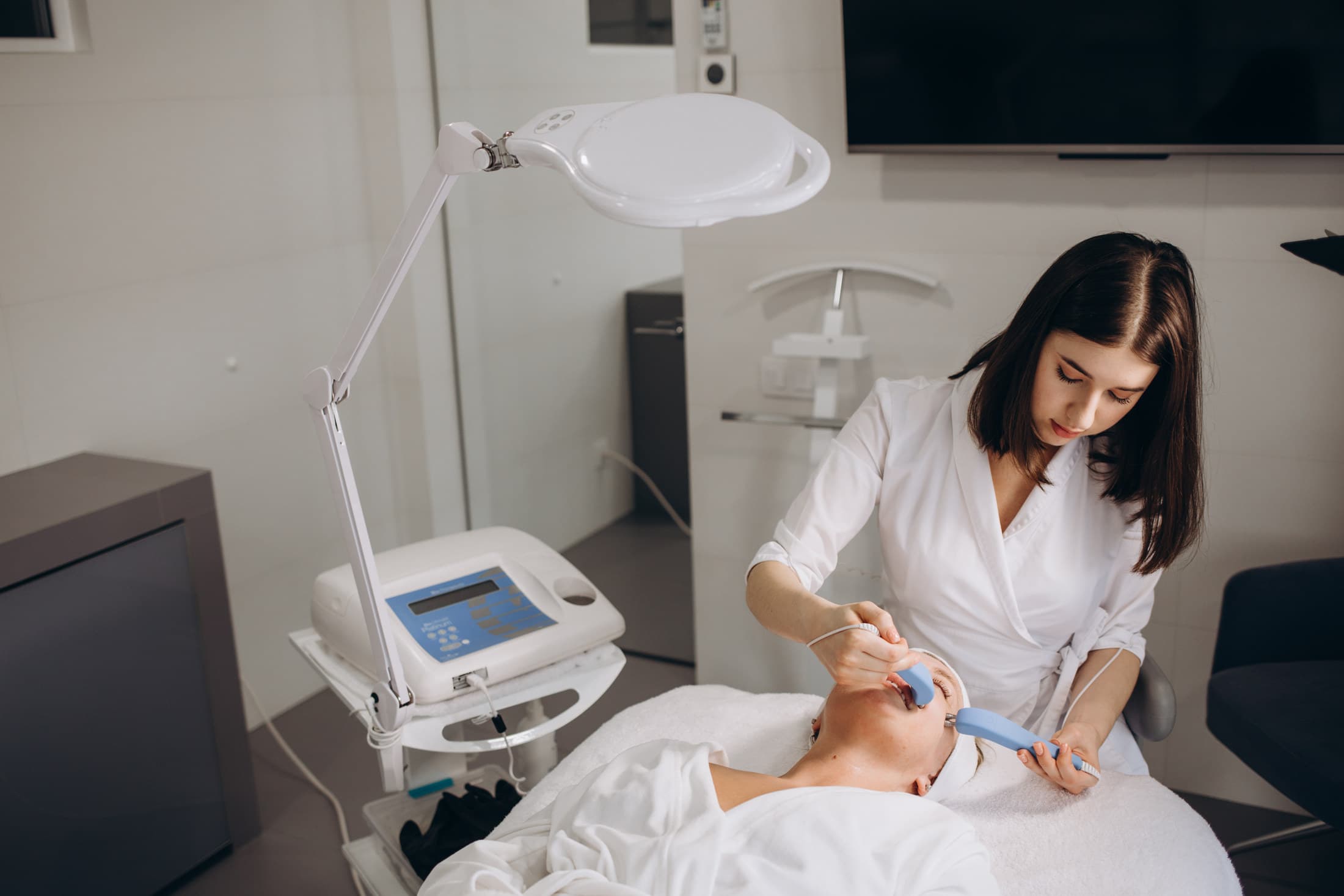
HOW TO HIRE · BEAUTY & GROOMING · CHECKED OCTOBER 2026
How to hire an aesthetician in the UK
The checks, the questions and the paperwork.
No register applies to aestheticians in the UK today. Here is what to check, what to ask, and what to do if a skin treatment goes wrong.
- Search and compare — no account needed
- Nearest to you first
- One score from Google, Trustpilot and Locufy reviews
THE 60-SECOND VERSION
Hiring an aesthetician in five steps
- Ask about trainingThe course for each treatment they offer, not one general certificate.
- Tell them your skin historyMedication, pregnancy, cold sores, recent sun.
- Agree the treatment planSingle session or course, and the price of each.
- Injectables are differentAnti-wrinkle injections need a prescriber who sees you.
- Plan aftercareSPF and the products to avoid.
BEFORE YOU BOOK
Check before you book
No register applies
No licence or register applies to aestheticians in England, Wales or Northern Ireland today, and none applies in Scotland until September 2027. England's government has announced licensing for some non-surgical cosmetic procedures but has set no start date, so an aesthetician can trade on training alone. Injectables are different everywhere: anti-wrinkle injections need a prescriber.
Ask the aesthetician for the training certificate for this exact skin treatment and the insurer that covers it.
Licence from 6 September 2027 (Scotland)
Scotland's 2026 licensing Order for non-surgical procedures, made under the Civic Government (Scotland) Act 1982, will require a council licence for superficial chemical peels and microneedling under 1.5mm from 6 September 2027; until then none is needed. Deeper peels and microneedling sits instead on the list in Scotland's Non-surgical Procedures and Functions of Medical Reviewers (Scotland) Act 2026, whose offences are not yet in force.
From 2027, ask an aesthetician in Scotland to show the council licence for the skin treatment. legislation.gov.uk →
Insurance that covers the skin treatment
Insurance for aestheticians is sold treatment by treatment, so an aesthetician's policy that covers a salon may stop at your front door. Public liability insurance is the part that pays for an injury.
A photo of the schedule is enough: it should list each treatment you are booking by name.
Trader status under the Consumer Rights Act 2015
The Consumer Rights Act 2015 covers a skin treatment bought from an aesthetician in business. Reasonable care and skill is the standard; below it, you can require the work again or a reduction.
The trader badge shows on the aesthetician's Locufy profile; save the booking message as your record. legislation.gov.uk →
VAT
Skin treatments from an aesthetician are cosmetic services, which HMRC treats as standard-rated at 20%. A clinic over the £90,000 registration threshold has to charge it on every treatment and course, and show it as a separate line rather than hide it in the session price.
Ask for the clinic's VAT number and a course invoice that splits the treatment price from the VAT. gov.uk →
A good answer: A plan after the aesthetician has looked at your skin.
A good answer: A named course for that treatment, which the aesthetician can show you.
A good answer: An answer from the aesthetician for that peel or product, and the wait time.
A good answer: An honest number of sessions and a total.
A good answer: A named prescriber who assesses you — not the aesthetician alone.
A good answer: Written aftercare and honest downtime.
A good answer: The aesthetician stops, soothes and tells you when to seek medical advice.
Getting the quote right
- Each treatment by name, single or course
- Consultation and skin analysis — free or charged
- Products and devices, if extra
- Who actually attends: the aesthetician named at consultation or another therapist on the rota, and whether that person is employed by the clinic or subcontracted
- A VAT number for the clinic, printed with the course price so the VAT on each session can be read off
Walk away if
- One certificate claimed to cover every treatment
- Anti-wrinkle injections offered with no prescriber
- A course sold before a skin assessment
- No questions about medication or pregnancy
What an aesthetician costs: £45–£150 per session
Aestheticians price per session, set by the treatment, with courses lowering the price each. Aesthetician price guide →
Guide prices compiled by the Locufy team from published Irish and UK provider price lists and 2026/27 cost guides. Updated 2026.
KNOW WHAT TO LOOK FOR? NOW FIND ONE
Aestheticians near you, with the badges that matter shown
ID checked, trader status and one score from every review — on the card, before you message anyone. Nearest first. No account needed to look.
Or post the job free and let them come to you.
- Skin analysisSkin examined and history taken.
- PlanTreatment and course agreed, with consent.
- PrepareCleansed; patch test result confirmed if needed.
- TreatmentThe peel, dermaplaning or resurfacing done.
- Finish and home careCalming products, SPF and the aesthetician's home-care plan.
- Skin analysis
- A close look at skin, sometimes with a lamp or camera.
- Resurfacing
- Removing surface skin layers by device, blade or acid.
- Superficial peel
- An acid peel that stays in the outer layer of skin.
- Course
- Several sessions bought together.
- Prescriber
- A doctor, dentist, nurse or pharmacist who can prescribe medicines.
- SPF
- Sun protection factor.
AFTER
When the job is done
Hiring an aesthetician: questions people ask
Not in England, Wales or Northern Ireland today. In Scotland a council licence will be needed for superficial peels and shallow microneedling from 6 September 2027.
An aesthetician who trades must use reasonable care and skill under the Consumer Rights Act 2015. Tell them in writing; you can ask for it to be put right or for a price reduction.
£45–£150 per session, typically around £80. The treatment, the therapist's training and a big-city clinic set it. Check the aesthetician price guide for the full picture, then search your town above for aestheticians close by.
Only with a prescriber who has assessed you and prescribed it for you: botulinum toxin is a prescription-only medicine in every UK nation.
No law sets one outside the injectables rules. Ask for the training certificate for each treatment.
Get advice, then tell the aesthetician in writing. A treatment not done with reasonable care and skill is a reason for a reduction or refund.
MORE GUIDES
More hiring guides in beauty & grooming
Aestheticians near you
Sources — checked October 2026
- Civic Government (Scotland) Act 1982 (Licensing of Non-surgical Procedures) Order 2026 (S.S.I. 2026/87)
- Non-surgical Procedures and Functions of Medical Reviewers (Scotland) Act 2026
- gov.uk (DHSC) — crackdown on unsafe cosmetic procedures, 6 August 2025
- gov.uk (MHRA) — crackdown on illegal 'Botox'
- gov.uk — tattoo, piercing and electrolysis licence (England and Wales), with London's Special Treatments Licence
- Consumer Rights Act 2015, section 49 — reasonable care and skill
- Consumer Rights Act 2015, section 54 — your rights when a service falls short
- gov.uk — VAT rates
- nidirect — small claims process (Northern Ireland)
- GOV.UK — Register for VAT: when to register