HOW TO HIRE · BEAUTY & GROOMING · CHECKED OCTOBER 2026
How to hire a chemical peel practitioner in the UK
The checks, the questions and the paperwork.
No licence applies to chemical peels yet, except in Scotland from 2027. Here is what to check, what to ask about depth, and what to do if it goes wrong.
- Search and compare — no account needed
- Nearest to you first
- One score from Google, Trustpilot and Locufy reviews
THE 60-SECOND VERSION
Hiring a chemical peel practitioner in five steps
- Ask who does the peelA therapist, a nurse or a doctor — and their training for that depth.
- Know the depthSuperficial, medium or deep: the risk and downtime differ.
- Prepare your skinStop retinoids and exfoliants as advised; no sunbeds.
- Tell them your historyCold sores, pregnancy, isotretinoin and skin conditions.
- Plan for the sunSPF daily and no strong sun before and after.
BEFORE YOU BOOK
Check before you book
No register applies
No licence or register applies to chemical peel practitioners in England, Wales or Northern Ireland today, and none applies in Scotland until September 2027. England's government has announced licensing for some non-surgical cosmetic procedures but has set no start date, so a chemical peel practitioner can trade on training alone.
Ask the chemical peel practitioner for the training certificate for this exact chemical peel and the insurer that covers it.
Licence from 6 September 2027 (Scotland)
Scotland's 2026 licensing Order for non-surgical procedures, made under the Civic Government (Scotland) Act 1982, will require a council licence for superficial chemical peels that stay within the outer layer of skin from 6 September 2027; until then none is needed. A deeper peel sits instead on the list in Scotland's Non-surgical Procedures and Functions of Medical Reviewers (Scotland) Act 2026, whose offences are not yet in force.
From 2027, ask a chemical peel practitioner in Scotland to show the council licence for the chemical peel. legislation.gov.uk →
Insurance that covers the chemical peel
A chemical peel practitioner's insurance should name the chemical peel itself; general beauty cover often leaves out the riskier work. If a product or tool injures you, public liability insurance is what pays.
Ask who insures them, and whether the peel strength being used is named on the cover.
Trader status under the Consumer Rights Act 2015
Your rights under the Consumer Rights Act 2015 apply when chemical peel practitioners trade as a business: the chemical peel must be done with reasonable care and skill, and if it is not, you can ask for a repeat or a lower price.
See whether the profile carries the trader badge before you pay, and screenshot what was agreed. legislation.gov.uk →
VAT
A chemical peel done for skin appearance is a cosmetic service and standard-rated at 20%, whether it is given in a salon or a medical clinic. Above £90,000 of taxable turnover the business must register, charge it and show it separately on the course invoice.
Ask for the clinic's VAT number and for VAT shown against the course price, not only the single session. gov.uk →
A good answer: A named peel and strength chosen after a skin assessment.
A good answer: A name, a course for that peel depth, and insurance that covers it.
A good answer: An answer for your skin, with any priming products priced.
A good answer: Days of peeling or redness, described honestly.
A good answer: An honest number and a price per chemical peel.
A good answer: Neutralise or remove at once.
A good answer: A number that is answered, and the chemical peel practitioner's advice to seek medical help if needed.
Getting the quote right
- The peel by name and depth
- Consultation, priming products and aftercare — in or extra
- Course price and terms
- Who actually attends: the chemical peel practitioner who did your consultation, or another therapist, and whether that person is employed or subcontracted
- The clinic's VAT number, with VAT on each peel and on the course total shown as its own line
Walk away if
- No skin assessment or medical history
- A medium or deep peel offered by someone trained only in light peels
- No warning about sun or downtime
- Peeling over a cold sore or broken skin
What a chemical peel practitioner costs: £60–£180 per session
Chemical peel practitioners price per session by peel depth, usually as a course of several sessions. Chemical Peels price guide →
Guide prices compiled by the Locufy team from published Irish and UK provider price lists and 2026/27 cost guides. Updated 2026.
KNOW WHAT TO LOOK FOR? NOW FIND ONE
Chemical peel practitioners near you, with the badges that matter shown
ID checked, trader status and one score from every review — on the card, before you message anyone. Nearest first. No account needed to look.
Or post the job free and let them come to you.
- ConsultationSkin assessed, history taken, peel chosen.
- PrepareSkin cleansed and degreased.
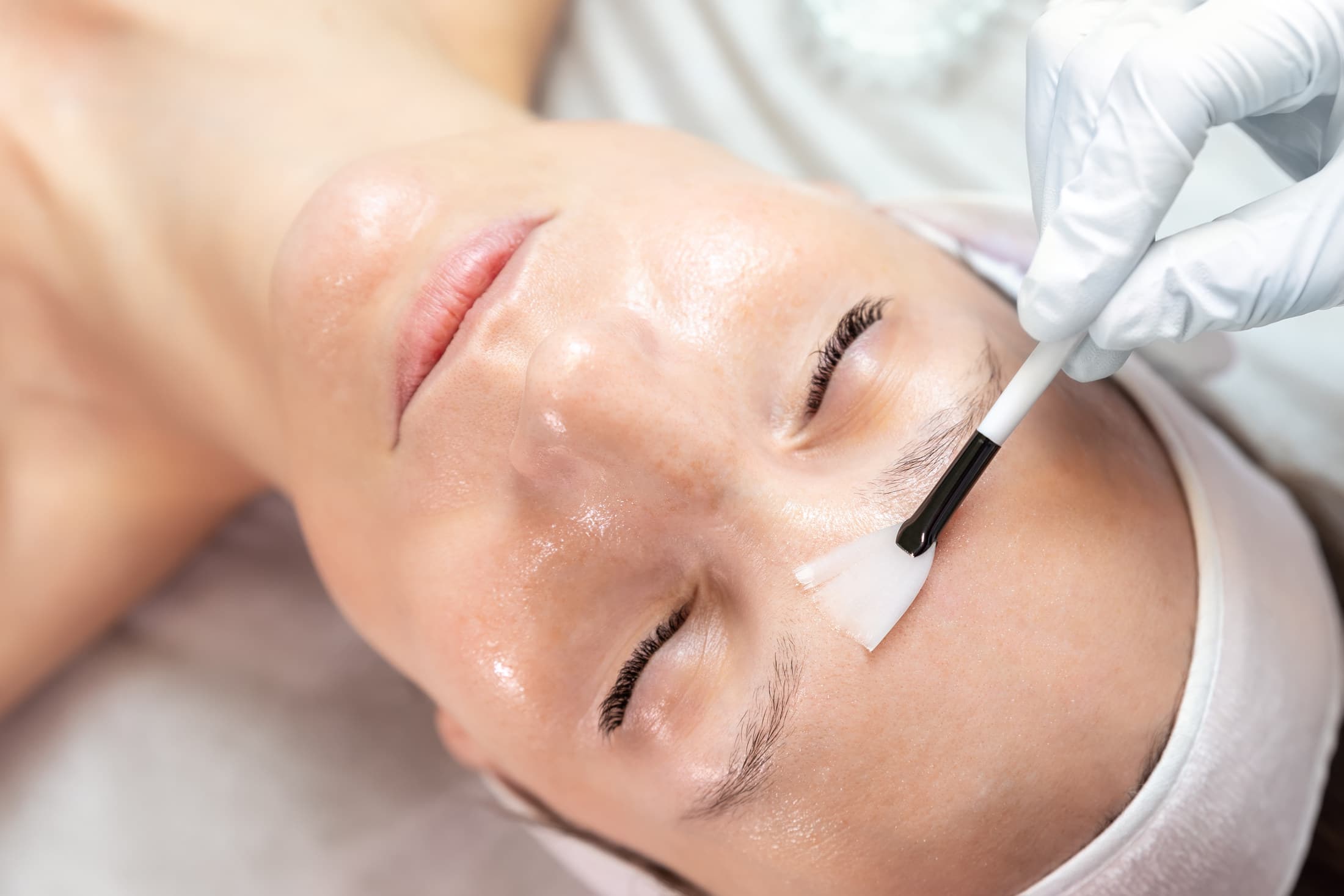
- Apply and timeThe peel applied and timed.
- Neutralise or removeStopped at the right moment.
- AftercareSoothing products, SPF and written aftercare from the chemical peel practitioner.
- Superficial peel
- A peel that stays in the outer layer of skin — glycolic or lactic acid.
- Medium peel
- A stronger peel, often TCA, reaching deeper.
- Epidermis
- The outer layer of skin; Scotland's laws draw their line here.
- Priming
- Skincare used before a peel.
- Neutraliser
- A solution that stops some peels working.
- Downtime
- The days of peeling or redness after.
AFTER
When the job is done
Hiring a chemical peel practitioner: questions people ask
Not in England, Wales or Northern Ireland today. In Scotland a council licence will be needed for superficial peels from 6 September 2027; England's announced licensing scheme has no start date.
A chemical peel practitioner who trades must use reasonable care and skill under the Consumer Rights Act 2015. Tell them in writing; you can ask for a price reduction, up to the full price.
£60–£180 per session, typically around £110. Peel depth sets most of it; medium peels and doctor-led clinics cost far more. For the breakdown, read the chemical peels price guide; your town in the search box above shows chemical peel practitioners near you.
From 6 September 2027 a council licence will be needed for superficial peels under Scotland's 2026 Order. Deeper peels are covered by the 2026 Act, whose offences have not started yet.
Tell the practitioner; recent use can be a reason to wait.
Get medical advice, then tell the practitioner in writing. A peel not done with reasonable care and skill is a reason for a refund or reduction.
MORE GUIDES
More hiring guides in beauty & grooming
Chemical peel practitioners near you
Sources — checked October 2026
- Civic Government (Scotland) Act 1982 (Licensing of Non-surgical Procedures) Order 2026 (S.S.I. 2026/87)
- Non-surgical Procedures and Functions of Medical Reviewers (Scotland) Act 2026
- gov.uk (DHSC) — crackdown on unsafe cosmetic procedures, 6 August 2025
- gov.uk — tattoo, piercing and electrolysis licence (England and Wales), with London's Special Treatments Licence
- Consumer Rights Act 2015, section 49 — reasonable care and skill
- Consumer Rights Act 2015, section 54 — your rights when a service falls short
- gov.uk — VAT rates
- nidirect — small claims process (Northern Ireland)
- GOV.UK — Register for VAT: when to register