DIY GUIDE · CLEANING · CHECKED OCTOBER 2026
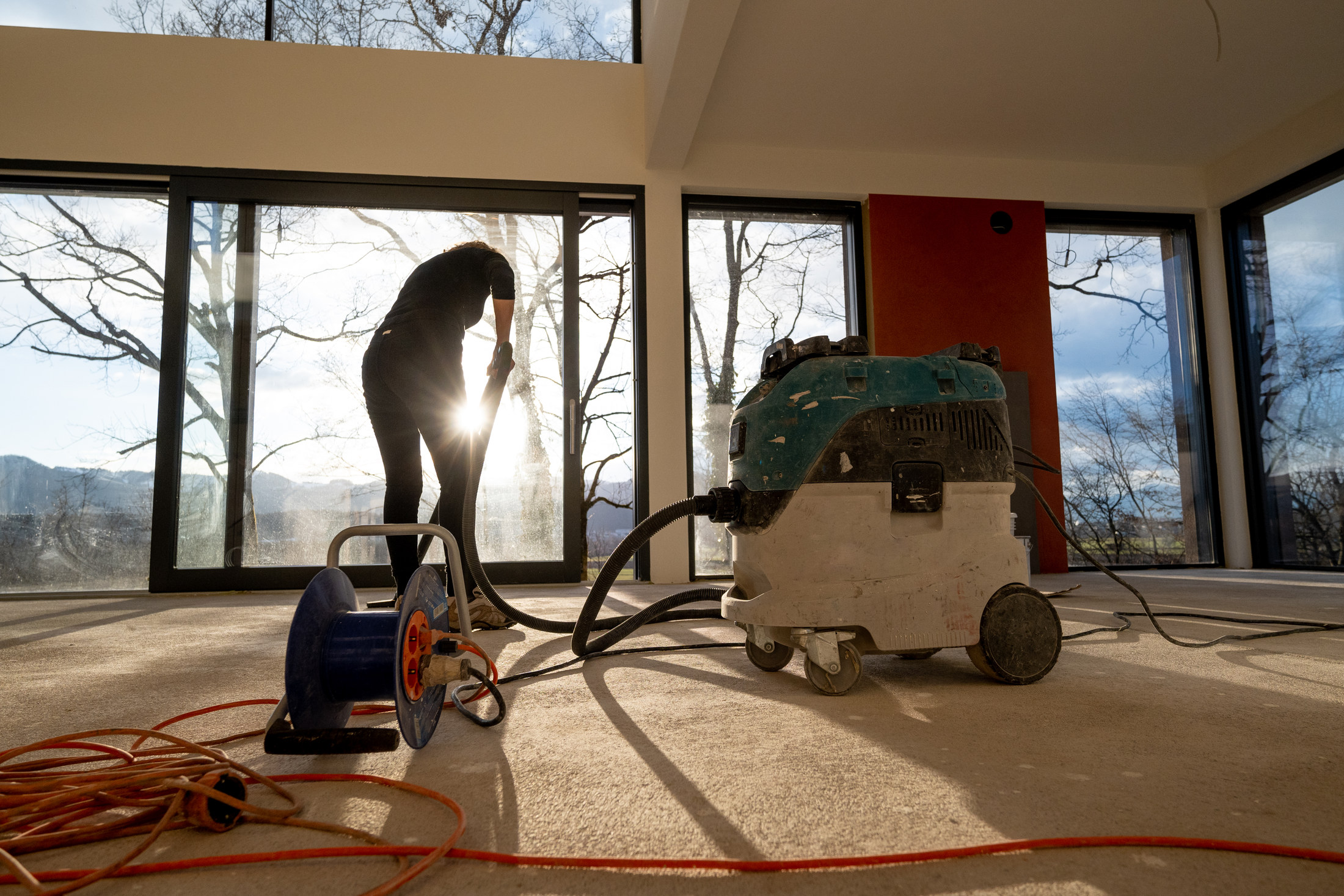
How to clean up after building work yourself
A weekend for a kitchen or extension. £33–£94 in masks, dust sheets, cloths and a grout haze remover; more if you buy an extraction vacuum.
Control the dust first — damp, extract, never dry-sweep — then the haze, splashes and labels on new surfaces.
- Every step, start to finish
- Checked October 2026 — sources at the end
- Honest about when to call a pro
FIRST, THE HONEST ANSWER
Do it yourself, or get a cleaner?
Do it yourself if…
- The work is finished and the builders have removed their rubble, offcuts and packaging
- The dust is plaster, paint, timber and tile dust from ordinary refurbishment
- The building was built after 1999, or the builders have confirmed no asbestos was disturbed
- You can borrow or hire an M or H class extraction vacuum, or will use damp methods throughout
Get a pro if…
- Dust or debris could contain asbestos — older textured ceilings, floor tiles, pipe lagging, boarding
- There is a lot of concrete or stone dust from cutting, chasing or grinding in an enclosed space
- New stone worktops, natural stone floors or specialist finishes are coated in haze or residue
- You need it done quickly before furniture or a tenant moves in
Safety first
- Do not dry-sweep building dust. HSE says dry brushing pushes large amounts of dust into the air and advises damping down and using a brush, shovel and bucket, or extraction, instead.
- For fine dust, HSE points builders to vacuum attachments on an H or M class extraction unit. A household vacuum blows fine dust through and can be damaged by it.
- Wear a mask with an assigned protection factor of 20, such as an FFP3 disposable mask, which is what HSE gives for clearing up; it needs to fit closely to work.
- Stop if you suspect asbestos. HSE notes asbestos was used in buildings until it was banned in 1999, and disturbing it is dangerous.
- Never mix cleaning products; grout haze removers are often acidic, and HSE warns acids and bleach give off harmful gases together.
- Wear goggles and gloves for acid cleaners and overhead dust, and ventilate every room.
Stop here: Asbestos and heavy silica dust
HSE says asbestos was used in buildings until it was banned in 1999 and that disturbing it releases fibres that are breathed in. If building work in an older property may have broken up asbestos materials, do not sweep, vacuum or wipe the dust — leave the area, keep others out and get it assessed by an asbestos professional. Separately, HSE treats dust from cutting, chasing and grinding concrete, brick and stone as high risk because of respirable crystalline silica; its exposure limit is very low and dry brushing produces high peaks. Heavy concrete or stone dust is a job for cleaners with the right extraction and protective equipment. How to hire an after-builders cleaner →
| MATERIAL | COVERAGE | FOR THIS JOB |
|---|---|---|
| Grout haze remover | Acid-resistant surfaces only; dwell as the label says | One bottle for a kitchen or bathroom |
| Washing-up liquid | Warm soapy water for frames, units and worktops | A squeeze per bucket |
| Multi-surface spray | For the finishing clean | One bottle |
How many dust passes and how long
36 m² of wall → 7.2 L for 2 coats. Buy about 7.5 L.
Passes ≈ 3 for most refurbishments: a heavy extraction pass, a damp-wipe pass, and a final pass two or three days later. Time per pass ≈ room floor area ÷ 10 m² per hour. A 4 × 5 m extension is 20 m² ÷ 10 = 2 hours a pass, so about 6 hours over three passes, plus haze and splashes.
Dust from cutting concrete or stone takes more passes than plaster dust. If the third pass still lifts a lot, the air or a hidden ledge is still releasing it.
HSE's guidance for clearing fine construction dust is an H or M class extraction unit. They filter far finer particles than a household vacuum and are built to take the load. Hire one or borrow the builders' if they will lend it; a household vacuum's filter clogs, the motor overheats and the finest dust is blown back into the room.
Damp down before you brush. Use a water spray mist on floors before sweeping debris with a soft brush into a shovel, and clean every surface with a damp, well-wrung microfibre rather than a dry duster. Damp cloths hold the dust; dry ones spread and scratch.
HSE gives a protection factor of 20 for clearing up — an FFP3 disposable or a half mask with a P3 filter — and says tight-fitting masks need to be properly fitted to work. Change disposable masks when they get damp or hard to breathe through.
Fresh haze, within about a day, usually comes off with a damp sponge rinsed often, one tile retailer says. Dried haze needs a remover. One maker gives a dwell time of 5 to 10 minutes and says its remover is for acid-resistant surfaces only — ceramic, porcelain, brick, quarry, terracotta and concrete — so never use it on marble, limestone or other acid-sensitive stone.
A worktop maker advises a plastic scraper for anything stuck on, a non-abrasive cleaner applied to a cloth, and keeping oven, drain and toilet cleaners and caustic products off quartz. A window maker warns that solvents and thinners discolour uPVC frames — warm soapy water only.
Peel protective film from new windows, appliances and units as soon as the dust is down — film left in sunlight bonds and becomes hard to remove. Warm stubborn labels with a hairdryer and roll them off; residue lifts with a little washing-up liquid on a cloth.
THE PART THAT DECIDES THE FINISH
Before you start — by what the dust has settled on
Protect what is clean, ventilate, and match each surface below to its prep. Work from the top of each room down, and from the far end of the house to the door.
Every room — dust control first
Before any cleaning.
- Open windows, close internal doors to rooms that escaped the dust, and seal them with dust sheets if needed
- Mask, goggles and gloves on
- Mist floors lightly with water before moving debris
- Set up the extraction vacuum with its fine-dust filter fitted
Ceilings, walls, ledges and light fittings
Where most of the dust sits.
- Switch lights off and let them cool
- Vacuum walls and ceiling corners with a brush attachment on the extraction unit
- Vacuum the tops of door frames, architraves and wall units
- Follow with a damp microfibre once the bulk is gone
New kitchen units and worktops
Easily scratched by dust.
- Vacuum before you wipe — never wipe dry dust across a new worktop
- Check the worktop maker's product list before using anything but warm soapy water
- Vacuum inside every unit and drawer, including the runners
- Peel off any protective film now
New tiles and grout
Haze, smears and spots.
- Check the grout has cured for the time on its packaging before any cleaner
- Identify the tile: ceramic and porcelain tolerate acid removers; marble, limestone and travertine do not
- Remove loose grit first so it is not dragged across the tiles
- Test any remover on one tile
Windows, doors and frames
Dust in tracks, film, plaster splashes.
- Vacuum the frame rebates and drainage slots
- Soften plaster splashes on glass with water before lifting them with a plastic scraper held flat
- Wash frames with warm soapy water only
- Peel protective film from frames and glass
Floors and carpets
The last thing to clean.
- Vacuum hard floors with the extraction unit before any mopping
- Mop in two buckets, changing the water often — dust turns to slurry
- Vacuum carpets slowly, several times, over several days
- Check carpets for plaster or paint before any wet cleaning
THE JOB
How to clean up after builders, in order
Check what was disturbed
15 minBefore you touch the dust, ask the builders what was cut, chased, sanded or removed, and whether any asbestos survey was done. In a building from before 2000, if any old textured ceiling, floor tile, pipe lagging or boarding was broken up, stop and get advice. Make sure their rubble, offcuts and packaging have gone.
- Ask for the builders' waste transfer note if they took the waste
- Keep doors to clean rooms shut
- Photograph any damage to new surfaces before cleaning
Mistake to avoid: Vacuuming up dust of unknown origin in an older building. If asbestos was disturbed, cleaning spreads it.
Set up dust control
20 minOpen windows. Mask, goggles and gloves on. Lay dust sheets in clean rooms and over anything you are not cleaning. Fit the extraction vacuum's fine-dust filter and check it is emptied. Mist the floors lightly with water.
- Fit-check the mask: no air leaking at the edges
- Empty the extraction unit before you start
- Close the door to the room you are not working in
Mistake to avoid: Starting with a household vacuum. It clogs in minutes and blows fine dust back into the room.
Pick up debris — damp, not dry
30 minMist the floor, then brush loose debris gently into a shovel and bucket, as HSE describes for small amounts. Bag it. Never dry-sweep with a broom; HSE says it pushes large amounts of dust into the air.
- Small movements, low to the floor
- Bag debris as you go and tie the bags
- Re-mist when the floor dries
Mistake to avoid: Sweeping briskly with a stiff broom. The cloud you raise settles back on every surface for days.
Extraction pass, top to bottom
2 hrsWith the extraction vacuum and a brush head, work each room from the ceiling down: ceiling corners, light fittings, tops of door frames and wall units, walls, window frames and tracks, inside units and drawers, radiators, skirting, then floors. Empty the vacuum and clean or shake the filter as its maker says.
- Top to bottom in every room
- Slow strokes — the fine dust needs time to lift
- Vacuum inside every cupboard and drawer runner
Mistake to avoid: Wiping before vacuuming. Dry dust dragged by a cloth scratches new gloss, glass and worktops.
Damp-wipe pass
2 hrsGo over every hard surface with a well-wrung microfibre in warm soapy water, rinsing the cloth constantly. Work top to bottom again. On new worktops and uPVC frames use only warm soapy water and a soft cloth.
- Change the water as soon as it clouds
- Fold the cloth to a clean face every few wipes
- Dry glossy surfaces straight away to avoid smears
Mistake to avoid: Using the same cloth for too long. A cloth loaded with grit is sandpaper.
Deal with grout haze
1 hrOn fresh haze, wipe tiles with a damp sponge in circles, rinsing often. On dried haze on ceramic or porcelain, apply a grout haze remover at the label's dilution, leave it for its dwell time — one maker gives 5 to 10 minutes — agitate with a soft pad, then rinse thoroughly and buff dry. Keep acid removers off natural stone, and off any surface you have not tested.
- Rinse twice so no acid stays on the grout
- Work small areas so it does not dry on
- Gloves and goggles for acid products
Mistake to avoid: Using an acid haze remover on marble or limestone. It etches the stone permanently.
Splashes, film and labels
1 hrSoften plaster, paint and cement splashes with water and lift them with a plastic scraper held flat. Peel protective film off frames, units and appliances. Warm stickers with a hairdryer and roll them off, then remove residue with a little washing-up liquid on a cloth. Clean the glass last.
- Never use a metal blade on coated or toughened glass
- Wet paint spots come off easily; dried emulsion softens with water and time
- Do not use solvents on uPVC
Mistake to avoid: Scraping dried cement off glass dry with a blade. It scratches the glass and can chip toughened panes.
Floors
1 hr 30Vacuum hard floors with the extraction unit, then mop with two buckets, changing the water often because dust turns to slurry. Vacuum carpets slowly in several directions. Do not wet-clean carpets until most of the dust is out, or it turns to mud in the pile.
- Extraction first, mop second
- Change mop water every room
- Vacuum carpets again on the following days
Mistake to avoid: Mopping before vacuuming. You spread a cement slurry across the floor that dries as a grey film.
Filters, vents and appliances
30 minClean or replace the extractor fan grilles, cooker hood grease filters, air vents and any heating or ventilation filters. Wipe inside the oven, fridge and dishwasher if they were in the work area. Change the household vacuum's bag and filter if it was used at all.
- Hood filters soak in hot soapy water
- Vacuum trickle vents in window frames
- Check smoke alarms — dust sets them off and clogs them
Mistake to avoid: Leaving dusty filters in place. The fans blow building dust round the house for weeks.
Final pass days later
2 hrsTwo or three days later, when the air has settled, do a final top-to-bottom pass with the extraction vacuum and a damp microfibre. Expect much less dust. Wash curtains and soft furnishings that were in the rooms, or have them cleaned.
- Keep windows open between passes
- Wash dust sheets separately
- Bin used masks and cloths in sealed bags
Mistake to avoid: Calling it done after one day. Fine dust is still coming out of the air and off high ledges.
The mistakes that spread dust or damage new work
- Dry sweeping, and using a household vacuum for fine building dust
- Wiping dry dust across new worktops, glass and gloss
- Acid grout haze removers on natural stone, or mixed with other products
- Cleaning dust in an older building without checking for asbestos
Stop here and get an after-builders cleaner
- You suspect asbestos was disturbed — old textured ceilings, floor tiles, lagging or boards broken up
- Heavy concrete or stone dust from cutting or grinding fills the rooms
- Natural stone or specialist finishes are coated in haze or cement
- You do not have, and cannot hire, an M or H class extraction vacuum
| WHAT YOU SEE | WHY, AND THE FIX |
|---|---|
| White film on tiles keeps coming back as they dry | Dried grout haze, not dust. Use a haze remover suited to the tile, dwell as directed, agitate, rinse twice and buff dry. |
| Fine scratches on a new worktop or glass | Dry dust was wiped across it. They may not polish out; from now on, vacuum first and wipe damp. |
| Dust keeps settling days later | It is coming out of the air and off hidden ledges. Keep windows open, clean ventilation filters and do another extraction pass. |
| Grey haze on the floor after mopping | Cement slurry from mopping too soon or with dirty water. Vacuum, then mop again with fresh water changed often. |
| Household vacuum has lost suction or smells hot | Fine building dust clogged the filter or the motor. Stop using it; clean or replace the filter and bag and use an extraction unit. |
| Paint spots on carpet | Emulsion while wet lifts with water and blotting; dried paint may need a specialist carpet cleaner. |
| Smoke alarm keeps going off | Dust in the sensor. Vacuum the vents gently with a brush attachment; replace it if it continues. |
| Etched dull patches on stone tiles | An acid cleaner was used on acid-sensitive stone. This is surface damage; a stone specialist can sometimes hone and polish it. |
WHAT YOU SAVE
What it costs to do it yourself
| FFP3 disposable masks | £7–£10 |
|---|---|
| Dust sheets | £4.50–£7.95 |
| Microfibre cloths | £6.59–£14.29 |
| Grout haze remover | £9.50–£48 |
| Goggles and gloves | £5.15–£13.99 |
| Total, without an extraction vacuum | £33–£94 |
| M class extraction vacuum (if buying) | £151.09–£288 |
| DIY total | £33–£94 |
Guide prices compiled by the Locufy team from published Irish and UK provider price lists and 2026/27 cost guides. Updated 2026.
The extraction vacuum is the expensive part; hiring one for a weekend or borrowing the builders' is usually the sensible route. Check whether your building contract includes a builders' clean before you start.
RATHER NOT?
After-builders cleaners near you, with prices shown
The ones who cover your area, nearest first, with one score from every review. No account needed to look.
Or post the job free and let them come to you.
Windows open as much as you can for the first week; dust keeps coming out of the air.
Builders' waste is the builder's to remove under their own waste duty. What you bag yourself — dust, cloths, masks, packaging — goes in general waste or recycling; plasterboard and rubble go to the household waste recycling centre, where some councils charge for DIY waste. Unwanted haze removers go to its hazardous waste container.
Follow each maker's care guide from day one: worktops, tiles, floors and frames all have their own.
Empty and clean the extraction vacuum's filter, wash cloths and dust sheets separately, and bin used masks.
Cleaning up after building work: questions people ask
Damp down and pick up debris with a brush and shovel, then vacuum every surface top to bottom with an M or H class extraction vacuum, then damp-wipe with microfibre. Never dry-sweep, and repeat the pass a few days later.
It is not designed for it. HSE points to H or M class extraction units for fine construction dust; a household vacuum clogs, overheats and blows the finest dust back out.
Fresh haze wipes off with a damp sponge rinsed often. Dried haze needs a grout haze remover suited to the tile — acid ones only on ceramic, porcelain and other acid-resistant surfaces — left for its dwell time, agitated, rinsed and buffed.
Yes. HSE gives an FFP3 disposable mask or a half mask with a P3 filter for clearing up construction dust, fitted properly.
The Locufy UK price guide puts after-builders cleaning at £150–£550 per visit, typically £300. Large extensions, heavy dust and lots of haze push it up.
Check your contract. Builders normally remove their own waste; a 'builders' clean' leaves rooms broom-clean, not ready to live in. The detailed clean is often left to you or a cleaner.
MORE GUIDES
More DIY guides
Sources — checked October 2026
- HSE — construction dust: dry sweeping (damp down, H or M class extraction, FFP3)
- HSE — introduction to asbestos: banned in 1999
- HSE — safe use of cleaning substances (CAIS22): never mix
- Universeal — grout haze remover: dwell time, acid-resistant surfaces, price
- Tile Mountain — how to remove grout haze from tiles
- REHAU — windows and doors operation and maintenance guide: no solvents on uPVC
- Aire Valley Worktops — quartz worktop aftercare
- B&Q — price check: FFP3 masks, October 2026
- B&Q — price check: dust sheets, October 2026
- B&Q — price check: microfibre cloths, October 2026
- B&Q — price check: M class vacuums, October 2026
- B&Q — price check: safety goggles, October 2026
- B&Q — price check: rubber gloves, October 2026
- GOV.UK — recycling collections: find your council