DIY GUIDE · CLEANING · CHECKED OCTOBER 2026
How to clean a fabric sofa yourself
Half a day for a three-seater. £10–£45 in cleaner and machine hire.
Find the cleaning code, then vacuum, test, use little liquid, blot and dry fast.
- Every step, start to finish
- Checked October 2026 — sources at the end
- Honest about when to call a pro
FIRST, THE HONEST ANSWER
Do it yourself, or get a cleaner?
Do it yourself if…
- The tag says W or W-S, or the maker's website confirms the fabric can be cleaned with water-based products
- The fabric passes a colour test on a hidden area
- The marks are general grime on arms and headrests, spills, or pet hair and smell
- The room can be aired and heated so the cushions dry the same day
Get a pro if…
- The code is S, X or missing and you cannot find it from the maker
- The fabric is silk, velvet, velour, brushed corduroy, Haitian cotton or leather
- The stain is large, old, or has already been treated and has spread into a ring
- The sofa is an antique, a recent expensive purchase still under a stain-protection plan, or has delicate piping and buttoning
Safety first
- Upholstery shampoos and spotters can irritate skin and eyes. Wear gloves, and never mix two cleaning products.
- Solvent spotters for S-coded fabric give off vapour. Use them only with windows open, and keep them away from flames and heaters.
- Do not use water hot enough to scald your skin in a machine; the machine maker warns against it and uses lukewarm water for delicate fabrics.
- Keep the extraction machine on the floor, the cable behind you, and the plug and socket dry.
- Keep children and pets off damp cushions; foam that stays wet can smell and grow mould.
- Read the sofa's own care label and any stain-protection plan terms first — using the wrong product can void them.
| MATERIAL | COVERAGE | FOR THIS JOB |
|---|---|---|
| Water-based upholstery cleaner | For W and W-S codes; test first | One bottle for spot work |
| Machine maker's upholstery solution | 250 ml in 9 litres of warm water for one standard machine | One dose usually does a three-seater |
| Distilled water (optional) | Reduces rings in hard-water areas | A few litres |
How much solution and how long
Machine doses = number of seats × cushion faces ÷ about 20 faces per tank. A three-seater with three seat and three back cushions has 6 cushions × 2 faces = 12 faces, plus the arms and back, so call it 18 — one tank of 9 litres with one dose of solution.
Do not clean the underside of fixed cushions or the platform; that only adds water you cannot extract.
Cleaning codes are usually on a tag on the seat cushions, tucked down the side next to the arm, or on the sofa platform under the cushions if they are sewn in. A sofa cover maker suggests running your hand along the front of the platform to find it. If it has been cut off, look up the model on the maker's website.
You can use water-based products: upholstery shampoo, mild detergent, an extraction machine with its upholstery solution. Use damp, never dripping, cloths, because too much water damages the foam cushioning inside. Distilled water helps avoid rings in hard-water areas.
Water must not be used. These fabrics are cleaned with water-free solvent cleaners made for upholstery, or professionally. Natural fibres such as cotton, linen, silk and wool often carry an S code. A hired water extraction machine is not for these.
Both a water-based shampoo and a mild dry-cleaning solvent are acceptable. Test whichever you choose on a hidden area, and still keep the fabric from getting saturated.
No liquid cleaner of any kind. Vacuum with a soft brush and brush the pile gently. Spills are blotted dry with a clean white cloth. Anything more is a job for a professional.
For a whole W-coded sofa, a hired extraction machine with the hand tool lifts far more dirt than hand shampooing. One machine maker's upholstery solution is dosed at 250 ml in 9 litres of warm water for its standard machine. For one stain, a cloth and a bottle of upholstery cleaner is enough.
THE PART THAT DECIDES THE FINISH
Preparing the sofa — by what it is covered in
Find your fabric and code below and do its prep before any liquid goes near the sofa.
W or W-S fabric, general grime
Most synthetic and blended sofas.
- Take off the seat and back cushions and vacuum the frame, seams and crevices with the crevice and brush tools
- Vacuum both sides of each cushion slowly, or brush them with a soft hand brush
- Do a colour test: dampen a hidden area with the solution, wait a minute, and blot with white kitchen roll
- Lay towels on the floor to stand cushions on while they dry
Spills and food stains
Fresh or recent marks.
- Scrape off anything solid with a blunt knife or a spoon
- Blot liquid with white kitchen roll, pressing, not rubbing
- Work from the outside of the mark inwards so it does not spread
- Treat the whole panel lightly afterwards, so a clean patch does not stand out against the rest
S-coded fabric
Often cotton, linen, wool, silk and some blends.
- Keep water off it completely, including from wet cloths and pets
- Vacuum and brush only, unless you have a water-free upholstery solvent
- Test any solvent on a hidden area first, with the windows open
- Leave a whole-sofa clean to a professional
X-coded fabric
Delicate weaves and some designer fabrics.
- Vacuum with a soft brush attachment, lightly
- Brush the pile in one direction with a soft clothes brush
- Blot spills with a dry white cloth and nothing else
- Do not use any liquid, foam or spray product
Velvet, chenille or deep pile
Plush fabrics that mark easily.
- Check the code first — many are S or X
- Vacuum along the direction of the pile, not against it
- Have a soft brush ready to lift the pile while it dries
- Do not use the extraction machine's hand tool on velvet or velour
Removable covers
Zipped or loose covers.
- Read the care label on the cover itself; a zip does not mean it can be machine-washed
- Wash all the covers together if washing is allowed, so the colour stays even
- Wash cold and do not tumble dry unless the label says you can — covers can shrink and not fit back on
- Refit covers while slightly damp so they ease back over the foam
THE JOB
How to clean a fabric sofa, in order
Find the code and test the fabric
15 minLook for the cleaning code on the cushion tags or the platform, as in the section above. If it is S, X or missing, go no further than vacuuming and blotting. If it is W or W-S, dampen a hidden area — the back or the underside of a cushion — with your solution, wait a minute or two, and blot with white kitchen roll. Any colour on the paper means the fabric is not colourfast and needs a professional.
- Photograph the tag; it is useful next time
- Test both the main fabric and any contrast piping
- Check the tag on removable covers separately
Mistake to avoid: Assuming a zip or a W code means the cover can go in the washing machine. Many covers are designed to be cleaned on the sofa.
Vacuum every surface
30 minRemove the cushions. Vacuum the platform, the crevices between the arms and the seat, and along every seam with the crevice tool. Vacuum the cushions on all sides with the brush tool, slowly. The machine maker's own guide starts here, because removing surface dirt lets the solution reach the deeper layers of the fabric.
- A lint roller or a damp rubber glove lifts pet hair the vacuum leaves
- Collect coins and crumbs from the crevices before vacuuming
- Brush deep pile in one direction afterwards
Mistake to avoid: Going straight in with liquid. Dust turns into muddy streaks as soon as it gets wet.
Spot treat the stains
20 minApply a water-based upholstery cleaner to a white cloth, not to the fabric, and blot the stain from the edge inwards. Turn the cloth to a clean area each time. Rinse by blotting with a cloth dampened in clean water, then blot dry. Keep the area damp, never wet.
- Dab and lift, do not scrub
- Treat the whole panel lightly afterwards to avoid a clean patch
- Leave the stain if it does not move after two goes; a professional has stronger options
Mistake to avoid: Pouring cleaner onto the stain. The liquid soaks into the foam, spreads, and dries as a ring.
Set up the machine and hand tool
15 minFit the hand tool as the machine maker shows and set the switch to hand-tool use. Fill a clean bucket with 9 litres of warm water — lukewarm for wool blends or delicate fabric — and add the measured upholstery solution. Pour it into the base tank and refit the recovery tank securely.
- Use the upholstery solution, not the carpet detergent, for soft furnishings
- Check the hose connections click home
- Lay towels under the machine on hard floors
Mistake to avoid: Using carpet detergent or a laundry product in the machine. The maker warns other detergents can damage the machine and possibly the fabric.
Clean the arms, back and frame
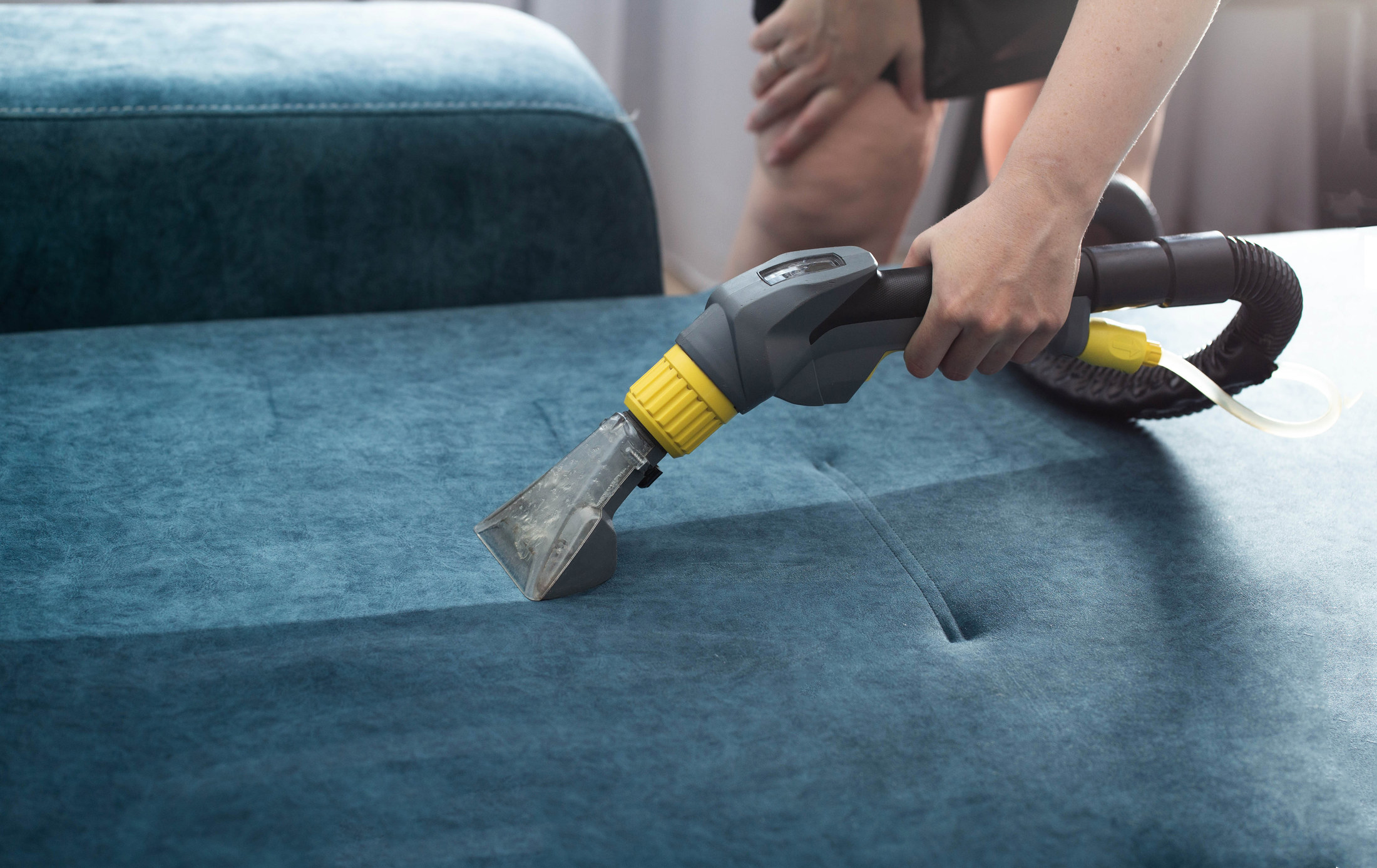
20 minStart on the outside back and arms, where marks matter least, so you get the feel of the tool. Squeeze the trigger to spray lightly, then draw the tool towards you in short strokes. Go back over each strip without spraying to lift the water. Work in overlapping strips from top to bottom.
- Light spray, slow dry pass
- Overlap each stroke so there are no lines
- Keep the tool flat to the fabric
Mistake to avoid: Holding the trigger down the whole time. The fabric soaks through to the frame and takes days to dry.
Clean the cushions one face at a time
30 minStand each cushion on a towel and clean one face with the same light-spray, slow-dry-pass technique, moving the tool back and forth to agitate the fabric. Finish with a vacuum-only pass, as the maker advises, for faster drying. Do the other face only once the first is touch-dry, so the foam does not soak from both sides.
- Do all the cushions to the same degree so they match
- Arm caps and headrests usually need two dry passes
- Keep cushion covers zipped while you clean them
Mistake to avoid: Soaking both sides of a cushion at once. The foam stays wet in the middle and starts to smell.
Brush the pile and set the shape
10 minWhile the fabric is still damp, brush the pile in one direction with a soft brush so it dries even. Smooth seams and piping straight with your hand. Stand cushions on their edges on towels so air reaches both faces.
- Brush every cushion the same way
- Pat crushed areas up with your fingers
- Leave buttons and piping to dry on their own
Mistake to avoid: Leaving the pile flattened in different directions. It dries patchy, and looks like the stain is still there.
Dry fast
Until dryOpen windows, run the heating low and use a fan if you have one. Keep cushions off the sofa until they are dry right through — press the centre and feel for any coolness. Do not put them on radiators, which can mark and shrink fabric.
- Air movement dries faster than heat
- Turn the cushions every hour or two
- Keep pets off the damp fabric
Mistake to avoid: Putting the cushions back while still damp in the middle. They smell musty for weeks.
Deal with pet hair and smell
15 minFor pet hair once dry, use a damp rubber glove or a lint roller, then vacuum. For smells, sprinkle a little bicarbonate of soda on dry W-coded cushions, leave it for an hour or so and vacuum it off thoroughly. Strong urine smells that come back need an enzyme cleaner or a professional.
- Test bicarbonate on a hidden area of dark fabric first
- Vacuum it off completely or it leaves a grey film
- A washable throw over the pet's favourite seat saves the next clean
Mistake to avoid: Spraying perfume or fabric freshener over a smell. It masks it briefly and can mark the fabric.
Return the cushions and clean the kit
15 minOnce everything is completely dry, vacuum lightly and put the cushions back. Empty the machine tanks down a toilet or inside sink, rinse the tool and the filter, and return the hire on time. Wash cloths without fabric conditioner.
- Swap seat cushions round from now on so they wear evenly
- Keep the leftover solution with the tag photo for next time
- Rinse the hand tool until the water runs clear
Mistake to avoid: Leaving dirty water in the machine. It smells and the next renter's clean starts badly.
The mistakes that ruin upholstery
- Ignoring the cleaning code and using water on an S or X fabric
- Over-wetting, so the foam soaks and the fabric dries with tide marks
- Rubbing stains, which spreads them and frays the surface
- Machine-washing covers that were never meant to come off for washing
Stop here and get an upholstery cleaner
- The code is S or X, or there is no tag and the maker cannot tell you
- The fabric is silk, velvet, velour, brushed corduroy, Haitian cotton or leather
- The colour test bleeds, or a stain has already spread into a ring
- The sofa is valuable, antique, or covered by a stain-protection plan that names its own process
| WHAT YOU SEE | WHY, AND THE FIX |
|---|---|
| Water rings or tide marks after drying | The fabric was wetted unevenly, or tap water left minerals. Lightly re-clean the whole panel edge to edge, extract well, and dry fast; use distilled water next time. |
| The cleaned patch is brighter than the rest | You spot-cleaned one area of a grubby panel. Clean the whole panel lightly so it matches. |
| The sofa smells musty | The foam stayed wet too long. Stand cushions on edge in a warm, ventilated room with a fan until fully dry. |
| The fabric feels stiff or sticky | Detergent was left in. Go over it with clean water and extract with vacuum-only passes. |
| The pile looks crushed or patchy | It dried lying in different directions. Dampen lightly and brush it all one way, then let it dry. |
| The colour ran into the piping or onto the frame | The fabric was not colourfast. Stop cleaning; this needs a professional, and sometimes the fabric cannot be saved. |
| Covers shrank in the wash | They were washed too hot or tumble-dried, or were not meant to be washed. Refit them damp and stretch gently; if they will not go back, a maker may supply replacements. |
| The stain came back as it dried | Residue wicked up from deep in the cushion. Blot it again with clean water and dry it quickly with a fan. |
WHAT YOU SAVE
What it costs to do it yourself
| Water-based upholstery cleaner for spot work | £4.98–£10.50 |
|---|---|
| Extraction machine hire for the day | £27.99 |
| Hand tool hire | £4.99 |
| Total, spot work only | £4.98–£10.50 |
| Total, whole sofa with a hired machine | £38–£45 |
| DIY total | £10–£45 |
Guide prices compiled by the Locufy team from published Irish and UK provider price lists and 2026/27 cost guides. Updated 2026.
Spot cleaning costs little more than the bottle. A full machine clean is worth it if you also have carpets to do the same day, as the hire is by the day.
RATHER NOT?
Upholstery cleaners near you, with prices shown
The ones who cover your area, nearest first, with one score from every review. No account needed to look.
Or post the job free and let them come to you.
Sit on it only when every cushion is dry right through; damp fabric soils quickly.
Machine water goes down a toilet or an inside sink, not an outside road drain. Empty cleaner bottles go in the council recycling collection; unwanted solvent spotters go to the household waste recycling centre rather than the bin.
Vacuum weekly, swap cushions round, keep it out of strong sun and blot spills straight away from the edges in.
A photo of the cleaning code and fabric label saves guessing next time, or when you call a professional.
Cleaning a fabric sofa: questions people ask
W means water-based cleaners only, S means solvent cleaners only with no water, W-S means either, and X means vacuum or brush only with no liquid at all. The tag is usually on the seat cushion or the platform.
Only on W or W-S fabric, with the hand tool and the machine maker's upholstery solution, and after a colour test. The machine maker lists codes S and X, silk, velour, corduroy, leather and non-colourfast fabrics as unsuitable.
Only if the care label on the cover says so. Many covers are designed to be cleaned on the sofa, and washing or tumble-drying can shrink them.
Lightly clean the whole panel evenly, edge to edge, extract the water, and dry it quickly. Distilled water helps in hard-water areas.
The Locufy UK price guide puts upholstery cleaning at £35–£140 per item, typically £75. Large corner sofas and delicate fabrics are at the top.
A few hours with good air flow if you used little water and plenty of dry passes. Cushions that were soaked can take much longer; stand them on edge with a fan.
MORE GUIDES
More DIY guides
Sources — checked October 2026
- Rug Doctor — how to clean upholstery: hand tool, dosing, unsuitable fabrics and codes
- Rug Doctor — FAQs: unsuitable fabrics, hand tool hire
- Plumbs — how to read furniture cleaning codes
- HSE — safe use of cleaning substances (CAIS22): never mix, ventilation
- B&Q — price check: upholstery cleaners, October 2026
- B&Q — price check: carpet and upholstery machine hire, October 2026
- GOV.UK — recycling collections: find your council