DIY GUIDE · HOME REPAIRS & HANDYMAN · CHECKED OCTOBER 2026
How to fix a window that sticks, will not close or will not stay open yourself
An hour or two a window. €7–€40 for a restrictor, a handle or draught strip.
Diagnose stays, handles and keeps, adjust or replace them from inside, fit restrictors — and where to stop.
- Every step, start to finish
- Checked October 2026 — sources at the end
- Honest about when to call a pro
FIRST, THE HONEST ANSWER
Do it yourself, or get a repairer?
Do it yourself if…
- A casement window is stiff, will not stay open, flaps in the wind, or will not close tightly
- A window handle is loose, broken or will not lock
- You want to fit a restrictor to stop a window opening too far
- You can do everything from inside the room, on a ground floor or at a window you can reach without leaning out
Get a pro if…
- The glass is cracked, or a double-glazed unit is misted between the panes
- The frame is rotten, split or out of square, or the whole window needs replacing
- An upstairs window needs work from outside, or the sash is too heavy to hold safely
- You rent, and the window is the landlord’s to repair
Safety first
- Work from inside the room only and never lean out or stand on the sill. For anything outside above the ground floor, a fall is the danger.
- If you must use a step-ladder inside, keep off the top two steps and keep your belt buckle inside the stiles, as the HSA’s ladder guidance sets out.
- Have a helper hold the sash while stays are off; a falling sash with glass in it is dangerous.
- Do not remove or press on sealed glazing units or cracked glass. Leave glass to a glazier.
- Keep keys for locking handles near the window so everyone can get out in a fire.
Stop here: Glass, frames, work at height and rented homes
The dangers are falls and glass. Sealed units and cracked panes mean handling heavy, sharp glass and refitting beads and packers, and any work outside an upper-floor window is work at height. In a rented home, the 2019 Housing (Standards for Rented Houses) Regulations require the landlord to keep windows in good condition and repair, and to fit suitable safety restrictors where the bottom of an opening section through which a person could fall is more than 1400mm above the ground outside; the local authority enforces those standards. Report the fault to the landlord in writing. How to hire a window repairer →
| MATERIAL | COVERAGE | FOR THIS JOB |
|---|---|---|
| Window restrictor | Cable or arm type, rated for the window | One per opening sash where a fall is possible |
| Replacement handle | Same type, hand, spindle length and screw centres | One per window, if broken |
| Friction stays | Same length, hand and stack height, as a pair | One pair per sash, if worn or bent |
| Draught strip | To suit the gap in the rebate | Enough for the perimeter of the sash |
Does this window need a restrictor?
Measure from the ground outside up to the bottom of the opening part of the window. In a rented home, if that is more than 1400mm, the law requires a suitable restrictor. A first-floor bedroom window with its opening section 3,200 mm above the patio is well over the limit and needs one. Even in your own home, any window a child could reach and climb through above that height is worth restricting.
Measure to the bottom of the opening section, not to the sill or the floor inside.
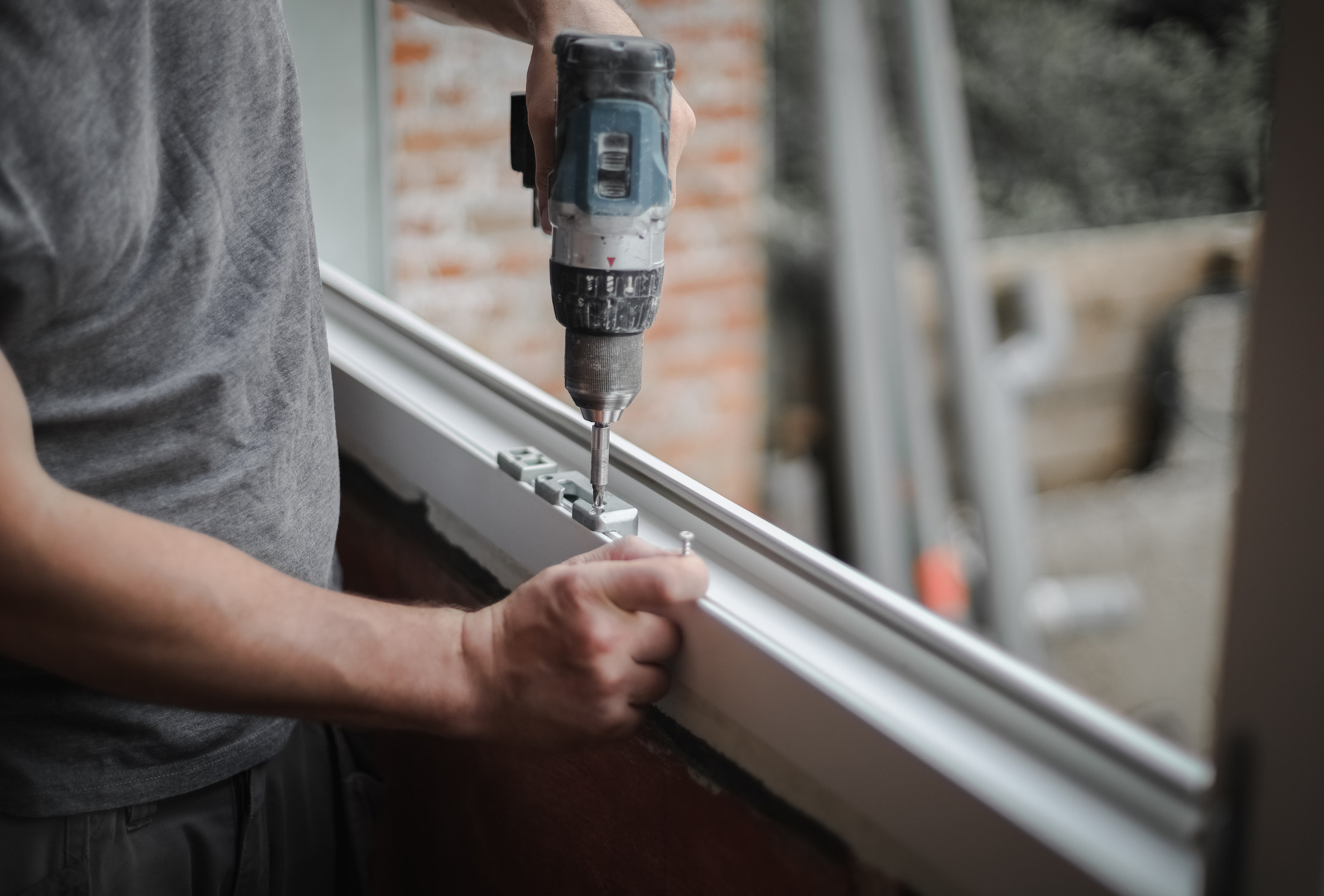
Most uPVC and many modern timber casement windows hang on friction stays — sliding hinges at the top and bottom of the sash. One hardware maker describes them as fitted in pairs, sized to the sash’s dimensions and weight, and with an adjustable friction screw that sets how stiffly the window opens. A window that will not stay open, or one that is very stiff, often needs only that screw turned.
A cockspur handle has a nose that hooks behind a wedge on the frame. An espagnolette handle turns, usually through 90o, to drive a locking bar along the sash edge through a square spindle — one maker gives the usual size as 7mm. A broken or floppy handle is an easy swap if you match the type, the hand and the spindle length.
The locking bar on an espagnolette window engages keeps on the frame. If the window does not pull in tight, the keeps may need adjusting or the frame may need cleaning. A window set too tight is hard to lock; one too loose rattles and lets in draughts.
A restrictor limits how far a window opens so a child cannot climb out. Many friction stays come with a restrictor built in, which can be overridden with a catch to open fully. Irish law requires suitable safety restrictors in rented homes where a person could fall through an opening section more than 1400mm above the ground outside.
A draught past a closed window is usually a flattened or missing seal, or keeps set too loose. On older timber windows, self-adhesive or fitted draught strip in the rebate makes a big difference. Rot in the bottom rail or the sill, though, is a joinery repair, not a strip of foam.
THE PART THAT DECIDES THE FINISH
Before you start — the window and the fault
Find the card that matches. Work from inside the room only, with the window open no further than you need, and keep children out of the room.
Window will not stay open, or is very stiff
It swings shut, flaps in the wind, or needs force to open.
- Open the window and find the friction stays at the top and bottom of the sash
- Look for the friction adjusting screw on the sliding shoe of each stay
- Clean grit out of the stay tracks with a brush and a cloth
- Check every stay screw is in place and tight
Window drops or will not close
The sash catches on the frame at the handle side, or the handle will not lock.
- Open the window and look at the stays for bent arms or broken rivets
- Lift the handle side gently — if the sash moves a lot, the stays are worn
- Check the keeps on the frame are clean and in line with the locking bar
- Measure the stays if they look worn, for replacements
Broken or loose handle
The handle spins, droops, or will not move the lock.
- Lift or swivel the cover at the base of the handle to find the two screws
- Tighten them; if it still spins, the spindle or the handle has failed
- Note whether it is a cockspur or an espagnolette handle
- Measure the spindle length and the screw centres before buying
Draughty timber window
Cold air or whistling past a closed casement or sash.
- Hold a strip of paper in the closed window at points round the frame — it should grip
- Look for gaps, flattened seals or missing draught strip
- Check the frame and the bottom rail for soft or rotten timber
- Clean the rebates before fitting any new strip
Window that will not stay restricted
A restrictor fitted, but the window opens past it or the catch releases on its own.
- Open the window to the restricted position and look at how the restrictor engages
- Check its screws are tight in sound timber or uPVC
- Look for a worn catch or a stretched cable
- Plan to replace a worn restrictor rather than adjusting it
THE JOB
How to fix a sticking or loose window, in order
Make it safe and clean the hardware
15 minKeep children out of the room. Open the window only as far as you need and never lean out. Brush the grit and debris out of the stay tracks and the keeps, and wipe them with a damp cloth. Oil the stay pivots and slides and the locking bar lightly, and work the window open and shut a few times.
- A dry paintbrush cleans the tracks well
- Wipe off excess oil so it does not collect dirt
- Close the window to check any change before going further
Mistake to avoid: Working on an upstairs window by leaning out over the sill. A slip there is a fall from height.
Adjust the friction stays
15 minWith the window open, find the adjusting screw on the sliding shoe of each friction stay. Turn it clockwise a quarter turn to make the window stiffer, anticlockwise to free it. Adjust the top and bottom stays by the same amount and test. A window that will not stay open needs more friction; one that is hard to open needs less.
- Small turns — the effect is larger than you expect
- Adjust both stays equally
- If there is no adjuster, the stay may be a fixed-friction type
Mistake to avoid: Tightening the friction so the window will not blow open in wind, instead of fitting a restrictor. It soon wears the stays.
Tighten handles and keeps
15 minLift or swivel the cover at the base of the handle and tighten the two screws. Close the window and check that the handle locks fully and pulls the sash in. If the sash is loose or hard to lock, look at the keeps on the frame: move or adjust them a little, or clean them, and test again.
- Tighten screws firmly but not hard into uPVC
- Check the handle turns through its full travel
- Lubricate the handle mechanism if it is stiff
Mistake to avoid: Forcing a stiff handle. The spindle or gearbox inside breaks.
Replace a broken handle
15 minOpen the window and turn the handle to the open position. Remove the two screws under the cover and pull the handle and spindle straight out. Fit the new handle with a spindle of the right length into the same hole, line up the screws, fix them and test that the window locks and unlocks fully.
- Check whether your window needs a left- or right-handed handle
- A lockable handle needs its key kept near the window for escape
- Keep the old screws in case the new ones are a different length
Mistake to avoid: Buying a handle with the wrong spindle length. It either fails to drive the lock or cannot sit flat.
Replace worn friction stays
1 hrIf the sash drops and the stays are bent or worn, replace them as a pair. With a helper holding the sash, unscrew the stays from the sash first, lift the sash away and set it down safely, then unscrew the stays from the frame. Fit the new frame tracks in the same position, then refit the sash onto the new stays. Test and adjust the friction.
- Match the length, the hand and the stack height exactly
- Replace screws that have rusted or stripped
- Have the helper hold the sash throughout — it falls when the last screw comes out
Mistake to avoid: Changing one stay of a pair. The old and new stays move differently, and the sash twists.
Fit a restrictor
20 minChoose a restrictor that suits the window — a cable restrictor for many uPVC and timber windows, or friction stays with a restrictor built in. Fix the restrictor to the frame and the sash as its instructions show, with screws long enough to hold securely. Test that the window opens only to the restricted position and that the release works for an adult.
- Fix restrictors on every window a child could reach and fall through
- Keep any restrictor key near the window but out of a child’s reach
- Check the release still lets the window open fully in an emergency
Mistake to avoid: Using a restrictor so short that the window cannot be opened at all for escape. It has to restrict, not seal.
Stop draughts on timber windows
45 minClean and dry the rebates. Measure the gap between the sash and the frame with the window shut and choose a draught strip of the right thickness. Fit it to the frame rebate, not the moving sash where you can, keeping it continuous round the corners. Close the window and do the paper test again.
- Too thick a strip stops the window closing and strains the handle
- Fit strip to clean, dry surfaces or it will not stick
- Leave trickle vents and vent strips open; the room still needs ventilation
Mistake to avoid: Sealing every gap including the ventilation. Condensation and mould follow.
Test and record
10 minOpen and close each window you worked on, lock and unlock it, and check the restrictors. Note the stay length, the handle type and the spindle size on your phone for next time.
- Test in wind if you can; it shows up loose stays
- Recheck the friction after a week
- If a window still drops or will not lock, the frame may have moved — stop there
Mistake to avoid: Leaving a restrictor half fitted or a stay with a missing screw. Both fail when they are needed.
The mistakes that make it worse
- Leaning out of an upstairs window to work on it
- Replacing one friction stay of a pair
- Tightening the friction instead of fitting a restrictor
- Forcing a stiff handle
- Blocking trickle vents with draught strip
Stop here and get a window repair specialist
- The glass is cracked or the double glazing is misted between the panes
- The frame is rotten, split or out of square, or the window needs replacing
- The work needs doing from outside on an upper floor
- You rent, and the landlord has not agreed to the work
| WHAT YOU SEE | WHY, AND THE FIX |
|---|---|
| Window will not stay open | The friction stays are too loose. Tighten the adjusting screws a quarter turn each, equally; replace them if they are worn. |
| Window very stiff to open | Dirt in the tracks or friction set too tight. Clean and oil the tracks, then ease the adjusters. |
| Window drops and catches at the handle side | Worn or bent friction stays. Replace them as a pair, matching length, hand and stack height. |
| Window handle spinning | Loose screws or a failed spindle. Tighten the screws; replace the handle with the right spindle length if it still spins. |
| Window will not lock | Keeps out of line or a dropped sash. Clean and adjust the keeps, or replace worn stays. |
| Draught round a closed window | Flattened seals, loose keeps or no draught strip. Adjust the keeps and fit or replace the seal or strip. |
| Condensation between the panes | The sealed unit has failed. A glazier replaces the glass unit; the frame usually stays. |
| Soft wood at the bottom of a timber window | Rot in the bottom rail or sill. Probe it; small areas can be repaired, but extensive rot needs a joiner. |
| Restrictor lets the window open too far | A loose fixing, a worn catch or a stretched cable. Tighten the screws into sound material or fit a new restrictor. |
WHAT YOU SAVE
What it costs to do it yourself
| Window restrictor | €15 |
|---|---|
| Replacement window handle | €16.35 |
| Draught strip kit | €7–€13 |
| Lubricant | €7 |
| Total, a typical window | €7–€40 |
| DIY total | €7–€40 |
Guide prices compiled by the Locufy team from published Irish and UK provider price lists and 2026/27 cost guides. Updated 2026.
Adjusting stays and keeps costs nothing. Restrictors, handles and draught strip are cheap; a pair of friction stays costs more and is bought by size, and a new glazing unit or window is a specialist’s job.
RATHER NOT?
Window repairers near you, with prices shown
The ones who cover your area, nearest first, with one score from every review. No account needed to look.
Or post the job free and let them come to you.
A light oil on the stays, locking bar and handle in spring and autumn keeps windows opening smoothly.
Test every restrictor every few months and after any adjustment, especially in children’s rooms.
Old stays and handles are scrap metal for the metal skip at your civic amenity site. Broken window glass is not bottle-bank glass, which mywaste.ie says is for bottles and jars; wrap it safely and ask your civic amenity site.
Note the stay length, stack height, handle type and spindle size for each window so replacements are quick.
Fresh draught strip makes a room tighter. Keep trickle vents open and air the room daily so condensation does not build up on the glass and frames.
Fixing a window that sticks, will not close or will not stay open: questions people ask
The friction stays are too loose or worn. Tighten the adjusting screw on each stay a quarter turn; if they are bent or worn, replace them as a pair.
The friction stays are usually worn. Replace both, matching length, hand and stack height, with a helper holding the sash.
Where a child could fall, yes. In a rented home the law requires suitable safety restrictors on any opening section whose bottom sits over 1400mm above outside ground level.
Yes. Match the type, hand, spindle length and screw spacing, take out the two screws under the cover and fit the new one.
No. The sealed unit has failed and needs replacing by a glazier; the frame can usually stay.
On the Locufy price guide for Ireland, window repair costs €100–€350 per window, typically €180. Adjustments and hardware are at the low end; a new glazing unit at the top.
MORE GUIDES
More DIY guides
Sources — checked October 2026
- ERA — window hinges and friction stays: fitted in pairs, adjustable friction, restrictor and stack height
- ERA — window handles: cockspur and espagnolette, spindles usually 7mm square
- HSA — using ladders safely, information sheet
- Irish Statute Book — S.I. No. 137/2019, Housing (Standards for Rented Houses) Regulations 2019: restrictors above 1400mm
- gov.ie — minimum standards in rented accommodation
- MyWaste — what to do with glass: bottle banks are for bottles and jars
- diy.ie — window restrictors, price check October 2026
- diy.ie — window handles, price check October 2026
- diy.ie — draught excluders and strip, price check October 2026
- diy.ie — lock lubricant, price check October 2026