DIY GUIDE · CLEANING · CHECKED OCTOBER 2026
How to clean a fabric sofa yourself
An afternoon for a three-seater. €20–€25 in cleaner, brushes and cloths.
Read the cleaning code, vacuum hard, test, blot stains, clean seam to seam and dry it evenly.
- Every step, start to finish
- Checked October 2026 — sources at the end
- Honest about when to call a pro
FIRST, THE HONEST ANSWER
Do it yourself, or get a cleaner?
Do it yourself if…
- The tag shows W or WS, or you have found the maker's care instructions
- The marks are everyday soiling, food, drink or muddy paws rather than a flood
- You can move the sofa away from the wall and turn the cushions
- The room can be aired and warmed so the fabric dries within the day
Get a pro if…
- The tag shows S and you do not want to work with solvents indoors, or it shows X
- The fabric is silk, velvet, a delicate weave or an antique piece
- There is urine, vomit or blood that has soaked into the foam
- Someone has already treated a stain with a household product and it has spread or bleached
Safety first
- Wear gloves with any upholstery cleaner and read the hazard pictograms on its label; some contain irritants or fragrance allergens.
- Solvent cleaners give off vapour: open windows, keep them away from any flame, heater or cigarette, and do not use them with children or pets in the room.
- Never mix two cleaning products. The HSA warns that mixing incompatible cleaning chemicals can release harmful gas.
- Unplug a spot washer before emptying it, and keep the plug and socket dry.
- Lift the sofa with help and bend your knees; slide it on a mat rather than dragging it across a wooden floor.
| MATERIAL | COVERAGE | FOR THIS JOB |
|---|---|---|
| Upholstery cleaner to match the code | Water-based for W, solvent-based for S; dose by the label | One bottle |
| Upholstery stain remover | For the worst marks before the all-over clean | One bottle |
| Clean water | For rinse blotting | A bowl, changed when it clouds |
How long the sofa takes
Time ≈ seats × about 40 minutes of work, then drying overnight. Each seat is its seat cushion, back cushion and the section of frame behind them; arms count as one seat between them. Example: a three-seater with two arms is four seats, so about 4 × 40 = 160 minutes, close to three hours.
A fabric that stays damp for hours is the one that gets rings and smells. If your estimate leaves no time for drying before bedtime, start in the morning.
Look under the seat cushions, on the deck of the sofa or on the base. The maker's code is its recommendation for cleaning that fabric without harming its colour or texture, and different cushions on the same sofa can carry different codes. Photograph it so you have it next time. No tag at all means treat the fabric as the most delicate case until you know better.
Safe for water-based upholstery cleaners and mild detergent solutions. One furniture maker suggests a soft cloth or sponge just dampened with a mild soap solution, blotting gently and letting it air-dry. W does not mean the covers can go in the washing machine; that needs its own care label on the cover.
Water leaves rings and can shrink or distort these fabrics, so only a water-free, solvent-based upholstery cleaner is used. Solvents give off vapour, so the maker advises good ventilation and gloves. Many people stop at vacuuming and send an S sofa to a professional, which is a sensible line to draw.
Water-based for food, drink and mud; a solvent cleaner for grease, make-up and ink. Start with the mildest option that might work and test it, because the code says the fabric tolerates both, not that every product suits it.
One furniture maker says an X code is a clear sign not to try cleaning the piece yourself, because the fabric can be damaged by home methods, and to hire a professional or ask the retailer. No liquid of any kind goes on it. Lifting loose crumbs gently is as far as home care goes; putting water on an X fabric is how a sofa ends up with a permanent tide mark.
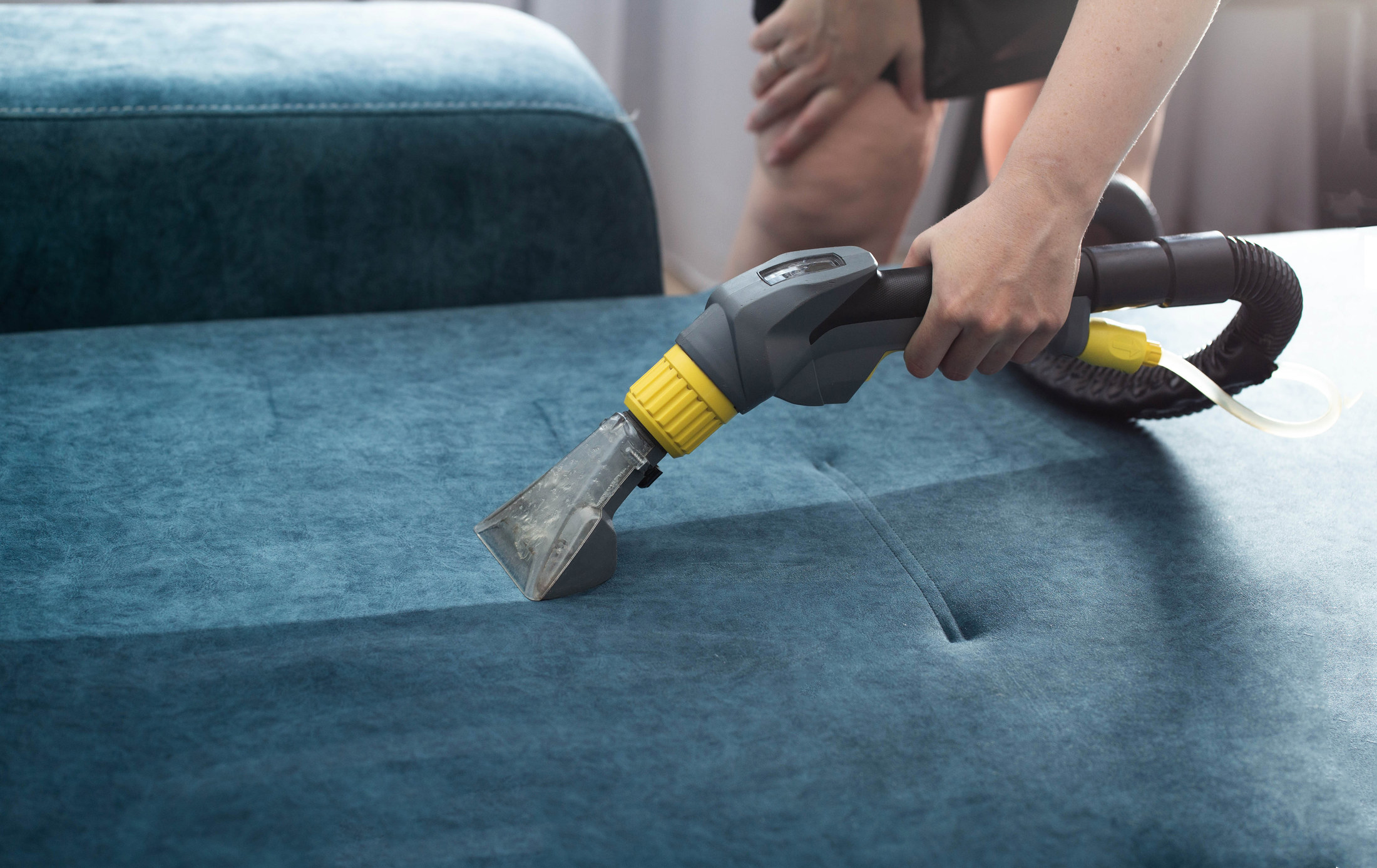
A small spot-washing machine sprays, scrubs and sucks the dirty water back out, which suits W fabrics. Its maker says to use only the solution made for it, not washing-up liquid or laundry detergent, which foam and may leave the stain behind. A bottled upholstery stain remover does the same job by hand, with more blotting.
THE PART THAT DECIDES THE FINISH
Preparing the sofa — by what it is made of
Find your fabric below and do its preparation before any cleaner comes out. If the tag and this page disagree, the tag wins.
Woven fabric with a W or WS code
Most modern sofas: polyester, cotton blends, chenille.
- Take off throws and cushions and shake them outside
- Vacuum every surface with the upholstery tool, then the crevices with the crevice tool
- Test your cleaner on the back of a cushion and let it dry fully
- Check whether cushion covers have zips; leave them on unless their own label allows washing
Fabric with an S code
Often viscose, some velvets and some natural blends.
- Open windows and plan to work with the room well aired
- Buy a water-free solvent upholstery cleaner and read its label for the fabric types it suits
- Wear gloves and keep the cleaner away from any flame or heater
- Test on a hidden area; if anything changes, stop and call a professional
Fabric with an X code, or no tag
Delicate weaves, some velvets, older furniture.
- Put no water, cleaner or stain remover on it at all
- Lift crumbs and hair gently with a lint roller
- Check the tag on every cushion; they can differ
- Get a quote from an upholstery cleaner for anything more
Microfibre and faux suede
Soft, short-pile synthetics, common on family sofas and recliners.
- Check the code; many are W or S, and they behave very differently
- Vacuum, then brush the nap up with a soft brush so dirt lifts
- On S, use the solvent cleaner sparingly and brush the nap as it dries
- On W, use as little water as possible; microfibre marks easily when over-wetted
A sofa with pet hair and paw marks
Dogs on the cushions, cats on the arms.
- Go over it with a rubber upholstery brush or lint roller before you vacuum
- Let mud dry completely and brush it off before any liquid goes near it
- Blot fresh accidents straight away with white kitchen roll, pressing rather than rubbing
- If the smell comes from inside the cushion, the foam is affected and a surface clean will not fix it
THE JOB
How to clean a fabric sofa, in order
Read the code and test
15 minUse the surfaces section above to match your fabric and its letter. Pull the sofa away from the wall so you can reach the back and sides. Choose your test spot — the back of a seat cushion or the fabric skirt at the back — and apply a little of your cleaner on a white cloth exactly as you plan to use it. Blot it, let it dry fully and look for any change in colour, texture or sheen before you go further.
- Test each different fabric on the sofa, including the piping
- Check the cloth for colour; any dye on it means stop
- Dry the test spot with a fan so you see the true result
Mistake to avoid: Skipping the test because the bottle says it suits all fabrics. A cleaner that is fine on the fabric can still lift the dye.
Strip and vacuum everything
25 minRemove throws, cushions and any loose covers. Take the cushions outside and beat them lightly to loosen dust. Vacuum every face of every cushion with the upholstery tool, then the deck, the arms, the back and the sides, and finally the crevices with the crevice tool, where crumbs and grit hide. The HSE advises cleaning upholstered furniture often, by vacuuming, to keep dust mites down.
- Use a lint roller or rubber brush first if there is pet hair
- Vacuum along the seams, not across them, so you do not pull threads
- Check down the sides for coins and pens before the cleaner goes on
Mistake to avoid: Going straight to the cleaner. Dust and grit turn to muddy streaks the moment they get wet.
Lift the stains first
20 minTreat the worst marks before the all-over clean. Blot any fresh spill with white kitchen roll, pressing down. Apply the stain remover or the cleaner to a white cloth, not straight onto the fabric, and blot from the outside of the mark inwards so it does not spread. Turn the cloth to a clean part each time. Older stains may need the product left for a few minutes, as its label says, before blotting again.
- Blot, never rub; rubbing frays the weave and spreads the stain
- For grease on a WS fabric, try the solvent cleaner first
- Stop if the stain changes colour; that is the dye moving
Mistake to avoid: Scrubbing a stain hard in the middle. It pushes the mark wider and leaves a fuzzy, lighter patch behind.
Clean each panel from seam to seam
40 minWater rings form where a wet patch dries with a hard edge, so on a W fabric clean a whole panel at a time, from one seam to the next, never a small circle in the middle. Lightly mist the cleaner onto a cloth or the fabric, work it in with gentle strokes, then blot. On a spot washer, spray as you draw the tool slowly towards you, then release and draw it back over the same line to extract.
- Damp, not wet — you should never see the fabric darken right through
- Feather the edges of each panel with a slightly damp cloth
- Do the back and arms before the seat so drips land on dirt
Mistake to avoid: Cleaning just the marked spot on a cushion face. It dries with a ring round it that is more obvious than the stain was.
Rinse-blot the residue out
20 minDetergent left in the fabric attracts dirt and leaves it stiff. Wring a clean microfibre cloth out in lukewarm water until it is barely damp and blot over each panel you cleaned, again seam to seam. With a spot washer, put plain water in the tank and make a pass, then several passes with the spray off to pull the moisture out. The maker recommends extra passes without solution rather than adding more water.
- Change the rinse water as soon as it clouds
- Press the cloth down; do not drag it
- Skip this step on an S fabric — water is the thing you are avoiding
Mistake to avoid: Leaving the cleaner in to work longer. Residue dries into a stiff, dull patch that greys quickly.
Deal with smells
15 minMost sofa smells are body oils and food in the fabric, and the clean deals with them. For a lingering smell on a W fabric, a light sprinkle of bicarbonate of soda over a dry cushion, left for a few hours and vacuumed off, helps. If a smell comes back after cleaning, it is in the foam; a pet accident that has soaked through needs the cover off and the foam treated or replaced.
- Only use bicarbonate on a fully dry fabric, never a damp one
- Vacuum it off thoroughly with the upholstery tool
- Avoid scented sprays on a damp sofa; they leave their own marks
Mistake to avoid: Masking a urine smell with fabric spray. It returns as soon as the room warms up.
Dry it evenly and quickly
OvernightStand the cushions on their edges so air reaches both faces, open a window and point a fan across the sofa. Warmth helps, but keep it away from a radiator or heater, which dries one side faster and sets rings and fades colour. The aim is for the whole panel to dry at the same rate. Keep people and pets off it until it is dry right through.
- Turn the cushions after a couple of hours
- Touch the fabric at the seams; they dry last
- Lay a clean towel over the seat if anyone must sit on it
Mistake to avoid: Drying a cushion against a radiator. One side dries in an hour, the rest later, and the difference shows as a tide line.
Brush the pile and refit
15 minWhen everything is dry, brush the pile in its natural direction with a soft upholstery brush to lift it, and vacuum once more lightly. Put the cushions back, rotating and flipping them so the wear spreads across all of them. Push the sofa back from the wall a little so air can move behind it.
- Swap seat cushions between positions if they are the same size
- Plump feather cushions by hand before you seat them
- Photograph the tag again if it came loose
Mistake to avoid: Putting the cushions back in the same places. The favourite seat keeps wearing faster and the colour goes uneven.
Look after the tools
10 minRinse the cloths and wash them on their own. Empty and rinse a spot washer's dirty tank straight away, then rinse the hose and tool through with clean water; its maker says not to store it with dirty water inside. Cap the cleaner and store it with the stain remover, upright and away from children.
- Pour dirty water down a toilet or inside sink, never an outside drain
- Let the spot washer's parts dry before reassembling
- Note on the tag photo which cleaner you used and how it went
Mistake to avoid: Putting the spot washer away with its dirty tank full. It smells, it grows mould and the next clean starts dirty.
The mistakes that ruin sofas
- Using water on an S or X fabric
- Cleaning a small spot instead of the whole panel, which leaves a ring
- Rubbing a stain instead of blotting it
- Machine-washing cushion covers that are not labelled for it
- Drying cushions against a radiator
Stop here and get an upholstery cleaner
- The tag reads X, or S and you would rather not use solvents indoors
- The test patch shows dye on the cloth or a change in the fabric
- There is urine, vomit or blood that has soaked into the foam
- The piece is antique, silk, velvet or valuable
| WHAT YOU SEE | WHY, AND THE FIX |
|---|---|
| Water rings or tide marks after cleaning | A patch dried with a hard edge. On a W fabric, dampen the whole panel evenly from seam to seam with a barely damp cloth and dry it quickly with a fan. |
| The fabric feels stiff or crunchy | Cleaner residue is left in it. Rinse-blot with a barely damp cloth and clean water, then brush the pile as it dries. |
| The stain came back as it dried | The stain was deeper in the padding and wicked up. Blot it again with the cleaner, then rinse-blot and dry fast. |
| A patch is lighter than the rest | The dye moved, or a bleaching product was used. Stop treating it; a professional may be able to tint it. |
| The pile looks flat or matted | It dried lying in different directions. Dampen lightly if it is a W fabric and brush the pile one way with a soft brush while it dries. |
| The sofa smells musty | It stayed wet too long. Air the room, run a fan and warm it gently; next time use less water and more blotting. |
| A cushion cover shrank in the wash | It was not labelled for machine washing, or was washed hot. Stretch it back on while slightly damp; if it will not fit, the cover needs replacing. |
| Fuzzing or pilling where you scrubbed | Too much friction on the weave. Remove the pills gently with a fabric shaver and use blotting only from now on. |
WHAT YOU SAVE
What it costs to do it yourself
| Upholstery cleaner | €9–€13.95 |
|---|---|
| Upholstery stain remover | €4.99 |
| Upholstery brush | €2.99 |
| Lint roller | €1.79 |
| Microfibre cloths, pack of four | €1.49 |
| Total, one three-seater | €20–€25 |
| DIY total | €20–€25 |
Guide prices compiled by the Locufy team from published Irish and UK provider price lists and 2026/27 cost guides. Updated 2026.
A bottle of cleaner does more than one sofa, and the brush and roller last for years. A spot washer is a bigger buy that pays back only in homes with pets or children; otherwise the hand method above is enough.
RATHER NOT?
Upholstery cleaners near you, with prices shown
The ones who cover your area, nearest first, with one score from every review. No account needed to look.
Or post the job free and let them come to you.
Vacuum the sofa weekly, rotate the cushions and deal with spills at once by blotting. A washable throw on the favourite seat saves most of the work.
Keep cleaners upright, capped and out of children's reach, solvents away from heat. The HSA says to use and store detergents as the maker's instructions say.
Rinsed plastic bottles go in the household recycling bin. Unwanted solvent cleaner is hazardous and goes to your local civic amenity site; mywaste.ie lists them, and some local authorities run hazardous waste collection days.
A sofa in reasonable condition can go to a charity shop that takes furniture. At the end of its life, your civic amenity site will usually take it, and some local authorities offer a bulky waste collection for a fee.
Cleaning a fabric sofa by hand: questions people ask
W means water-based cleaners are safe, S means solvent-based only, WS means either, and X means professional cleaning only — one maker says not to attempt it yourself. The tag is usually under the seat cushions or on the base.
Only if the cover has its own care label that says so. A W code on the sofa means water-based cleaning in place, not machine washing; covers can shrink and no longer fit.
Clean a whole panel from seam to seam rather than a small spot, use as little water as you can, rinse-blot the residue out, and dry it evenly with a fan.
Not in a spot washer: its maker says to use only its own solution, because household products foam and may not lift the stain. By hand on a W fabric, a very mild solution blotted on and rinsed out is what one furniture maker suggests.
The Locufy price guide puts professional upholstery cleaning at €40–€150 per item, typically €80. Large corner sofas, delicate fabrics and heavy staining cost more.
Vacuum it weekly and deep-clean it once or twice a year, more with pets or children. The HSE suggests cleaning upholstered furniture often if anyone in the house has a dust mite allergy.
MORE GUIDES
More DIY guides
Sources — checked October 2026
- American Leather — fabric cleaning codes explained
- Vax — how to use a spot cleaner
- HSE — preventing allergic rhinitis: dust mites and upholstery
- HSA — Safety in Contract Cleaning: chemical safety
- HSA — using and storing detergents
- MyWaste.ie — sofas and settees
- MyWaste.ie — chemicals and household hazardous waste
- B&Q Ireland — price check: upholstery cleaner, October 2026
- Mr Price — price check: upholstery stain remover, brush, lint roller and cloths, October 2026