DIY GUIDE · PLUMBING & HEATING · CHECKED OCTOBER 2026
How to unblock a sink, bath, toilet or outside drain yourself
An hour or two. €6–€95 for a plunger, a waste cleaner and a set of drain rods, if you buy them all.
Find where it is blocked, then plunger, trap, waste cleaner or rods in that order. Stop at the boundary, the shared drain and the septic tank.
- Every step, start to finish
- Checked October 2026 — sources at the end
- Honest about when to call a pro
FIRST, THE HONEST ANSWER
Do it yourself, or get a plumber?
Do it yourself if…
- One fitting is slow or blocked, or the blockage is in the gully or inspection chamber on your own property
- You can get at the trap under the sink or basin, or lift your own inspection chamber cover safely
- The water has not backed up from the drain into the house through a floor gully or toilet
- You are on a public sewer and the blockage is inside your boundary
Get a pro if…
- Several fittings are backing up at once, or sewage is coming up into the house
- The blockage is in a drain shared with neighbours, or beyond your boundary
- Your rods meet a solid obstruction, roots, or a collapsed pipe
- The house is on a septic tank or private treatment system
Safety first
- Drains carry bacteria, and outside drains can carry rat urine. The HSA warns that Weil's disease spreads through cuts and through the eyes, nose and mouth; cover cuts, wear gloves, keep your hands away from your face and wash thoroughly.
- Chemical drain cleaners are corrosive. One maker's safety sheet calls for gloves, protective clothing and eye protection, and says that contact with acids releases toxic gas. Use one product only and never mix them.
- Inspection chamber covers are heavy and trap fingers. The HSA's manual handling guidance treats awkward lifts as risks in their own right; lift with a key or a spade, keep your back straight and slide the cover rather than carry it.
- Never put your head into a chamber or climb into a deep one. Gases collect in drains and the air can be unsafe.
- Keep an open chamber covered or guarded at all times, and never leave it unattended with children or pets around.
Stop here: Stop here: the public sewer, shared drains, septic tanks and anything dug
Uisce Éireann's guidance is that the householder is responsible for internal plumbing and the private pipework up to the public sewer, and that Uisce Éireann alone cleans and maintains the public sewer; contact it if the blockage may be on the public side. A drain shared with neighbours is a shared responsibility, and Uisce Éireann notes that Irish water services law lets one owner take another to court over a nuisance from a communal drain. A septic tank is outside Uisce Éireann's remit. Anything that means opening the ground, or entering a chamber, is a danger and a job for a professional. How to hire a drain unblocker →
| MATERIAL | COVERAGE | FOR THIS JOB |
|---|---|---|
| Hot water from the kettle | For a greasy kitchen trap; not boiling into a plastic toilet pan or a cold ceramic sink | A kettle or two |
| Washing-up liquid | Helps the plunger seal and loosens grease | A squirt |
| Chemical drain unblocker | A last resort on a sink or basin only, never with another product and never before you plunge | One dose as the label says |
How many rods you need
Rods needed = distance from the chamber to the blockage ÷ rod length, plus one. If the blockage is about 7 m from the chamber and each rod is 0.9 m, you need eight rods, plus one to spare.
Pace out the distance between the inspection chambers above ground. The blockage is usually at a bend or a junction.
If only the basin, the bath or the kitchen sink drains slowly and everything else is fine, the blockage is in that fitting's trap or the pipe just beyond it. That is the easiest case and the commonest. Start with the plunger and the trap.
A toilet that fills up and drains slowly, or that bubbles when a tap runs, is blocked in the pan, the pan connector or further down. Uisce Éireann lists overflowing toilets, gurgling and smells among the signs of a blocked drain. If only the toilet is affected, a plunger usually clears it.
When the toilet, the shower and the sink all drain slowly at once, the blockage is in the main drain that serves them. Lift the inspection chamber covers outside, starting nearest the house, to see where water is standing.
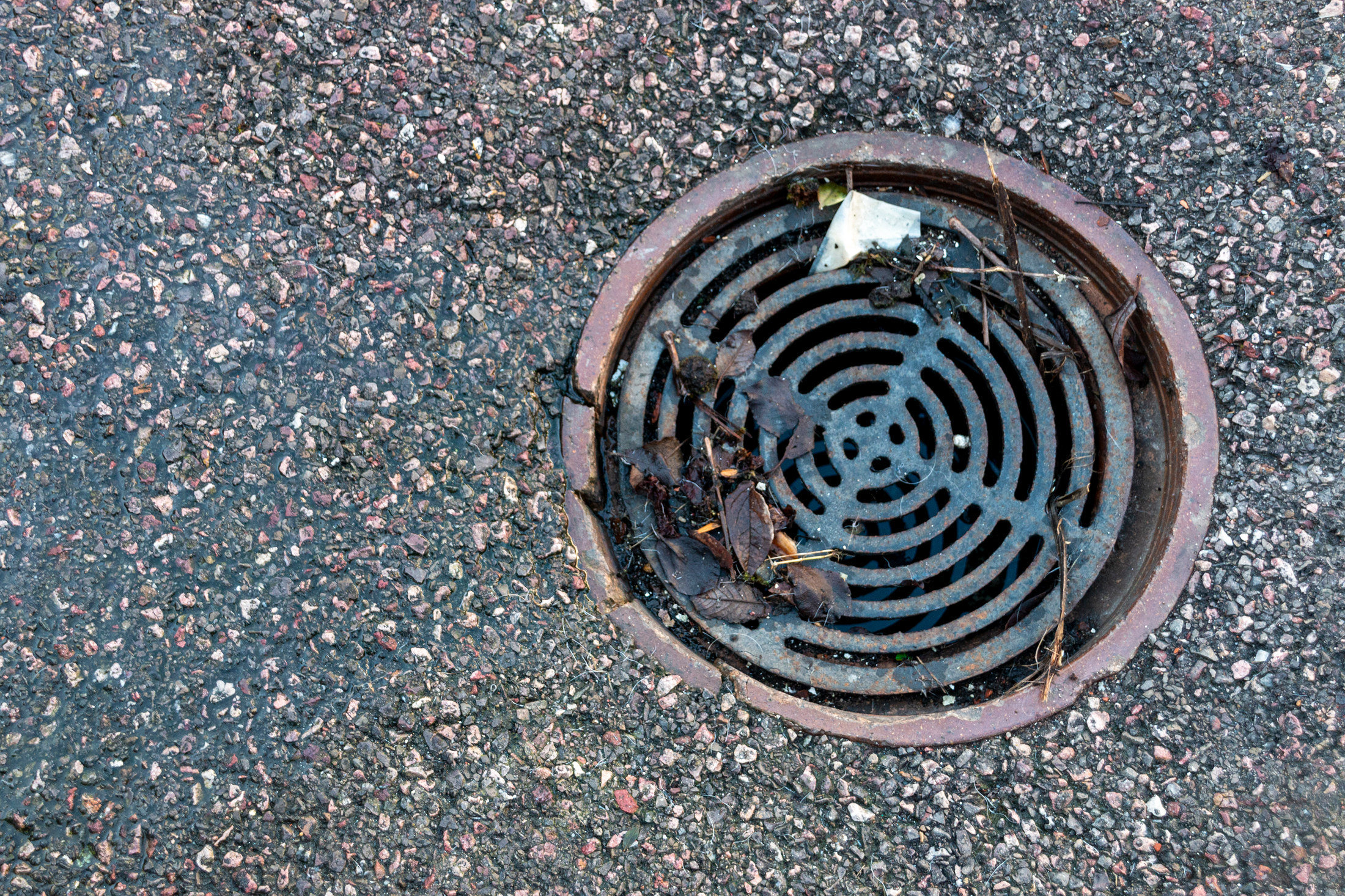
A gully grate overflowing in the yard is usually leaves, silt or fat from the kitchen. Clear the grate and the trap below it by hand, with gloves, before anything else.
Uisce Éireann's guidance is that the householder looks after internal plumbing and the private pipework up to the public sewer, and Uisce Éireann looks after the public sewer. If the chamber nearest the road is full but the next one downstream is clear, the blockage is on your side. If you are not sure, contact Uisce Éireann before you go further.
THE PART THAT DECIDES THE FINISH
Before you start — which blockage you have
Match what you see to one of these and do its prep before you start clearing.
Kitchen sink
Water stands in the sink, often greasy, and drains slowly or not at all.
- Bail out standing water into a bucket so you can see the plug hole
- Turn off and unplug a dishwasher or washing machine that drains into the same trap
- Block the overflow with a damp cloth so the plunger can build pressure
- Put a bucket under the trap in case you need to open it
Bath, shower or basin
A slow drain with hair and soap round the plug.
- Pull out the plug, or lift the click-clack, and remove any hair you can reach
- Block the overflow with a damp cloth
- For a shower tray, lift the cover off the waste to reach the trap
- Have the waste cleaner ready for the trap
Toilet
The bowl fills high after a flush and drains slowly, or not at all.
- Do not flush again; it can overflow
- Lay old towels round the pan and wear gloves
- Bail out some water if the bowl is full to the rim
- Have the flanged plunger ready
Outside gully or inspection chamber
Water standing in the yard gully, or in a chamber when you lift its cover.
- Find all the chambers on your property and lift each cover carefully, keeping fingers clear
- Work out which way the drain runs from the clear chamber to the full one
- Keep children and pets away from an open chamber
- Wear gloves and cover any cuts before you touch anything in the drain
THE JOB
How to clear the blockage
Set up and make it safe
10 minPut on gloves and, if you might splash, eye protection. Turn off any appliance that drains into the blocked pipe. Lay towels and a bucket. If anyone has already put a chemical drain cleaner in, do not plunge or open the trap until it has been flushed through with plenty of cold water.
- Cover cuts on your hands before you start
- Open a window in a small bathroom
- Keep children and pets out of the room
Mistake to avoid: Plunging a sink full of drain cleaner. The chemical splashes back into your face and eyes.
Do the prep for your case
10 minThis is the prep from the cards above. Bail out standing water, clear the plug hole, block the overflow, lift the shower waste cover, or lift the chamber covers outside to find the blockage.
- A damp cloth pressed in the overflow is enough
- Take photographs of the chambers so you can explain it later if needed
- Note which chamber is full and which is empty
Mistake to avoid: Plunging without blocking the overflow. The pressure escapes through the overflow and the blockage never moves.
Use the plunger
15 minLeave a few centimetres of water in the sink, bath or toilet so the plunger seals. Put the plunger over the outlet and push down gently first to expel air, then pump firmly up and down a dozen times without breaking the seal. Lift off and see if the water drains. Repeat several times before you move on.
- The upstroke does as much as the downstroke; it pulls the blockage back and loosens it
- For a toilet, use a flanged plunger seated right in the outlet
- A squirt of washing-up liquid helps on a greasy kitchen sink
Mistake to avoid: Giving up after three or four pushes. Plunging works by repetition; it often takes several sets to shift a blockage.
Clean the trap
20 minIf plunging fails on a sink or basin, put a bucket under the trap and undo its nuts by hand. Tip out the contents, clean the trap with a brush and look into the pipe beyond it. Hair, grease or food is often lodged right there. Refit the trap with its seals square and hand tight.
- Check the trap's seals as you refit; replace any that are flat or split
- Run water and watch the trap for drips
- Do this before reaching for a chemical
Mistake to avoid: Leaving a dirty trap and pouring chemicals onto it instead. The chemical eats some of the blockage and leaves the rest, and the sink blocks again.
Use the waste cleaner
20 minFeed the waste cleaner into the plug hole or the pipe beyond the trap, turning the handle as you push. When it meets the blockage, keep turning and push and pull to break it up or hook it. Uisce Éireann suggests a drain snake for exactly this. Pull it out slowly over the bucket and clean it.
- Feed it through the trap opening rather than the plug hole if the waste has a cross bar
- Wipe the wire as it comes out
- Run hot water after to wash the debris through
Mistake to avoid: Forcing the wire round a tight bend in a plastic trap. It punctures the trap or kinks inside it and becomes a second problem.
Rod the outside drain
40 minFrom the chamber nearest the blockage on the upstream side, screw the plunger head onto the first rod and push it into the pipe towards the blockage, adding rods as you go. Always turn the rods clockwise as you push and pull, so the joints tighten. When you meet the blockage, work it back and forth until the water starts to drop. Swap to the corkscrew head for a stubborn blockage.
- Never turn the rods anticlockwise, or they unscrew in the drain
- Keep one rod in the chamber and pull back slowly as the water goes
- Flush the drain with a hose or buckets of water afterwards
Mistake to avoid: Turning the rods anticlockwise. A rod unscrews and stays in the pipe, and you now need a professional to get it out.
Flush and test
15 minRun plenty of hot water down a sink or basin, or several buckets down an outside drain, and flush a toilet a few times. Watch that the water goes away at the normal speed and that no other fitting gurgles or backs up. Lift the chamber covers again to see that they are running clear.
- Run the sink for a full minute at full flow
- Watch the downstream chamber while a toilet is flushed
- Refit all chamber covers securely before you leave them
Mistake to avoid: Leaving a chamber cover off or loose. Someone steps into it, and the drain fills with leaves and silt.
Use a chemical only as a last resort
30 minIf a sink or basin is still slow after plunging and the trap, a chemical unblocker can clear the last of the soap and grease. Read the label, use one product only, wear gloves and eye protection, and keep the room ventilated. The maker of one common drain gel warns that it causes severe burns and that contact with acids gives off toxic gas.
- Never mix two drain products, or follow one with another
- Never use a chemical in a toilet that is full, or before you plunge
- Leave it the time on the label, then flush with plenty of cold water
Mistake to avoid: Mixing a chlorine-based product with an acid one, or with another unblocker. The gas given off can cause serious harm in a small bathroom.
Clean up
15 minWash the plunger, the waste cleaner and the rods with hot soapy water outside, and let them dry before storing. Bag gloves, cloths and anything that came out of the drain. Wash your hands and arms thoroughly.
- Store rods screwed together in a bundle so none goes missing
- Disinfect the floor round the toilet
- Wash your hands before you eat or drink
Mistake to avoid: Putting dirty rods back in the shed. Whatever was on them is on your hands the next time you pick them up.
The mistakes that show
- Reaching for a chemical before trying the plunger and the trap
- Mixing drain products, or plunging a sink full of chemical
- Turning drain rods anticlockwise
- Pouring fat and cooking oil down the kitchen sink
- Flushing wipes labelled flushable
- Leaving a chamber cover off or loose
Stop here and get a drain specialist or plumber
- Sewage is coming up into the house, or several fittings back up at once
- The blockage is in a drain shared with neighbours or beyond your boundary
- Your rods meet roots, a collapse or something they cannot move
- The house is on a septic tank or treatment system
| WHAT YOU SEE | WHY, AND THE FIX |
|---|---|
| Sink drains then blocks again in days | Grease is building up in the trap or the pipe beyond. Clean the trap and stop pouring fat down the sink; let it set and bin it. |
| Toilet clears but is slow | A wipe or object is lodged in the pan outlet. Plunge again with a flanged plunger; if it persists, a plumber can remove the pan. |
| Gurgling from the basin when the bath empties | The two share a waste and one trap is being siphoned. Clear both traps; if it continues, the venting needs a plumber. |
| Water rising in the shower when the toilet flushes | The blockage is in the drain below both. Rod from the chamber outside. |
| Rods meet something hard and will not pass | Roots, a collapsed pipe or a lodged object. Stop and call a drain specialist; forcing it can damage the pipe. |
| Chamber nearest the road is full, the next one is clear | The blockage is between the two, on your side. Rod from the full chamber towards the clear one. |
| Every chamber on your side is clear but the house backs up | The blockage may be on the public side. Contact Uisce Éireann, which clears public sewer blockages. |
| Smell after clearing | Debris is still in a trap, or a trap has lost its water. Run water into every fitting and clean the traps. |
WHAT YOU SAVE
What it costs to do it yourself
| Rubber plunger | €5.95 |
|---|---|
| Waste cleaner wire | €11.69–€13.95 |
| Polypropylene drain rods, each | €5.95 |
| Caustic drain cleaner, if needed | €15.99 |
| Total | €6–€95 |
| DIY total | €6–€95 |
Guide prices compiled by the Locufy team from published Irish and UK provider price lists and 2026/27 cost guides. Updated 2026.
A plunger clears most blockages and costs a few euro. The top of the range assumes a waste cleaner, ten rods and a bottle of drain cleaner, which together still cost less than one call-out.
RATHER NOT?
Drain unblockers near you, with prices shown
The ones who cover your area, nearest first, with one score from every review. No account needed to look.
Or post the job free and let them come to you.
Fats, oils and grease set in the pipes. Mywaste.ie advises letting small amounts set, putting them in an egg box and into the food waste bin, and taking larger quantities of cooking oil to a civic amenity site.
Wet wipes are not flushable, whatever the packet says. Mywaste.ie lists them for the general waste bin.
Do not pour unused drain chemicals away or put them in the bin. Mywaste.ie explains that household chemicals go to a civic amenity site that accepts hazardous waste or to a local authority collection.
A cheap hair catcher in each shower and basin waste stops most bathroom blockages before they start. Empty them into the bin.
Unblocking a sink, bath, toilet or outside drain: questions people ask
Bail out the water, block the overflow and plunge firmly several times. If that fails, clean the trap, then use a waste cleaner. Save chemicals for last.
Uisce Éireann's guidance is that the householder looks after the drain up to the public sewer, and Uisce Éireann looks after the public sewer itself. If you are not sure where the blockage is, contact Uisce Éireann.
Only if the label says so, and never in a toilet that is full or that you are about to plunge. A flanged plunger is safer and usually works.
Fat from the kitchen, wipes in the toilet, or hair in the bathroom wastes. Change those habits and most repeat blockages stop.
Your own inspection chamber, yes, with care: lift it with a key or spade, keep fingers clear and never leave it open unattended. Do not climb into it.
Locufy's Irish price guide puts drain unblocking at €70–€280 per job, typically €130. A blockage needing a camera survey or jetting costs more.
MORE GUIDES
More DIY guides
Sources — checked October 2026
- Mr Muscle — kitchen and bathroom drain gel safety data sheet
- HSA — leptospirosis (Weil's disease)
- HSA — guide to the manual handling of loads (General Application Regulations 2007)
- Uisce Éireann — blockages: signs, clearing and responsibility
- MyWaste.ie — fats, oils and greases
- MyWaste.ie — wet wipes
- MyWaste.ie — chemicals
- Ganly's — plumbers' tools: plunger and waste cleaner (price check)
- Ganly's — polypropylene sewer rod (price check)
- Woodie's — plumbing tools, page 2: drain wire (price check)
- Woodie's — plumbing tools, page 3: caustic drain cleaner (price check)