DIY GUIDE · CLEANING · CHECKED OCTOBER 2026
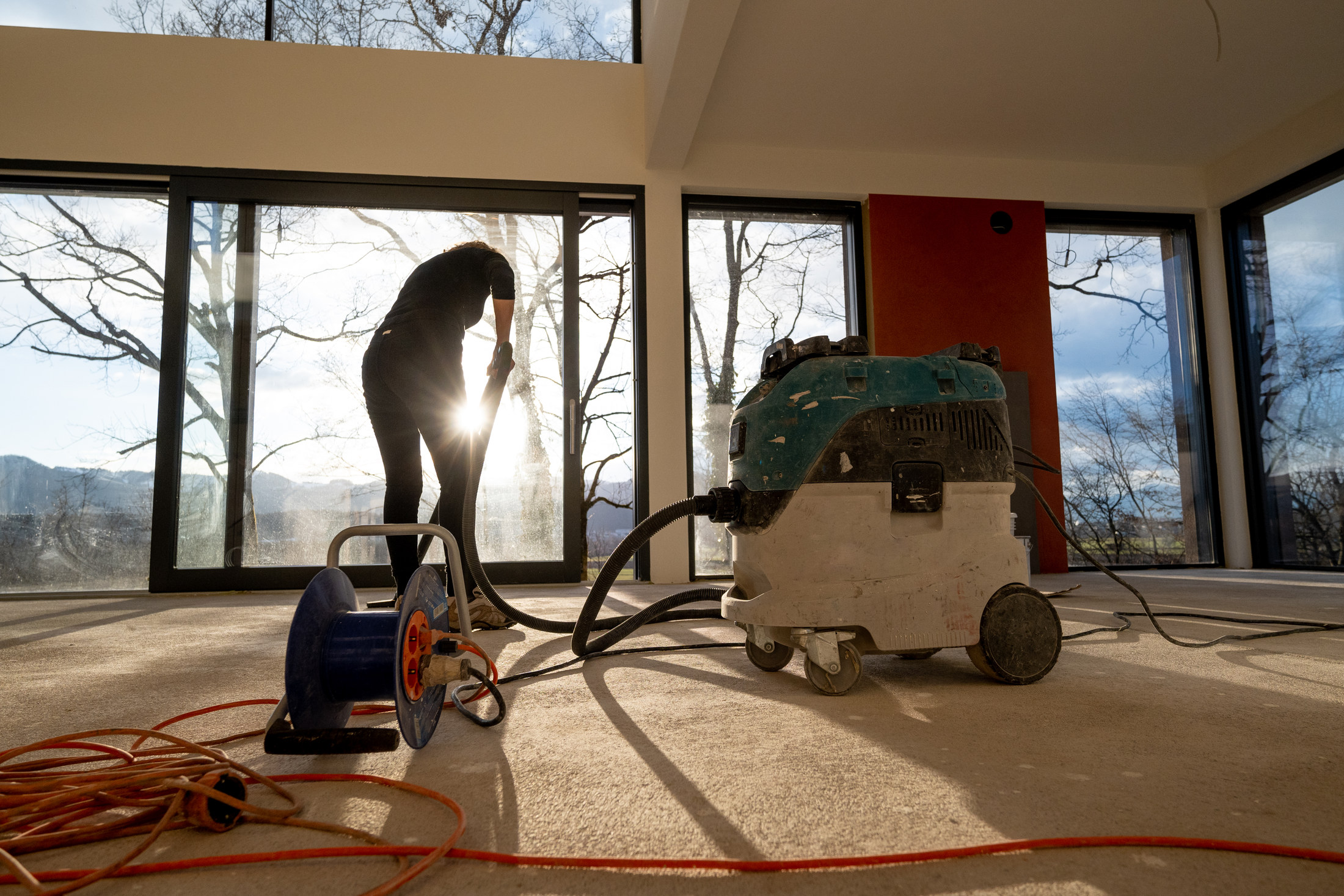
How to clean up after the builders yourself
One to two days after the trades leave. €92–€167, most of it a wet-and-dry vacuum.
Mask on, vacuum before wiping, let the dust settle, then haze, splashes and floors.
- Every step, start to finish
- Checked October 2026 — sources at the end
- Honest about when to call a pro
FIRST, THE HONEST ANSWER
Do it yourself, or get a cleaner?
Do it yourself if…
- The building work is finished and the trades have taken their tools and rubble
- The work was a refit, an extension or redecoration in a home built after asbestos stopped being used, or the asbestos question has been answered
- You can get a mask that fits, a vacuum with a fine filter, and ventilate the house
- Nobody with asthma or a lung condition will be in the house during the clean
Get a pro if…
- There is dust through the whole house, including heating vents and the attic
- The work disturbed old ceiling textures, floor tiles, pipe lagging or sheeting that could contain asbestos
- Large areas of tile have heavy, set grout haze or cement on them
- Mortar or concrete has set on glass, stone or timber
Safety first
- Silica dust from brick, concrete, tile, mortar and stone can cause silicosis and lung cancer, the HSA warns, and even small amounts can harm. Wear a well-fitting FFP3 mask or a P3 half mask and gather dust with a wet-and-dry vacuum with a high-efficiency filter.
- Do not disturb anything that might contain asbestos. If the work broke into old ceilings, floor tiles, lagging or boards, stop and get it checked before any cleaning.
- Damp down dust before cleaning, but keep water away from sockets, cables and tools.
- Acid haze removers and post-construction cleaners can burn skin and eyes: wear gloves and glasses, and keep them off metal, stone and seals unless the label allows it.
- Rubble is heavy. Fill sacks only as far as you can lift and carry with a straight back.
- Keep children and anyone with asthma out of the house until the dust is down.
| MATERIAL | COVERAGE | FOR THIS JOB |
|---|---|---|
| Cement-film or grout-haze remover | Diluted as its label says; acid-resistant tiles only | One litre for a kitchen or bathroom |
| Clean water | For damping, wiping and rinsing | Many buckets |
| Mild detergent | For the final wipe of every surface | A squeeze in a bucket |
How much haze remover for the tiles
36 m² of wall → 1.8 L for 2 coats. Buy about 2 L.
Litres ≈ tiled area in m² ÷ the coverage per litre at your dilution. One end-of-works cleaner gives 40 to 80 m² per litre on porcelain at 1:5 to 1:10. Example: a 3 × 2.5 m bathroom floor (7.5 m²) plus 12 m² of wall tiles is about 20 m², so at the cautious end, 20 ÷ 40 = half a litre of concentrate.
Natural stone and terracotta use much more per square metre, and some cannot take acid at all. Read your product's figures, not these.
The HSA explains that respirable crystalline silica is found in most rock, sand and clay and in bricks, tiles, concrete, mortar and engineered stone, and that the very fine dust from working them can cause silicosis and cancer, with even small amounts doing harm. Its guidance names respiratory protection as the last line of defence: a disposable FFP3 mask, or a reusable half or full mask with a P3 filter, marked as such and CE marked, fitted properly.
A household vacuum blows fine dust straight out through its exhaust and clogs within minutes. The HSA's construction dust advice is to gather dust with wet-and-dry vacuums fitted with a high-efficiency filter and to dampen areas before cleaning, taking care around electrics. Never sweep dry building dust with a brush — that is how it ends up in every room.
One adhesive and grout maker explains that cement grout haze is mostly calcium, which acid-based cleaners dissolve — but only on acid-resistant surfaces, and that more acid can damage the surface rather than lifting more haze. Ready-mixed and epoxy grouts need different, non-acid products. Ask the tiler which grout was used before you buy anything.
A post-construction cleaner sold for tiled floors gives a dilution of 1:5 to 1:10 depending on the dirt, applied over a few square metres at a time onto a pre-wetted surface, left a few minutes, scrubbed and then lifted with microfibre or a wet vacuum and rinsed well. It is not for polished marble or anything acid-sensitive, and should be used between 5° and 30°C. Always test a hidden tile first.
An Irish window maker's advice is to clean plaster spatters off timber while still wet with clean water and never with acid cleaners, and warns that acidic brick washes damage paint and timber. On glass it says never to use scrapers, razor blades, steel wool or any metal tool, and that dried concrete splatter cannot be removed without damaging the glass. That changes how you tackle splashes.
The same maker says to remove glass labels promptly after installation, because sun makes the adhesive very hard to remove. Peel protective film off new frames and appliances soon after the work, for the same reason.
THE PART THAT DECIDES THE FINISH
Preparing each area — by what the work left behind
Find the situations you have below and do their preparation before you start. Dust control comes first everywhere; the special jobs follow once the dust is down.
Fine dust on every surface
The grey film on floors, sills, presses and tops of doors.
- Put on an FFP3 mask and safety glasses before you open the rooms
- Open windows and close doors to the rest of the house
- Mist hard floors lightly with water to settle the dust, keeping well away from sockets
- Turn off any heating or ventilation that will blow dust around
Rubble, offcuts and packaging
What the trades did not take with them.
- Check what the contract said the builder would remove
- Use rubble sacks for broken tile, plaster and concrete; do not overfill them
- Keep plasterboard offcuts separate from rubble
- Flatten cardboard for recycling
New tiles with grout haze
A dull film, white powder, smears or swirls on fresh tiling.
- Ask the tiler what grout was used and how long it needs to cure
- Check the tile: porcelain and glazed ceramic tolerate acid; marble, limestone and travertine do not
- Test the remover on a spare tile or a hidden one
- Vacuum the floor first so you are not scrubbing grit
Windows, frames and glass
Plaster, paint, sealant and cement splashes; labels and film.
- Peel labels and protective film off straight away
- Soften plaster on frames with clean water rather than scraping
- Keep acid brick washes and haze removers off frames, seals and glass
- Note any set concrete on glass; it needs a glazier's advice
Heating, vents and extractor fans
Dust drawn in while the work went on.
- Switch radiators off and let them cool before you vacuum behind them
- Remove extractor fan covers and vacuum them outside
- Vacuum wall vents and trickle vents
- Plan to change or wash the filter of any extractor or air system
Anything that might be asbestos
Old textured ceilings, floor tiles, pipe lagging, boards or sheeting that the work broke into.
- Stop and leave it alone
- Do not vacuum, sweep or wipe the debris
- Close the room and keep everyone out
- Ask the builder or an asbestos surveyor before anything else; see the stop card
THE JOB
How to clean up after building work, in order
Check the work is finished and safe
15 minUse the surfaces section above to walk every affected room. Confirm the trades have finished, taken their tools and removed what the contract said they would. Look for anything that might be asbestos — old textured ceilings, floor tiles, lagging or boards that were cut or broken — and if you find any, stop there. Note the heating vents, extractor fans and any rooms beyond the work that got dust.
- Ask the tiler which grout went down
- Ask the painter about curing times before you wipe new paint
- Photograph splashes on glass and frames before you touch them
Mistake to avoid: Starting to vacuum debris from old ceilings or tiles that were never checked for asbestos. Disturbing it is the danger.
Protect yourself and ventilate
15 minPut on an FFP3 mask or a P3 half mask, checked for fit, and safety glasses. The HSA describes respiratory protection as the last line of defence for silica dust, after controlling the dust itself. Open windows in the work area and close internal doors to the rest of the house. Switch off fan heaters and extractor systems that will stir the dust while you work.
- Shave or accept that a beard breaks the mask seal
- Change a disposable mask when breathing through it gets harder
- Wear old clothes you can wash straight afterwards
Mistake to avoid: Cleaning in a paper dust mask or none. Fine silica dust goes straight past it.
Clear the rubble and offcuts
45 minBag broken tile, plaster, mortar and concrete in heavy-duty rubble sacks, filled only as far as you can lift safely. Keep plasterboard offcuts separate. Construction and demolition waste does not go in household bins; mywaste.ie says it goes in a skip or to a civic amenity site that accepts it. Flatten cardboard and bag plastic packaging for recycling.
- Lift with bent knees; rubble is heavier than it looks
- Leftover paint tins go aside for the civic amenity site
- Check under dust sheets for screws and blades
Mistake to avoid: Putting rubble in the wheelie bin. It is refused, it can break the bin, and it is not household waste.
Damp down, then vacuum from the top
2 hoursLightly mist hard floors to settle the dust, keeping water away from sockets and tools, as the HSA's construction advice suggests. Then vacuum with the wet-and-dry vacuum fitted with its fine filter, working top to bottom: tops of door frames and presses, light fittings when off and cool, walls, sills, skirting boards, radiators, vents and the floor last. Empty the vacuum outside, bagging the dust.
- Move slowly; fast strokes throw dust up
- Tap the filter clean outside, wearing your mask
- Vacuum inside presses and drawers, which fill with dust
Mistake to avoid: Sweeping with a brush or using a household vacuum. The dust goes back into the air and settles on everything again.
Leave it to settle, then wipe
1–2 hoursFine dust stays in the air for hours. Leave the rooms closed with windows open for a few hours or overnight, then go round again, wiping every surface with a well-wrung damp microfibre cloth and a little mild detergent. Rinse the cloth constantly and change the water as soon as it clouds. You will usually need a second wipe the next day.
- Fold the cloth so you always use a clean face
- Wipe in one direction, not in circles, so dust is lifted not spread
- Do inside presses, drawers and the tops of doors again
Mistake to avoid: Wiping straight after vacuuming. You smear a grey film over everything and the dust in the air settles on top.
Lift grout haze from new tiles
1–2 hoursOnce the grout has cured as the tiler advises, pre-wet the tiles with clean water and apply the haze remover at the dilution its label gives, over a few square metres at a time. Leave it the few minutes allowed, scrub with a pad suited to the tile, then lift it with microfibre cloths or the wet vacuum and rinse thoroughly with plenty of water. One grout maker warns that if a mild acid wash does not work, more acid can damage the surface instead.
- Test on a hidden or spare tile first
- Keep acid off natural stone, metal trims and sealant unless the label allows it
- Rinse until no film is left when the tile dries
Mistake to avoid: Using an acid haze remover on marble or limestone. It etches the surface and the dull patches are permanent.
Deal with splashes on frames and glass
1 hourPlaster and paint on frames come off best softened with clean water and a cloth, following the window maker's advice not to use acid cleaners. On glass, soak the spot with water and a few drops of washing-up liquid and wipe gently with a soft cloth; the same maker says never to use scrapers, razor blades, steel wool or metal tools on glass. Peel off labels and film now. Ask a glazier about set concrete or mortar.
- Patience beats force: soak, wait, wipe, repeat
- Keep haze removers and brick washes off frames and seals
- Dry and inspect the glass in daylight
Mistake to avoid: Scraping set plaster off glass with a blade. It scratches the glass, and the window maker will not cover scratches from cleaning.
Vents, heating and fans
45 minWith the heating off and cool, vacuum behind and between radiator fins. Remove extractor fan covers, vacuum and wash them, and dry them before refitting. Vacuum wall and trickle vents. If you have a cooker hood, wash its metal grease filters; carbon filters are replaced rather than washed. Then run the heating and the fans for a while with windows open to clear what is left.
- Switch fans off at the isolator before removing covers
- Do this before the final wipe, not after
- Change the filter on any ventilation system as its manual says
Mistake to avoid: Turning the heating on while the radiators are full of dust. It bakes and smells, and blows the dust round the room.
Final wipe and floors
1.5 hoursThe next day, wipe every surface once more with a damp cloth, then clean the floors by type: vacuum carpets slowly in two directions; mop tiles and vinyl with a mild cleaner and a well wrung-out mop; mop laminate and wood barely damp. Wash your work clothes on their own and the cloths separately. Bag the used vacuum filter or bag and the masks for the general waste.
- Expect more dust on day two; it is normal
- Leave new paint alone until its curing time has passed
- Check the tops of doors and frames one last time
Mistake to avoid: Mopping laminate with a wet mop to shift the last dust. Water in the joints swells the board edges.
The mistakes that keep the dust coming back
- Sweeping or dry dusting instead of vacuuming with a fine filter
- Using a household vacuum on building dust
- Wiping before the dust has settled
- Acid haze removers on natural stone, frames or seals
- Scrapers or blades on glass
Stop here and get an after builders cleaning service
- The work disturbed material that could be asbestos — get it checked first
- Dust has spread through the whole house, into the attic and heating system
- Set cement or mortar is on glass, stone or timber
- Heavy grout haze covers large areas of natural stone
| WHAT YOU SEE | WHY, AND THE FIX |
|---|---|
| Dust keeps reappearing for days | Fine dust is still settling out of the air, carpets and vents. Ventilate, vacuum with a fine filter, then damp-wipe again; two or three rounds is normal. |
| A white film on new tiles after cleaning | Grout haze that was not fully removed, or residue from the cleaner. Re-apply the haze remover as its label says on acid-resistant tiles, scrub and rinse until no film dries. |
| Dull, etched patches on stone tiles | An acid cleaner attacked the calcium in the stone. It needs a stone specialist; use only stone-safe products from now on. |
| Fine scratches on new glass | Grit was dragged across it or a blade was used. They will not polish out; soak and wipe gently from now on. |
| The household vacuum has lost suction | Building dust clogged the filter and may have damaged the motor. Clean or replace the filter; use a wet-and-dry vacuum for the rest. |
| Plaster marks on a timber sill | Dried plaster on timber is hard to lift without damaging the finish. Soften with clean water and a cloth; touch up the coating if it lifts. |
| Radiators smell burnt when switched on | Dust inside the fins is cooking. Switch off, let them cool, vacuum between the fins and wipe the tops. |
| Sticky residue where labels were | Adhesive left too long in the sun. Soften with warm soapy water and a cloth, and test a sticker remover on a hidden spot first. |
WHAT YOU SAVE
What it costs to do it yourself
| FFP3 masks, pack of two | €9 |
|---|---|
| Wet-and-dry vacuum | €60–€133 |
| Cement-film and grout-haze remover, 1 litre | €13.95 |
| Rubble sacks, pack of five | €4 |
| Microfibre cloths, two packs of four | €2.98 |
| Safety glasses | €2.25–€4 |
| Total | €92–€167 |
| DIY total | €92–€167 |
Guide prices compiled by the Locufy team from published Irish and UK provider price lists and 2026/27 cost guides. Updated 2026.
The vacuum is most of the cost and is worth owning if you do your own DIY; borrow one and the rest comes to well under €35. Ask the builder whether cleaning is in the contract before you start.
RATHER NOT?
After-builders cleaners near you, with prices shown
The ones who cover your area, nearest first, with one score from every review. No account needed to look.
Or post the job free and let them come to you.
Leave new paint, sealant and grout alone for the time the trade or the product label gives before washing them.
Rubble and construction waste go in a skip or to a civic amenity site that accepts it, not household bins; plasterboard goes to a civic amenity site that takes it; leftover paint is brought to a site that accepts paint, and solvent paint and white spirit only as hazardous waste — mywaste.ie lists them all.
Empty the vacuum outside wearing a mask, wash or replace its filter, and wash cloths and work clothes on their own.
Ask the trades to use on-tool dust extraction and to seal doorways with sheeting; the HSA promotes on-tool extraction for cutting and drilling.
Cleaning up after building work: questions people ask
It can be. The HSA warns that silica dust from brick, concrete, tiles, mortar and stone can cause silicosis and cancer, and even small amounts can harm. Wear an FFP3 mask and use a wet-and-dry vacuum with a high-efficiency filter.
Not for the fine dust. It passes through or clogs a household vacuum's filter and can damage the motor; use a wet-and-dry vacuum with a fine filter.
With a remover matched to the grout. Cement haze comes off with an acid-based cleaner on acid-resistant tiles, applied as its label says, scrubbed and rinsed. Ready-mixed and epoxy grouts need different products.
Soften it with clean water and a cloth. An Irish window maker says never to use scrapers, razor blades or steel wool on glass, and not to use acid cleaners on frames.
The Locufy price guide puts a professional after-builders clean at €200–€650 per visit, typically €400. Whole-house dust and heavy haze cost more.
Hours, and it keeps coming out of carpets and vents for days. Plan on a vacuum and damp wipe, a gap of several hours or overnight, and a second round the next day.
MORE GUIDES
More DIY guides
Sources — checked October 2026
- HSA — silica dust: employee information sheet, masks and dust control
- HSA — Safety in Contract Cleaning: asbestos and chemicals
- Mapei — technical bulletin: removing grout haze
- Fila — post-construction acid cleaner technical data sheet
- Munster Joinery — care and maintenance: plaster, acid washes and glass
- MyWaste.ie — construction and demolition waste
- MyWaste.ie — plasterboard
- MyWaste.ie — paint
- B&Q Ireland — price check: FFP3 dust masks, October 2026
- B&Q Ireland — price check: wet and dry vacuums, October 2026
- B&Q Ireland — price check: grout and cement film removers, October 2026
- B&Q Ireland — price check: rubble sacks, October 2026
- B&Q Ireland — price check: safety glasses, October 2026
- Mr Price — price check: microfibre cloths, October 2026