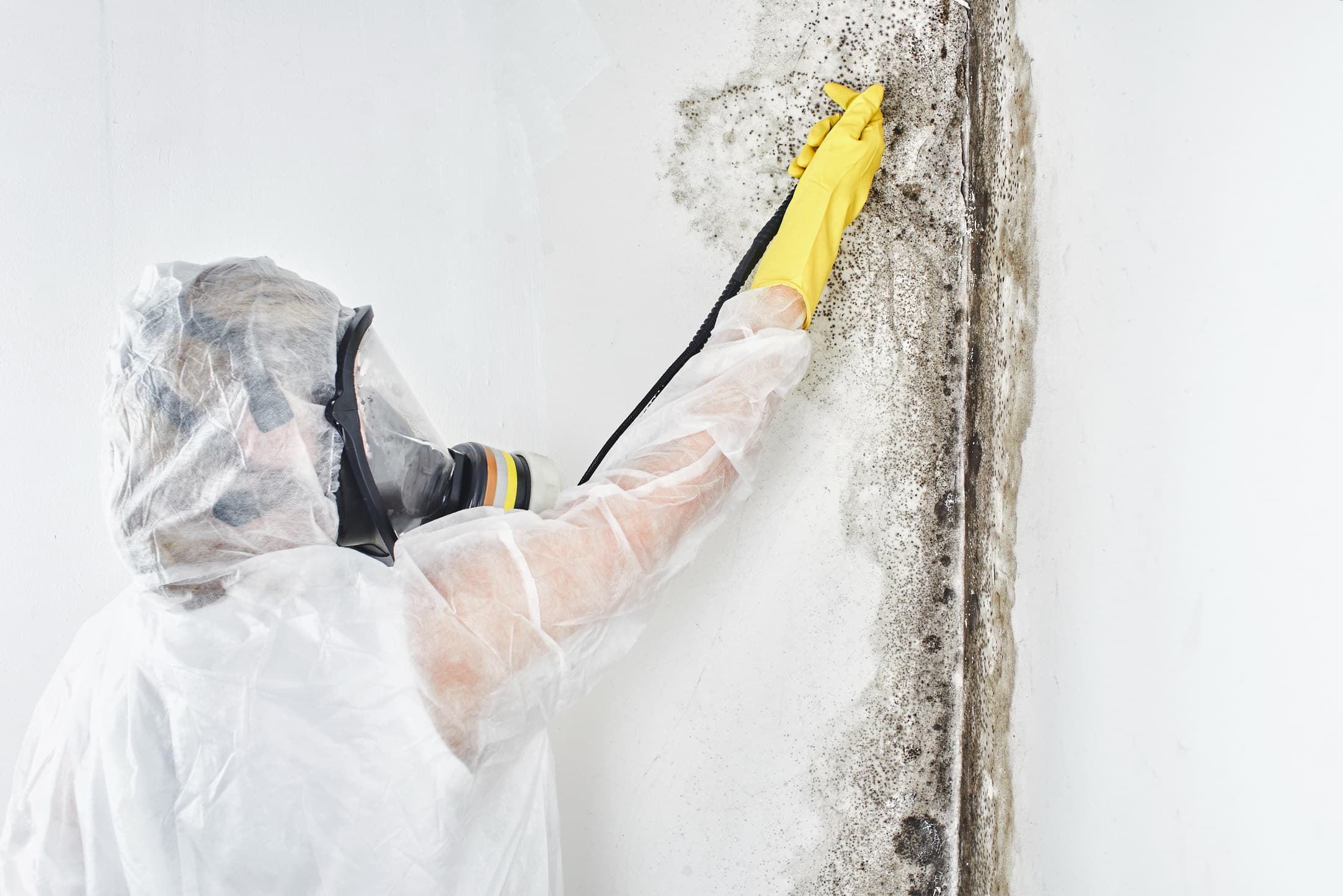
HOW TO HIRE · CLEANING · CHECKED OCTOBER 2026
How to hire a mould removal specialist in the UK
The checks, the questions and the paperwork.
No register applies to mould removal. Find the cause, treat it properly, and if you rent, report it to your landlord first.
- Search and compare — no account needed
- Nearest to you first
- One score from Google, Trustpilot and Locufy reviews
THE 60-SECOND VERSION
Hiring a mould removal specialist in five steps
- Renting? Tell the landlordIn writing, straight away.
- Find the causeCondensation, penetrating or rising damp.
- No dry brushingIt spreads spores.
- Fungicidal treatmentAsk what product is used.
- Fix the cause tooVentilation, heating or repairs.
BEFORE YOU BOOK
Check before you book
No register applies
Nothing licenses mould removal specialists in England, Wales, Scotland or Northern Ireland, so mould treatment can be offered by anyone; trader status, insurance and references carry the weight.
Ask for a business name, an invoice for the mould treatment and the name of the insurer.
If you rent: your landlord's duty
gov.uk tells tenants to contact the landlord straight away about repairs or mould, and says the council's environmental health department must act if problems could harm you; in Scotland the Private Rented Housing Panel handles unresolved repairs.
If you rent, report the mould to your landlord in writing before paying for mould treatment yourself. gov.uk →
Cleaning chemicals and COSHH
HSE applies the COSHH rules to self-employed people carrying hazardous products onto someone else's premises. For mould treatment, that means knowing what each degreaser, descaler or biocide is and how to use it safely.
Ask which products the mould treatment uses, and whether they are safe on your surfaces. hse.gov.uk →
Public liability insurance
Nothing obliges a cleaner to be insured, but public liability cover is the difference between a claim paid and a dispute if mould treatment goes wrong. The Consumer Rights Act 2015 entitles you to mould treatment done with reasonable care and skill.
Before the mould treatment, ask the specialist for the insurer and the cover level.
VAT
Mould removal is standard-rated, so VAT on it is 20%. A mould removal business over the £90,000 turnover threshold must be registered, charge the 20% on the treatment and any plaster or timber repairs, and show it separately.
Ask for the mould removal specialist's VAT number and check the 20% is a separate line under the treatment price. gov.uk →
A good answer: A diagnosis before any mould treatment.
A good answer: Named, safe for the surface.
A good answer: Where mould has got into it, priced.
A good answer: Advice on ventilation, heating or repairs.
A good answer: Priced separately or included.
A good answer: Public liability, insurer named.
Getting the quote right
- Areas treated
- Cause identified
- Products named
- Plaster or timber repairs priced
- Who actually attends to treat the mould and any repairs, and whether they are employed or subcontracted
- The VAT number, with VAT at 20% set out apart from the treatment and repair prices
Walk away if
- Paints over mould without treating it
- No view on the cause
- Dry-brushes mould
- Sells damp-proofing without a survey
What a mould removal specialist costs: £300–£2,200 per job
Mould removal is priced per job by the area and the cause; repairs and damp-proofing are separate. Mould Cleaning price guide →
Guide prices compiled by the Locufy team from published Irish and UK provider price lists and 2026/27 cost guides. Updated 2026.
KNOW WHAT TO LOOK FOR? NOW FIND ONE
Mould removal specialists near you, with the badges that matter shown
ID checked, trader status and one score from every review — on the card, before you message anyone. Nearest first. No account needed to look.
Or post the job free and let them come to you.
- AssessMould and damp cause checked.
- ProtectRoom and contents protected.
- TreatFungicidal wash applied.
- RepairDamaged plaster dealt with.
- AdviseVentilation and repairs explained.
- Condensation
- Moist air turning to water on cold surfaces.
- Penetrating damp
- Water coming through walls or roofs.
- Rising damp
- Ground moisture rising up walls.
- Fungicidal wash
- A treatment that kills mould.
- Environmental health
- The council team that deals with unsafe rented homes.
- Damp survey
- An inspection to find the cause of damp.
AFTER
When the job is done
Hiring a mould removal specialist: questions people ask
No. No licence or register applies.
gov.uk tells tenants to contact the landlord about repairs or mould straight away; the council can act if problems could harm you.
A fungicidal wash is better; never dry-brush mould.
£300–£2,200 per job, about £700 on average. The detail sits in the mould cleaning price guide, and the search above lists specialists working near your town.
Unless the cause is fixed, usually yes.
Half a day for a single room, two or more days for a whole property.
MORE GUIDES
More hiring guides in cleaning
Mould removal specialists near you
Sources — checked October 2026
- gov.uk — private renting: repairs and mould
- HSE — does COSHH apply to the self-employed?
- HSE — safe use of cleaning substances (CAIS22)
- Consumer Rights Act 2015, section 49 — reasonable care and skill
- Citizens Advice — more help with a consumer issue (England)
- VAT rates — VAT rates for goods and services: standard rate 20% on most goods and services
- GOV.UK — Register for VAT: when to register