DIY GUIDE · CLEANING · CHECKED OCTOBER 2026
How to remove small patches of mould yourself
An hour or two per room. £10–£30 in spray, gloves, goggles and a mask.
Protection, the right spray, the method by surface — and when mould means a problem in the building.
- Every step, start to finish
- Checked October 2026 — sources at the end
- Honest about when to call a pro
FIRST, THE HONEST ANSWER
Do it yourself, or get a cleaner?
Do it yourself if…
- The mould is in small, separate patches on hard surfaces — tile grout, sealant, window reveals, a ceiling corner
- You can see an obvious everyday cause: steam from a shower or kettle, laundry drying indoors, a cold corner behind furniture
- No one in the home has asthma, a lung condition or a weakened immune system who would be in the room while you work
- The surface underneath is sound: plaster that is hard, paint that is attached, sealant that is still bonded
Get a pro if…
- The mould covers a large area, or comes back within weeks of a thorough clean
- There is a tide mark, a damp patch that is wet to the touch, bubbling plaster or a musty smell with no visible cause
- Mould is behind wallpaper, panelling or under a carpet, where removing the material will release a lot of spores
- You rent the home — tell your landlord in writing, because finding and fixing the cause is their job
Safety first
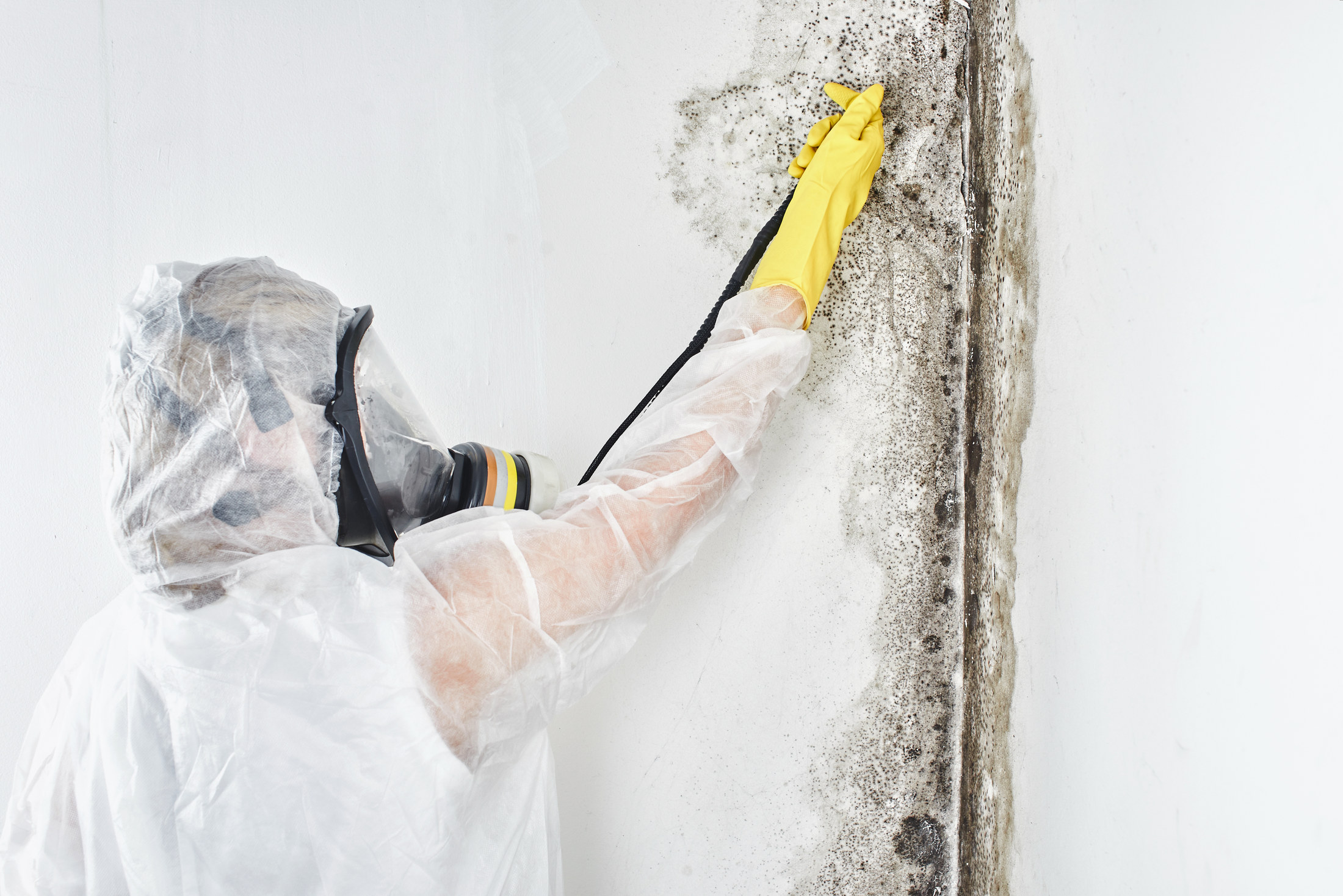
- Wear gloves, goggles and a mask while you work; government guidance on damp and mould recommends all three regardless of the size of the patch.
- Shut the door to the rest of the house and open the window, during the clean and afterwards, so spores do not spread and fumes clear.
- Never mix cleaning products. Bleach-based mould sprays release harmful gas with acid cleaners such as limescale removers, or with ammonia.
- Spray away from your face, keep the bottle upright and do not spray overhead without goggles on.
- Keep children, pets and anyone with asthma or a weakened immune system out of the room until it has been cleaned and aired.
- Do not scrub or brush mould dry; it puts spores into the air you are breathing.
Stop here: Large areas, hidden mould and the cause in the building
Government guidance on damp and mould says tenants can reasonably deal with condensation and very small amounts of mould, but larger areas should only be tackled by qualified professionals, and that disturbing mould behind wallpaper, panelling or carpet can release a large amount of spores. Mould can cause or worsen asthma and other airway conditions, and people with weakened immune systems are at greater risk. The guidance is England's; in England it says identifying and tackling the cause is the landlord's responsibility in rented homes, and Wales, Scotland and Northern Ireland each set their own housing standards. If you rent, report it to your landlord in writing. If you own the home, a leak, failed damp-proof course or ventilation fault needs a surveyor or a damp specialist, not more spray. How to hire a mould removal specialist →
| MATERIAL | COVERAGE | FOR THIS JOB |
|---|---|---|
| Mould and mildew spray | Bleach-based for tiles; follow the label's distance and time | One bottle for most bathrooms |
| Non-bleach mould killer for walls | One maker gives up to 15 m² per litre | Use the calculator below |
| Anti-mould emulsion (optional) | For repainting a treated wall | Only once the wall is dry |
How much mould killer for a wall
36 m² of wall → 4.8 L for 2 coats. Buy about 5 L.
Litres = area of the patch and a margin round it, in m², ÷ the coverage on the bottle. A patch of 1.5 m × 1 m in a bedroom corner, plus a margin to 2 m × 1.5 m, is 3 m²; at 15 m² per litre that is 3 ÷ 15 = 0.2 litres, well within one standard bottle.
If the area you need to treat is larger than a few square metres, read the stop section first — government guidance leaves larger areas to professionals.
Government guidance on damp and mould prefers purpose-made mould and mildew products to bleach, on safety grounds. They are formulated to kill the growth and lift the stain at a known dilution, and their labels give a contact time. Neat household bleach is harsher on surfaces, bleaches fabrics and grout unevenly, and is the product most likely to be mixed accidentally with something else.
Many supermarket mould sprays are chlorine-based and act in minutes — one gives a maximum of 5 minutes before you wipe off and rinse. Pre-decorating mould killers are often non-bleach biocides that you spray and leave to dry before painting; one maker's data sheet gives coverage of up to 15 m² per litre. Choose bleach-based sprays for tiles and sealant, and a biocide for painted walls you are about to redecorate.
Labels differ a lot. One bleach spray asks for a test patch for 3 minutes and a spraying distance of 20–25 cm. Following the stated contact time matters: too short and the roots survive, too long and a bleach spray can mark coloured grout, sealant or paint.
Household rubber or nitrile gloves, close-fitting goggles rather than glasses, and a disposable particle mask. An FFP3 disposable mask filters far more than a basic dust mask and costs little more. Wash or bin everything afterwards.
Once a wall is clean and dry, an anti-mould paint resists regrowth for longer than ordinary emulsion in a steamy room. Sealant that is black inside, not just on the surface, will not come clean — the mould is in the silicone, and the fix is to cut it out and reseal.
THE PART THAT DECIDES THE FINISH
Preparing the surface — by where the mould is
Each surface takes the product differently. Before you start anywhere, photograph the patch and, if you can, draw round it lightly in pencil, as the government guidance suggests, so you can see whether it returns.
Tile grout and tiles
Showers, splashbacks, bath surrounds.
- Run the extractor and open the window; dry the tiles with a towel first so the spray is not diluted
- Test the spray on a hidden piece of coloured grout for the time the label gives
- Spray the grout lines only, from the distance on the label, and leave for the stated time
- Have a bucket of clean water and a cloth ready for the rinse
Silicone sealant round a bath, shower or sink
The commonest black mould.
- Press the bead with a fingernail; if it is loose, cracked or peeling, it needs replacing, not cleaning
- Dry the joint thoroughly
- Lay a strip of kitchen roll over the bead and wet it with the spray, so the product stays in contact
- Accept that stains deep inside the silicone will not lift; that bead is due for renewal
Painted walls and ceilings
Corners, behind wardrobes, above windows.
- Pull furniture a hand's width away from the wall to give yourself room and air
- Lay a dust sheet or old towel below the patch
- Check the paint is firmly attached; flaking paint over mould comes off with it
- Use a non-bleach mould killer on coloured paint, or test a bleach spray on a hidden area first
Window frames, reveals and sills
Condensation every winter morning.
- Wipe the condensation off the glass and frame first with an absorbent cloth
- Check the frame's trickle vents and open them
- Treat the black spots on the seals and the frame with a spray safe for uPVC
- Note whether the plaster in the reveal is soft or damp — that is a different problem
Fabrics, curtains and soft furnishings
Usually from a damp, cold wall behind.
- Take mouldy fabric outside before you brush or move it much
- Check the care label: washable items can go on the hottest wash the label allows
- Do not spray bleach-based products on fabric
- Throw away anything that stays stained or smells after washing, as absorbent materials may not clean
Wallpaper, plasterboard or wall panelling
Mould that seems to come from behind.
- Do not peel the paper or panel off to look — removing them can release a lot of spores
- Look for a tide mark, bubbling or softness, and feel whether the wall is cold and wet
- Photograph it and stop here
- This needs the cause found first, and the removal done by someone equipped for it
THE JOB
How to remove mould, in order
Record it and find the likely cause
15 minPhotograph the patch and draw round it lightly in pencil. Then look for the reason it is there. Is it where steam goes — above a shower, beside a kettle — or on a cold outside wall behind furniture? Is there a drip, a tide mark, a soft patch of plaster or a gutter overflowing outside? If the cause looks like water getting in rather than condensation, stop and go to the section on when to call someone.
- Feel the wall: cold and dry is condensation; cold and wet to the touch is often a leak
- Check outside the same wall for an overflowing gutter or a broken downpipe
- Note how quickly the patch came back last time
Mistake to avoid: Treating every patch as condensation. Mould from a leak returns however well you clean it.
Protect yourself and the room
10 minPut on gloves, goggles and the mask. Close the door to the rest of the house and open the window. Move what you can out of the way, and lay a dust sheet or old towel under walls and ceilings. Keep children and pets out.
- Door shut, window open, both for the whole job and afterwards
- Turn on the extractor fan if there is one
- Put the bin bag in the room before you start, so nothing mouldy is carried through the house
Mistake to avoid: Leaving the door open to let air through. It sends spores and fumes into the rest of the house.
Test the product
5 minRead the label and spray a small hidden area — coloured grout, a painted skirting, the inside edge of a sealant bead — for the time the label gives. One bleach spray asks for a 3 minute test. Rinse and look at it in good light for colour change, softening or marking.
- Test on the same material you are treating
- A non-bleach mould killer is the safer choice for coloured paint and fabric-backed surfaces
- If the test marks, do not use that product there
Mistake to avoid: Skipping the test on coloured grout or sealant. Bleach lightens some colours unevenly and the patch shows.
Wipe off loose growth damp, not dry
10 minOn tiles and gloss paint, wipe the worst of the growth off with a damp disposable cloth, folding it to a clean face each time. On grout, use a wet soft brush. Never brush or rub mould when it is dry, which releases spores into the air. Bag the cloth.
- Damp cloth, single pass, fold and turn
- On matt paint, skip the wipe and go straight to the spray
- Bag each cloth as you finish with it
Mistake to avoid: Dry-brushing a black patch to see how bad it is. The spores you raise end up in your lungs and on other walls.
Apply the spray and leave it for the stated time
10 minSpray from the distance the label gives — one specifies 20–25 cm — keeping the bottle upright and the nozzle pointing away from your face. Cover the patch and a margin round it. On sealant and vertical joints, lay kitchen roll over the bead and spray that, so the product stays in contact. Leave it for the time on the label and no longer; one bleach spray gives 5 minutes maximum.
- Set a timer on your phone
- Do not spray ceilings without goggles
- Leave the room while it works if the fumes are strong
Mistake to avoid: Leaving a bleach spray on overnight for a better result. It marks grout and sealant and does not reach roots any faster.
Wipe and rinse
15 minWipe the treated area with a cloth wrung out in clean water, then rinse again with a fresh cloth, so no product is left on the surface. Bag each cloth. On a non-bleach biocide for walls, follow its label — some are sprayed and left to dry with no rinse.
- Rinse twice; residue attracts dirt and can mark paint
- Change the rinse water once it looks cloudy
- Dry tiles and frames with a towel afterwards
Mistake to avoid: Following the mould spray with a limescale remover on the same tiles straight away. Bleach and acid together give off a harmful gas.
Deal with what will not clean
15 minLook at the area in good light. Grout that is still dark may be stained rather than mouldy, and a second application after drying often lifts it. Sealant that stays black inside is due for replacement: cut it out and reseal once the joint is completely dry. Soft furnishings and cardboard that are mouldy and do not wash clean should be bagged and thrown away.
- Wait a day before a second application
- Reseal only onto a clean, bone-dry joint, or the new bead goes mouldy too
- Bag mouldy fabrics outside the house
Mistake to avoid: Sealing new silicone over old mould. The mould grows straight through the new bead.
Let it dry completely
OvernightLeave the window open and the door shut, with the heating on low if it is cold, until the surface is completely dry. Do not hang towels or drying laundry in the room. If you are going to repaint, allow the mould killer to dry fully before decorating, as the maker's data sheet says.
- Run the extractor fan on overrun
- Pull furniture away from outside walls for air
- Check the next morning for any damp coming back
Mistake to avoid: Painting straight over a damp treated wall. The paint traps moisture and the mould comes back under it.
Bag, clean up and wash
15 minTie the bag with the cloths, kitchen roll and mask in it and take it straight outside to the bin. Rinse the gloves before taking them off, then wash your hands. Wash any clothing you wore, and wash or throw away the goggles' strap if it is fabric.
- Remove the mask last, outside the room
- Put the spray back in its own storage place, upright
- Clean the bucket with plain water
Mistake to avoid: Carrying the used cloths through the house to the kitchen bin. You spread spores on the way.
Change the habits that grow it
OngoingMould returns where the moisture returns. Run extractor fans when cooking and showering and keep them running for a while after. Open trickle vents. Dry laundry outside or in a vented dryer where you can. Keep furniture slightly away from cold outside walls. Wipe window condensation off each morning. Check the pencil line in a month.
- Lids on pans and the bathroom door shut while showering
- A little steady heat beats bursts of high heat in cold rooms
- If it is back inside the line within weeks, the cause is bigger than habits
Mistake to avoid: Treating cleaning as the fix. The government guidance is clear that removing surface mould will not stop it reappearing if the cause stays.
The mistakes that make mould worse
- Mixing a bleach mould spray with an acid limescale remover or ammonia cleaner
- Dry-brushing mould, which spreads spores through the house
- Painting or sealing over mould, or over a surface that is still damp
- Cleaning the same patch every month without finding why it is wet
Stop here and get a damp and mould specialist
- The mould covers more than a few small patches, or returns within weeks of a thorough clean
- There is a tide mark, wet plaster, bubbling paint, a leak, rising or penetrating damp, or a musty smell with no visible mould
- Mould is behind wallpaper, panelling, plasterboard or under flooring
- Someone in the home has asthma, a lung condition or a weakened immune system
| WHAT YOU SEE | WHY, AND THE FIX |
|---|---|
| Black mould came back in the same place within weeks | The moisture is still there. Check ventilation and look for a leak or cold spot; if habits are already good, the cause is in the building and needs investigating. |
| The grout went patchy or lighter after spraying | A bleach-based spray on coloured grout. Rinse well; a grout colour restorer or regrouting evens it out. Use a non-bleach product next time. |
| Black marks are still inside the silicone | The mould has grown into the sealant. Cut the bead out, clean and dry the joint, treat it, and reseal once fully dry. |
| There was a strong chlorine smell and coughing | A bleach spray in a closed room, or two products mixed. Leave the room, open windows and get fresh air. If symptoms persist, seek medical advice. |
| Paint peeled when the mould was wiped | The paint had lost its bond because the wall was damp. Let it dry, scrape back to sound paint, treat, and redecorate with anti-mould paint. |
| A musty smell but no visible mould | Mould may be behind furniture, under flooring or inside a wall. Look behind wardrobes and under rugs; if you still cannot find it, have the home checked. |
| White fluffy growth on a wall or wood | This can be efflorescence salts on masonry or a fungal growth on timber. Salts brush off when dry; fungal growth on timber can signal rot and needs a specialist. |
| Mould on clothes inside a wardrobe | A cold outside wall behind it and little air movement. Wash the clothes, clean the wardrobe, pull it away from the wall and leave the doors slightly open. |
WHAT YOU SAVE
What it costs to do it yourself
| Mould and mildew spray | £2.50–£4.50 |
|---|---|
| Pre-decorating mould killer (optional) | £9.25–£13 |
| Gloves | £2.85–£6 |
| Goggles | £2.30–£7.99 |
| Disposable FFP3 masks | £7–£10 |
| Total | £10–£30 |
| DIY total | £10–£30 |
Guide prices compiled by the Locufy team from published Irish and UK provider price lists and 2026/27 cost guides. Updated 2026.
The kit is cheap; the expensive part of mould is what causes it. If a specialist survey finds a leak or a ventilation fault, fixing that is the money well spent.
RATHER NOT?
Mould removal specialists near you, with prices shown
The ones who cover your area, nearest first, with one score from every review. No account needed to look.
Or post the job free and let them come to you.
Check the patch in a week and a month. Inside the line and fading is condensation under control; back over the line is a cause to investigate.
Bag cloths, kitchen roll, masks and anything mouldy, tie the bag and put it in the general waste bin outside. Empty spray bottles go in the council recycling collection; unwanted or part-used cleaning products go to the household waste recycling centre's hazardous waste container, not down the drain.
Extractors on when cooking and showering, trickle vents open, laundry outside where possible, furniture slightly away from outside walls.
Wait until the wall is dry to the touch and has been for several days before using anti-mould paint, and treat any new spots before painting.
Removing small patches of surface mould: questions people ask
Protect yourself with gloves, goggles and a mask, open the window and shut the door, then use a mould and mildew spray as the label says — government guidance prefers these to bleach. Rinse, dry, and deal with the moisture that caused it.
A purpose-made mould and mildew product is the better choice; government guidance favours them over bleach on safety grounds. Never mix bleach with acid limescale cleaners or ammonia.
It can cause or worsen breathing problems such as asthma and rhinitis, and people with weakened immune systems are at greater risk. Small patches can be cleaned safely with protection; larger areas need a professional.
Because the surface keeps getting wet. Condensation from cooking, washing and drying laundry is the usual cause; a leak, blocked gutter or failed damp-proofing is the cause when habits make no difference.
The Locufy UK price guide puts professional mould removal at £300–£2,200 per job, typically £700. The top end usually includes finding and fixing the cause, not just cleaning.
You can deal with condensation and very small patches. Tell your landlord in writing as well, because the cause — ventilation, heating, leaks or building faults — is theirs to fix, and a written record matters if it continues.
MORE GUIDES
More DIY guides
Sources — checked October 2026
- GOV.UK — damp and mould: understanding and addressing the health risks (removing mould, protective equipment)
- Zinsser — Mould Killer & Remover technical data sheet: up to 15 m² per litre
- HSE — safe use of cleaning substances (CAIS22): bleach mixed with acid or ammonia gives off harmful gases
- Tesco — mould and mildew remover spray: directions, test time, distance and contact time
- Sainsbury's — price check: mould removers, October 2026
- B&Q — price check: interior mould removers, October 2026
- B&Q — price check: rubber gloves, October 2026
- B&Q — price check: safety goggles, October 2026
- B&Q — price check: FFP3 masks, October 2026
- West Sussex County Council — how to dispose of cleaning products