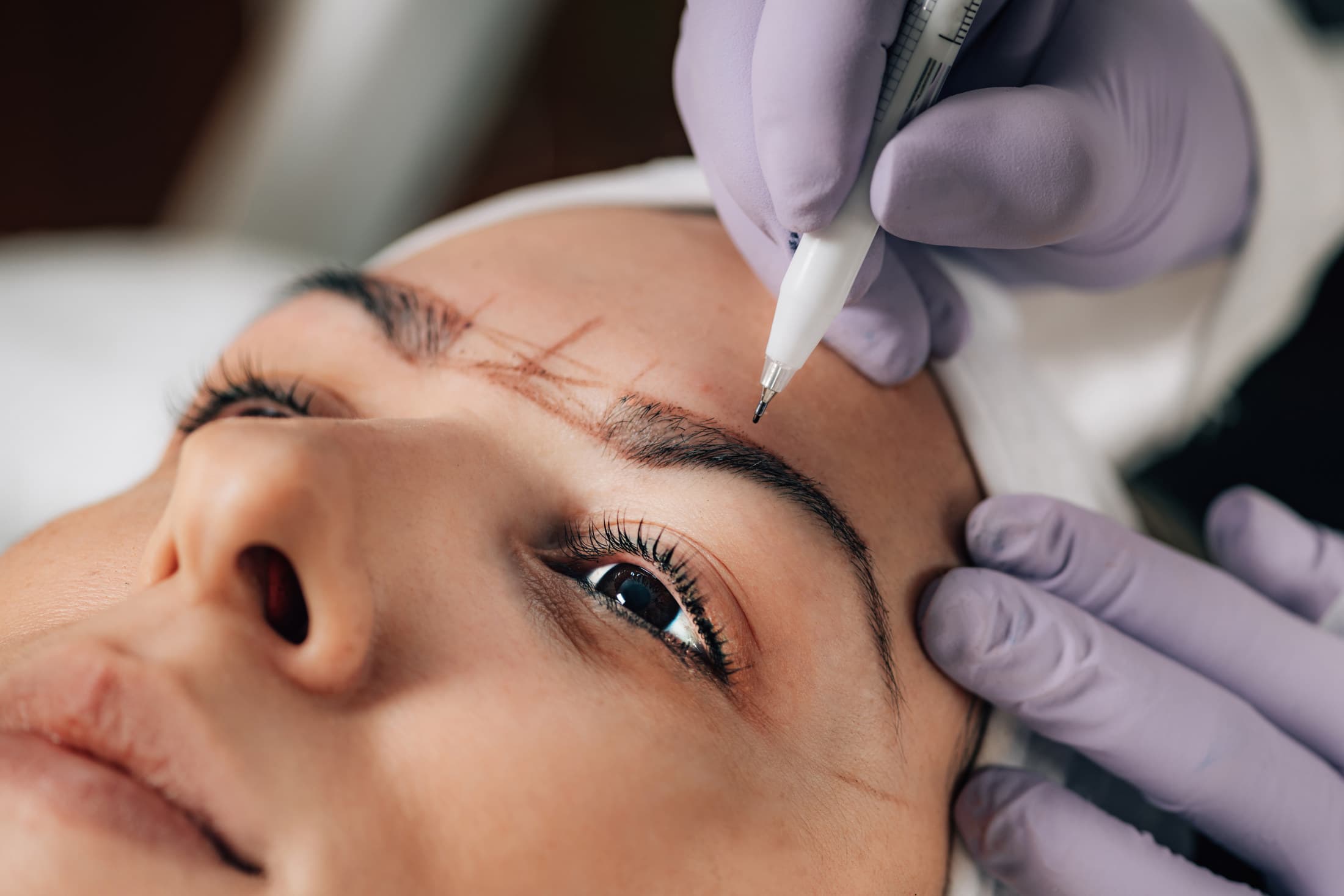
HOW TO HIRE · BEAUTY & GROOMING · CHECKED OCTOBER 2026
How to hire a cosmetic tattoo artist in the UK
The checks, the questions and the paperwork.
Cosmetic tattooing is licensed by the council in every UK nation. Here is how to check the studio, what to ask, and what to do if it goes wrong.
- Search and compare — no account needed
- Nearest to you first
- One score from Google, Trustpilot and Locufy reviews
THE 60-SECOND VERSION
Hiring a cosmetic tattoo artist in five steps
- Find the licenceCouncil registration or licence on the wall; in Wales, the artist's own licence.
- Patch test the pigmentThe actual pigment that will be used, ahead of the day.
- Look at healed resultsWeeks and months later, not fresh.
- Mention your healthCold sores, keloids, pregnancy, blood thinners.
- Price the top-upIncluded, or extra.
BEFORE YOU BOOK
Check before you book
Council licence or registration
In England, where the council has adopted the Local Government (Miscellaneous Provisions) Act 1982, both the cosmetic tattoo artist and the premises must be registered for tattooing and semi-permanent skin-colouring; in Greater London (not the City of London) the borough issues a Special Treatments Licence instead. In Northern Ireland, councils that have brought in Article 14 of the 1985 Order register the same work.
Look for the registration certificate and the council's byelaws on the wall of the cosmetic tattoo artist's studio, or ask the council's licensing team. gov.uk →
Special procedure licence (Wales)
Since 29 November 2024 anyone doing tattooing and semi-permanent skin-colouring in Wales needs a personal special procedure licence from the local authority under the Public Health (Wales) Act 2017, and the premises or vehicle needs an approval certificate. A cosmetic tattoo artist licensed elsewhere in the UK still needs the Welsh licence.
Search the cosmetic tattoo artist on the national special procedures register, and look for the licence displayed or worn on a lanyard. specialprocedures.co.uk →
Skin piercing and tattooing licence (Scotland)
A business offering skin piercing or tattooing in Scotland needs a council licence (the 2006 Order under the Civic Government (Scotland) Act 1982), whether the cosmetic tattoo artist works alone or in a studio.
Ask the cosmetic tattoo artist to show the council licence, or ask the council's licensing team to confirm it. legislation.gov.uk →
Under-18s and the Tattooing of Minors Act 1969
If the pigment is designed to leave a permanent mark, a cosmetic tattoo counts as a tattoo under the Tattooing of Minors Act 1969, and tattooing anyone under 18 is an offence in England, Wales and Scotland unless a doctor does it for medical reasons.
Expect the cosmetic tattoo artist to ask for photo ID; one who does not is taking a risk with the law. legislation.gov.uk →
VAT
Cosmetic tattooing of brows, lips or eyeliner is standard-rated at 20%, including the top-up session. A cosmetic tattoo artist whose turnover passes £90,000 must register, charge VAT on the treatment and the top-up, and show it as a separate line.
Ask for the studio's VAT number and for VAT shown apart on each invoice. gov.uk →
A good answer: Yes, with the certificate on display; in Wales the artist's personal licence too.
A good answer: Yes, the same pigment, ahead of the cosmetic tattoo.
A good answer: Photos weeks and months on.
A good answer: A named pigment and honest talk about how colour changes over time.
A good answer: Yes or no, and when.
A good answer: Yes, opened in front of you.
A good answer: Corrected at the top-up.
Getting the quote right
- The area — brows, lips, eyeliner — and the technique
- Patch test and top-up, included or extra
- Deposit and cancellation terms
- Who actually attends: the cosmetic tattoo artist whose healed work you saw, not a trainee, and whether they are employed by the studio or subcontracted
- The studio's VAT number, with VAT shown for the treatment and the top-up apart
Walk away if
- No council registration or licence on display
- No patch test of the pigment
- Only fresh photos, no healed work
- No questions about your health or medication
What a cosmetic tattoo artist costs: £150–£600 per treatment
Cosmetic tattoo artists price per treatment by area, with the top-up either included or charged. Cosmetic Tattoo price guide →
Guide prices compiled by the Locufy team from published Irish and UK provider price lists and 2026/27 cost guides. Updated 2026.
KNOW WHAT TO LOOK FOR? NOW FIND ONE
Cosmetic tattoo artists near you, with the badges that matter shown
ID checked, trader status and one score from every review — on the card, before you message anyone. Nearest first. No account needed to look.
Or post the job free and let them come to you.
- Consultation and patch testHealth questions, colour choice and a pigment patch test ahead.
- DesignThe shape drawn on and agreed.
- Clean set-upGloves and new needles opened in front of you.
- PigmentImplanted by machine or hand tool.
- Aftercare and top-upWritten aftercare and a top-up date from the cosmetic tattoo artist.
- Lip blush
- A soft tint of colour tattooed on the lips.
- Ombre brows
- Shaded brows that fade from light to dark.
- Top-up
- A follow-up session to perfect the result.
- Pigment
- The colour implanted in the skin.
- Scar camouflage
- Pigment used to blend scars with skin tone.
- Semi-permanent skin-colouring
- The term the 1982 Act uses for this work in England.
AFTER
When the job is done
Hiring a cosmetic tattoo artist: questions people ask
Yes, in every UK nation: council registration in England where the 1982 Act is adopted (a Special Treatments Licence in Greater London), a special procedure licence in Wales, a council licence for the business in Scotland and council registration in Northern Ireland where Article 14 applies.
If the pigment is designed to leave a permanent mark, it is a tattoo under the Tattooing of Minors Act 1969, an offence on anyone under 18 in England, Wales and Scotland. Ask the studio's age policy.
£150–£600 per treatment, typically around £250. The area, the artist's experience and whether the top-up is included set it. Our cosmetic tattoo price guide breaks the figure down; to see what cosmetic tattoo artists near you charge, search your town above.
Ask the artist for that pigment and area; colour fades over time and may need boosts.
Often with laser, at extra cost and with care. Choose the shape carefully at the design stage.
Tell the artist in writing. Work not done with reasonable care and skill can be corrected or the price reduced; hygiene concerns go to the council.
MORE GUIDES
More hiring guides in beauty & grooming
Cosmetic tattoo artists near you
Sources — checked October 2026
- gov.uk — tattoo, piercing and electrolysis licence (England and Wales), with London's Special Treatments Licence
- Local Government (Miscellaneous Provisions) Act 1982, Part VIII
- gov.wales — licensing scheme for special procedures
- Civic Government (Scotland) Act 1982 (Licensing of Skin Piercing and Tattooing) Order 2006, article 2
- Local Government (Miscellaneous Provisions) (Northern Ireland) Order 1985, Part V
- Tattooing of Minors Act 1969
- Consumer Rights Act 2015, section 49 — reasonable care and skill
- nidirect — small claims process (Northern Ireland)
- VAT rates — VAT rates for goods and services: standard rate 20% on most goods and services
- GOV.UK — Register for VAT: when to register