DIY GUIDE · PLUMBING & HEATING · CHECKED OCTOBER 2026
How to find a hidden water leak yourself
An evening and a morning. £18–£29 for a damp meter; the rest uses food colouring and a torch.
Meter test, cistern test, pressure test, then trace the damp. Find it without breaking anything — then decide who fixes it.
- Every step, start to finish
- Checked October 2026 — sources at the end
- Honest about when to call a pro
FIRST, THE HONEST ANSWER
Do it yourself, or get a plumber?
Do it yourself if…
- Your water meter moves with every tap and appliance off
- The toilet runs, or the pan has a trickle you can see
- The boiler's pressure keeps dropping on a sealed heating system
- A damp patch has appeared and you want to know which pipe or fitting is above it
Get a pro if…
- The meter shows a leak but you cannot find any visible source after the tests
- The leak is under a solid floor, inside a wall, or on the supply pipe outside
- Water is coming through a ceiling near lights or the consumer unit
- The heating keeps losing pressure and nothing visible is wet
Safety first
- If water is near light fittings, sockets or the consumer unit, switch off at the board before investigating, if you can reach it without standing in water. HSE's electrical guidance is to isolate first.
- Do not cut, drill or break into walls, ceilings or boards to look. Pipes and cables share the same routes, and HSE lists ceiling and wall boards among the places asbestos is found in buildings from before 2000.
- Never press on a bulging, wet ceiling. Put a bucket below and pierce it from the side with a broom handle so the water comes down where you choose.
- Leave the gas meter and the boiler's insides alone. If you smell gas while investigating, leave the house and ring the gas emergency line on 0800 111 999.
- Lifting a loft hatch or crawling in a loft means a sound step-ladder and boards to kneel on; never step between joists.
Stop here: Stop here: anything you would have to open, the supply pipe and the heating's insides
Finding a leak is yours; opening the structure to reach it is not. Repairing or re-running pipework is installing water fittings, which must meet the 1999 Water Fittings Regulations in England and Wales, the Scottish Water byelaws in Scotland or Northern Ireland's 2009 Water Fittings Regulations. A leak on an unvented hot water cylinder falls under requirement G3 and England's Approved Document G, with matching rules elsewhere. The boiler and its gas side are gas work, restricted to Gas Safe registered engineers by the 1998 Gas Safety (Installation and Use) Regulations in Great Britain and the 2004 Regulations in Northern Ireland. HSE warns that disturbing old boards and lagging can release asbestos in buildings from before 2000. How to hire a leak detection specialist →
| MATERIAL | COVERAGE | FOR THIS JOB |
|---|---|---|
| Food colouring | Any colour that shows against the pan | A few drops |
| Pencil or masking tape | To mark the edge of a stain and watch it spread | A roll |
| Kitchen roll | Laid under suspect joints overnight | A roll |
| Bucket and towels | Under any drip you find | One of each |
How much the leak is losing
Leak rate = the meter difference ÷ the hours it ran with nothing used. If the meter moved 0.040 cubic metres in 8 hours overnight, that is 40 litres in 8 hours, or 5 litres an hour — 120 litres a day.
A leak of that size is often a toilet or a dripping outside tap. A bigger loss with nothing visible points at the supply pipe or a pipe under a floor.
If you have a meter, it is the best leak detector you own. It may be in a chamber in the pavement, in a box on the outside wall, or under the kitchen sink. Some have a small star or triangle dial that spins with the slightest flow. Find it, and read it before and after a period of no water use.
A few drops of food colouring in the cistern, with nobody flushing for half an hour, shows whether water is seeping past the flush valve into the pan. It is the cheapest and most decisive test in the house, because a running toilet is the commonest invisible leak.
On a sealed heating system, the gauge on the boiler is a leak test in itself. A boiler maker's filling guide we checked sets the normal band at 1 to 1.5 bar and says a system that needs refilling regularly should be checked for leaks, most likely at radiator valves. Note the cold reading every day for a week.
A pin or pinless damp meter reads moisture in plaster and timber. Readings across a stain, taken in a grid, show where the wettest point is — usually nearest the leak. It cannot see through tiles or tell a pipe leak from condensation on its own, but alongside the other tests it narrows the search.
Dry tissue held under a joint for a few minutes shows a weep long before a drip falls. A torch along the underside of pipes in airing cupboards, under sinks and in the loft finds green or white crust on fittings, which means they have wept for a long time.
THE PART THAT DECIDES THE FINISH
Before you start — which sign you have
The sign decides the test. Match yours to one of these and run its test first.
The bill went up, or the meter moves
Water is going somewhere.
- Turn off every tap, appliance, water softener and outside tap, and make sure no cistern is filling
- Read the meter and write down the full reading and the time
- Wait an hour or two, or overnight, with no water used, and read it again
- Then turn the stopcock off and repeat: if the meter still moves, the leak is between the meter and the stopcock
The toilet trickles or refills on its own
The flush valve or the fill valve.
- Lift the cistern lid and look at the water level against the overflow
- Add a few drops of food colouring and leave it for half an hour unflushed
- Colour in the pan means the flush valve seal is leaking
- Water running into the overflow means the fill valve is not shutting off
The boiler keeps losing pressure
Water is leaving the sealed heating circuit.
- Note the cold pressure each morning for a week
- Look under every radiator valve and along exposed pipes with a torch and tissue
- Look outside where the small pipe from the boiler's safety valve comes through the wall; drips there mean it is discharging
- Check under the boiler for damp, but do not open the case
A damp patch on a ceiling or wall
Something above or behind it is wet.
- Work out what is directly above: a bath, a shower, a cistern, a radiator, a tank or a roof
- Run each fitting above it in turn, one at a time, and watch whether the patch grows
- Take damp meter readings across the patch in a grid and mark the wettest point
- Rule out condensation: does it appear in cold weather on outside walls, or after showers, with no fitting nearby
THE JOB
How to find the leak
Set up: make the house still
15 minRead the cards above and pick the test for your sign. Turn off every tap. Make sure the washing machine, dishwasher, water softener and any outside tap are off, and no cistern is filling. Switch off the electricity at the board first if water is near fittings. Find your water meter and your stopcock before you go further.
- Tell everyone in the house not to use water for the test
- If your meter is in a pavement chamber, lift the lid and clear the dirt from the dial
- Photograph the meter dial so you have the exact first reading
Mistake to avoid: Running the meter test while a cistern is still refilling or the dishwasher is mid-cycle. The meter moves, and you chase a leak that is not there.
Run the meter test
2 hoursThis is the first card's test. Write down the full meter reading and the time. Leave the house unused for at least an hour, ideally overnight, and read it again. No movement means no leak on the cold supply. Movement means water is escaping somewhere. If it moved, turn the stopcock off and repeat for an hour: if the meter still moves, the leak is on the supply pipe before the stopcock.
- Watch the small flow indicator for a minute; it spins with even a drip
- Write the readings down; do not trust memory overnight
- A meter that moves with the stopcock off means the supply pipe, which is not a householder repair
Mistake to avoid: Reading only the large numbers. A small leak moves only the fine dial, and the big numbers look unchanged.
Test every toilet
40 minLift each cistern lid. Check the water level is below the overflow. Add a few drops of food colouring, put the lid back, and do not flush for half an hour. Check the pan. Colour in the pan means the flush valve is leaking; a level spilling into the overflow means the fill valve.
- Test every toilet in the house, not just the one you suspect
- Look at the overflow pipe outside the house; a drip there is a cistern problem
- Flush the colour away afterwards and check the pan clears
Mistake to avoid: Skipping the toilets because there is no puddle. A cistern leak goes down the pan, so it never makes a puddle, only a bill.
Check the heating pressure for a week
10 minOn a sealed system, read the cold pressure each morning and write it down. A steady reading is sound. A reading that falls every few days means water is leaving the heating circuit. Walk the radiators with a torch and tissue, checking each valve and the bleed screws, and look outside for the small safety-valve pipe dripping.
- Read it cold, before the heating comes on
- Green or white crust on a radiator valve means it has wept for a long time
- A safety-valve pipe that drips points at over-pressure or a failing expansion vessel, which is an engineer's job
Mistake to avoid: Topping up the pressure every few days and calling it fixed. The top-ups bring in fresh oxygen that corrodes the system from inside.
Trace a damp patch
45 minMark the edge of the stain with pencil. Work out which fittings are above or behind it. Run each one in turn for a few minutes — the bath, then the shower, then the basin — and go back to the patch after each. Take damp meter readings in a grid across the stain and write them on a sketch. The wettest point, and the fitting whose use makes the patch spread, point at the source.
- A patch that grows only when the shower runs is usually the tray seal or the waste, not a supply pipe
- A patch that grows all the time, with nothing running, is a supply or heating pipe under pressure
- A patch that comes and goes with the weather may be the roof or condensation
Mistake to avoid: Assuming the leak is directly above the stain. Water runs along joists and pipes before it drips, sometimes a metre or more from its source.
Look in the places leaks hide
45 minWith a torch, look under the bath panel, behind the toilet, in the airing cupboard round the cylinder and its pipes, under the kitchen sink, behind the washing machine and in the loft round the cold water tank. Hold a dry tissue under every joint you can reach for a minute. Check outside taps and the pipe to them.
- Bath panels usually unclip or unscrew at the top edge
- Look for rust, green crust, tide marks on boards or a musty smell
- In the loft, kneel on boards and keep off the space between joists
Mistake to avoid: Pulling up floorboards or cutting the plasterboard to look. Pipes and cables run in the same spaces, and old boards may contain asbestos.
Fix what is yours, report what is not
15 minIf you found a dripping tap, a weeping compression joint, a trap or a cistern valve, it is a householder repair; the separate guides cover them. If the meter test pointed at the supply pipe, or the leak is under a floor or in a wall, write down what you found, the meter readings and the dates, and call a plumber or a leak detection specialist with that evidence.
- Ring your water supplier if the meter moves with the stopcock off
- Tell your insurer early if there is damage
- Keep the dated readings; they shorten any survey and support any claim
Mistake to avoid: Calling someone with no readings. A specialist then spends paid hours repeating the tests you could have done.
Repeat the meter test after the repair
2 hoursOnce a leak is fixed, repeat the meter test exactly as before. A meter that stays still means the leak is gone. Keep reading the meter monthly for a while; a bill that falls back to its old level confirms it.
- Use the same conditions as the first test so the readings compare
- If the meter still moves, there was more than one leak
- Note the date of the repair beside the readings
Mistake to avoid: Assuming the first leak found was the only one. Houses with one tired joint often have another.
The mistakes that show
- Running the meter test while a cistern or appliance is still drawing water
- Assuming the leak is directly above the stain
- Cutting into walls or floors to look
- Topping up the boiler pressure instead of finding where it goes
- Forgetting the toilets because there is no puddle
Stop here and get a leak detection specialist
- The meter shows a leak and no visible source turns up after every test
- The meter moves with the stopcock off, which points at the supply pipe
- The leak is under a solid floor or inside a wall
- The heating keeps losing pressure with nothing visible wet
| WHAT YOU SEE | WHY, AND THE FIX |
|---|---|
| Water meter moving with everything off | Water is escaping. Test each toilet with food colouring, check outside taps, then turn the stopcock off: if the meter still moves, the leak is on the supply pipe. |
| Toilet keeps running | Either the fill valve is spilling into the overflow or the flush valve is seeping into the pan. A dye test shows which. |
| Boiler losing pressure | Water is leaving the sealed heating circuit, often at a radiator valve, or the safety valve is discharging. Check valves and the outside pipe; if nothing shows, call a heating engineer. |
| Damp patch under the bathroom | Run the bath, then the shower, then the basin, one at a time. A patch that grows with the shower usually means the tray seal or waste. |
| Damp patch that appears in cold weather | Likely condensation on a cold wall, not a leak. It forms on outside walls and behind furniture, and a damp meter reading on the surface only is a clue. |
| Musty smell but nothing visible | A slow leak under a bath, a sink or a floor. Lift the bath panel and look underneath with a torch. |
| Stain on the ceiling below the loft | The cold water tank, its overflow, or a pipe in the loft. Look at the tank's float valve and the pipe joints round it. |
| Water bill doubled with no leak found | A leak on the supply pipe outside, or a meter fault. Ask your water supplier to check the meter and the supply. |
WHAT YOU SAVE
What it costs to do it yourself
| Damp meter | £18–£29 |
|---|---|
| Food colouring, tissues, torch | already in the house |
| Total | £18–£29 |
| DIY total | £18–£29 |
Guide prices compiled by the Locufy team from published Irish and UK provider price lists and 2026/27 cost guides. Updated 2026.
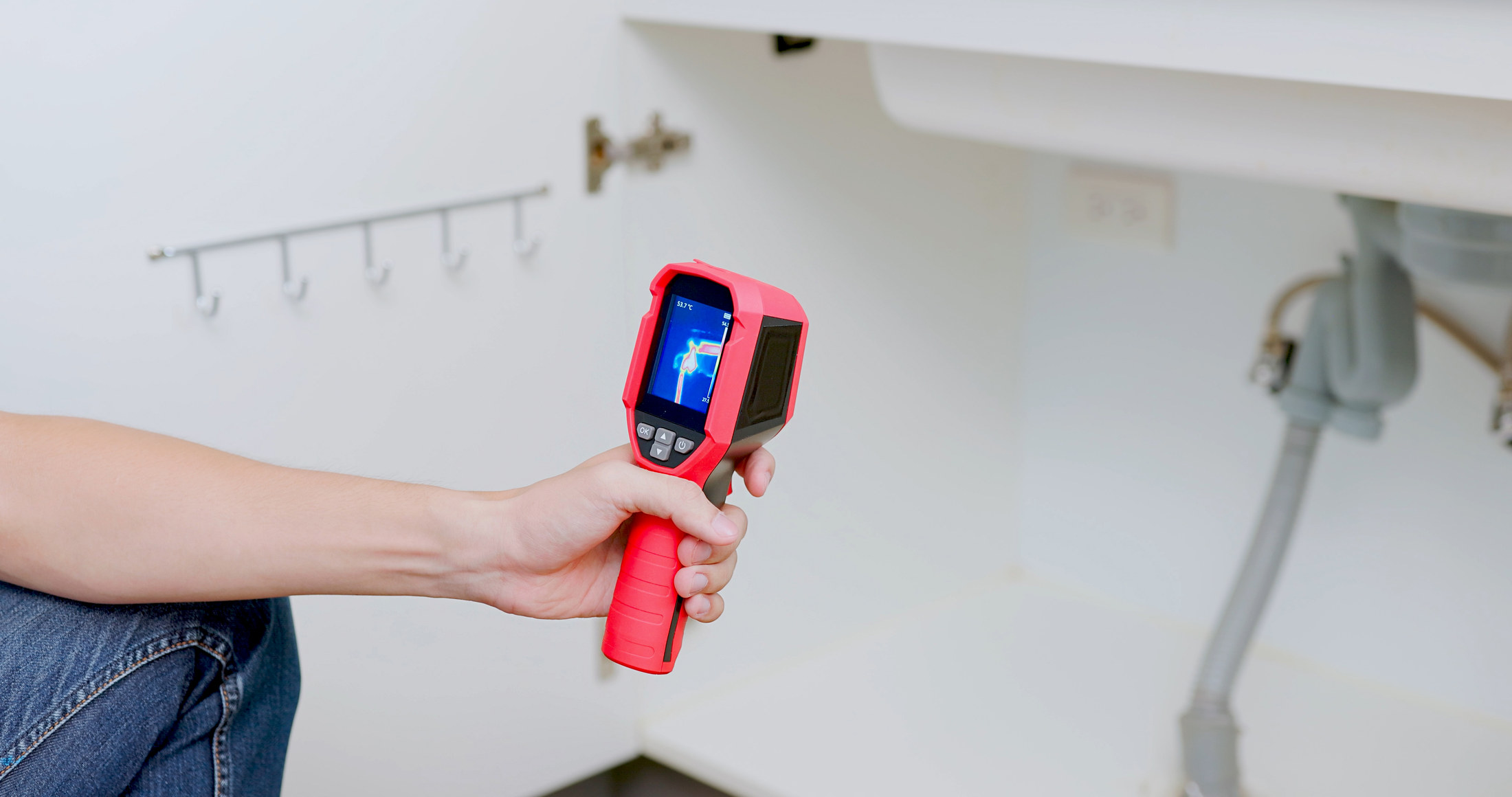
A leak detection specialist's guide price is for a survey with acoustic, thermal or tracer-gas equipment. The tests here are free and narrow the search, so if you do need a survey it starts with your readings.
RATHER NOT?
Leak detection specialists near you, with prices shown
The ones who cover your area, nearest first, with one score from every review. No account needed to look.
Or post the job free and let them come to you.
File the meter readings, pressure readings and photographs with the date. They help an insurer, a landlord and the next survey.
A monthly meter photograph is the earliest warning of a new leak.
Once a leak is fixed, let a damp ceiling or wall dry fully before painting, and use a stain-blocking primer on the tide mark.
Soaked plasterboard goes in the plasterboard area at your council's household waste recycling centre; old pipes and fittings go to the metals container. Do not break or bag boards you suspect contain asbestos yourself. Find your centre on the council website or the recycling pages for your nation.
Finding a hidden water leak: questions people ask
Turn off every tap and appliance, read your water meter, and read it again an hour or two later with nothing used. Movement means water is escaping somewhere.
Put a few drops of food colouring in the cistern and leave it unflushed for half an hour. Colour in the pan means the flush valve seal is leaking.
Water is leaving the sealed heating circuit, often through a weeping radiator valve, or the safety valve is discharging outside. One boiler maker's guide says regular refilling means the system should be checked for leaks.
You can narrow it down with a meter test and a damp meter, and by running fittings one at a time. Opening the wall to reach it is a job for a plumber or specialist.
That depends on where it is. Your water supplier can tell you whether the pipe outside is theirs or yours; ring them if the meter moves with the stopcock off.
Locufy's UK price guide puts leak detection at £200–£1,200 per survey, typically £600 — the same three figures as the strip at the top of this page.
MORE GUIDES
More DIY guides
Sources — checked October 2026
- Worcester Bosch — system filling guide: the 1 to 1.5 bar band and what regular refilling means
- Fluidmaster — fill and flush valve kit technical data sheet
- HSE — electrical safety: frequently asked questions
- HSE — asbestos: frequently asked questions (boards and lagging, buildings before 2000)
- HSE — domestic gas safety: frequently asked questions
- Water Supply (Water Fittings) Regulations 1999, regulation 5
- Water Supply (Water Fittings) (Scotland) Byelaws Extension Order 2024
- Water Supply (Water Fittings) Regulations (Northern Ireland) 2009
- gov.uk — Approved Document G: sanitation, hot water safety and water efficiency (England)
- Gas Safety (Installation and Use) Regulations 1998, regulation 3
- Gas Safety (Installation and Use) Regulations (Northern Ireland) 2004, regulation 3
- gov.uk — recycling collections: find your council (England and Wales)
- mygov.scot — find your council's recycling centre (Scotland)
- nidirect — recycling and reusing (Northern Ireland)
- B&Q — price check: damp meters