HOW TO HIRE · PETS · CHECKED OCTOBER 2026
How to hire an equine specialist in the UK
The checks, the questions and the paperwork.
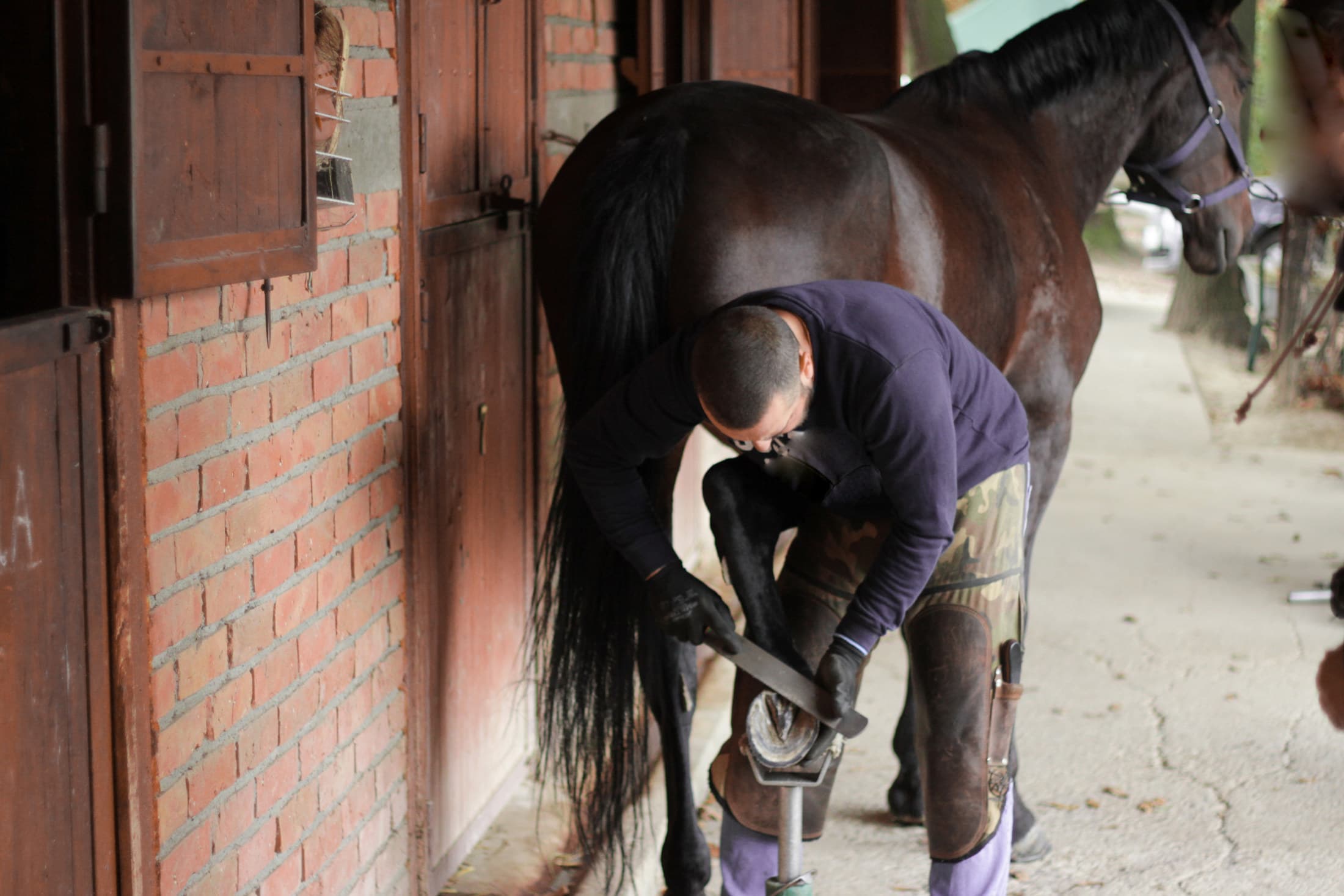
Shoeing is restricted to registered farriers; vet work to vets. Here is which register applies.
- Search and compare — no account needed
- Nearest to you first
- One score from Google, Trustpilot and Locufy reviews
THE 60-SECOND VERSION
Hiring an equine specialist in five steps
- Match the job to the registerShoeing: a registered farrier. Sedation or treatment: a vet.
- Check the registerFarriers Registration Council or RCVS Find a Vet.
- Describe your horseAge, work, hooves, teeth, behaviour.
- Agree the visitTrim, shoes, dental check, saddle fit — priced.
- Keep recordsShoeing dates, dental notes, saddle fit report.
BEFORE YOU BOOK
Check before you book
Farriers Registration Council register
Section 16 of the Farriers (Registration) Act 1975 makes it unlawful for anyone not on the register to carry out farriery in England, Wales and Scotland, apart from apprentices, approved trainees, vets and first aid in an emergency.
Search the farrier on the Farriers Registration Council's Find a Farrier. farrier-reg.gov.uk →
Vets for veterinary work
Only a vet on the RCVS register may practise veterinary surgery (Veterinary Surgeons Act 1966, section 19). Sedation for dental work or shoeing needs a vet.
Check the vet on RCVS Find a Vet. rcvs.org.uk →
No register applies to saddle fitters
No law licenses saddle fitters, so experience and the fit itself are what to check.
Ask how they assess the horse and the saddle, and for a follow-up check.
Insurance
There is no compulsory insurance for an equine specialist. A professional will carry public liability and cover for the animals they look after, and can tell you the insurer's name and what happens if your horse is injured.
Ask for a copy of the insurance schedule.
VAT
Equine services such as trimming, shoeing, dental work and saddle fitting are standard-rated at 20%. Over the £90,000 registration threshold a trader has to charge VAT and show it separately, next to its VAT number.
Ask for the VAT number, and for the visit price and the 20% VAT to be itemised on the invoice. gov.uk →
A good answer: A registered farrier gives their name for checking on Find a Farrier.
A good answer: A clear scope: trim, shoes, dental check or fit.
A good answer: Only a vet may sedate.
A good answer: Advice for its hooves, teeth or saddle.
A good answer: Notes on what was found and done.
A good answer: Yes.
A good answer: Call them and your vet straight away.
Getting the quote right
- Who actually attends the horse — the farrier, dental technician or saddle fitter you checked, or an apprentice, employed or subcontracted
- The service and its price
- Travel or call-out
- Remedial work or extra shoes
- Vet costs for sedation, if needed
- The VAT number, and VAT on the equine visit as its own line
Walk away if
- Shoeing by someone not on the farriers register
- Sedation offered by a non-vet
- No record of work done
- Lameness after a visit dismissed
What an equine specialist costs: £25–£100 per visit
Equine services are priced per visit — a trim, a set of shoes, a dental check or a saddle fit — with travel and sedation (by a vet) extra. Equine Services price guide →
Guide prices compiled by the Locufy team from published Irish and UK provider price lists and 2026/27 cost guides. Updated 2026.
KNOW WHAT TO LOOK FOR? NOW FIND ONE
Equine specialists near you, with the badges that matter shown
ID checked, trader status and one score from every review — on the card, before you message anyone. Nearest first. No account needed to look.
Or post the job free and let them come to you.
- AssessHorse seen moving and standing.
- PlanThe work explained.
- WorkTrim, shoe, dental check or fit.
- CheckHorse trotted up or saddle checked in use.
- RecordNotes given and next visit set.
- Farrier
- A registered professional who trims and shoes hooves.
- Barefoot trim
- Trimming hooves without shoes.
- Remedial shoeing
- Shoeing to correct a problem.
- Equine dental technician
- A specialist in routine horse dental care.
- Saddle fit
- Matching a saddle to the horse's back.
- Lameness
- Pain or abnormal movement in a leg.
AFTER
When the job is done
Hiring an equine specialist: questions people ask
Yes, in England, Wales and Scotland: the Farriers (Registration) Act 1975 makes farriery by anyone not registered unlawful, with limited exceptions.
A vet. Veterinary surgery is restricted to RCVS-registered vets.
No. Saddle fitting is unregulated; check experience.
£25–£100 per visit, typically around £50. The equine services price guide explains what moves the figure; enter your postcode above for prices from equine specialists near you.
Use the Farriers Registration Council's Find a Farrier.
Call the farrier and your vet, and set it out in writing; the Consumer Rights Act 2015 requires reasonable care and skill.
MORE GUIDES
More hiring guides in pets
Equine specialists near you
Sources — checked October 2026
- Farriers (Registration) Act 1975, section 16
- Farriers Registration Council
- Veterinary Surgeons Act 1966, section 19
- RCVS — Find a Vet
- Consumer Rights Act 2015, section 49 — reasonable care and skill
- gov.uk — make a court claim for money: court fees
- mygov.scot — make a court claim for money
- nidirect — small claims process
- VAT rates — VAT rates for goods and services: standard rate 20% on most goods and services
- GOV.UK — Register for VAT: when to register