DIY GUIDE · GARDEN & OUTDOOR · CHECKED OCTOBER 2026
How to clear an overgrown garden yourself
One to three weekends for a typical back garden. £109–£171 in tools you keep.
Survey and mark, clear, cut down, dig out, prune what stays, and get rid of the waste lawfully.
- Every step, start to finish
- Checked October 2026 — sources at the end
- Honest about when to call a pro
FIRST, THE HONEST ANSWER
Do it yourself, or get a clearer?
Do it yourself if…
- The growth is grass, weeds, brambles and shrubs you can cut with hand tools
- You can lift and barrow loads safely and take it over several days
- You have a plan for the waste before you start: bins, trips to the tip, a skip or a registered carrier
- Nothing in the garden needs a chainsaw, a ladder or a machine
Get a pro if…
- You find Japanese knotweed, giant hogweed or another plant with legal rules on spread and disposal
- There is old corrugated sheeting, a collapsed shed or rubble that might contain asbestos
- Trees need felling or large branches cutting from height
- The volume of waste is far beyond what you can bag and move
Safety first
- Lift the way HSE's good handling guidance sets out: plan the lift, get help with heavy loads, keep the load close to your waist and turn with your feet rather than twisting.
- Wear thick gloves, boots, long sleeves and safety glasses; overgrown gardens hide glass, nails, needles, broken pots and wire.
- Push long grass and nettles aside with a stick before you walk through, and mark trip hazards, holes and hidden objects with canes.
- Do not break up or move old sheeting, roofing, pipes or boards you are not sure about; HSE notes that buildings dating from before 2000 may contain asbestos, and old sheds, garages and the sheeting dumped behind them are no exception.
- Use a brushcutter or strimmer only with a face guard or glasses, ear protection and nobody within throwing range.
- Keep drinking water to hand and take breaks; clearance is heavy, repetitive work that injures people who try to finish in a day.
| MATERIAL | COVERAGE | FOR THIS JOB |
|---|---|---|
| Heavy-duty garden waste or rubble sacks | Reusable bags; rubble sacks for soil and stones | Many; clearance fills more than you expect |
| Canes and marker tape | For marking keepers and hazards | A bundle |
| Weed membrane or mulch | To stop regrowth on cleared beds | For the areas you will not plant straight away |
How much waste, and where it will go
Waste volume ≈ area cleared × average depth of growth, then halve it for compacting. A 10 × 6 m garden with growth averaging 0.5 m deep is 30 m³ loose, roughly 15 m³ once trodden down — several car trips or a mid-size skip.
This is a rough guide for planning, not a figure from a manufacturer. Bag a measured patch first and count the bags, then scale up.
Walk the garden and decide what stays, what goes and what you are not sure about. Mark keepers with canes or tape. A rough scale sketch showing beds, paths, sunny and shady areas saves you clearing something you later wish you had kept.
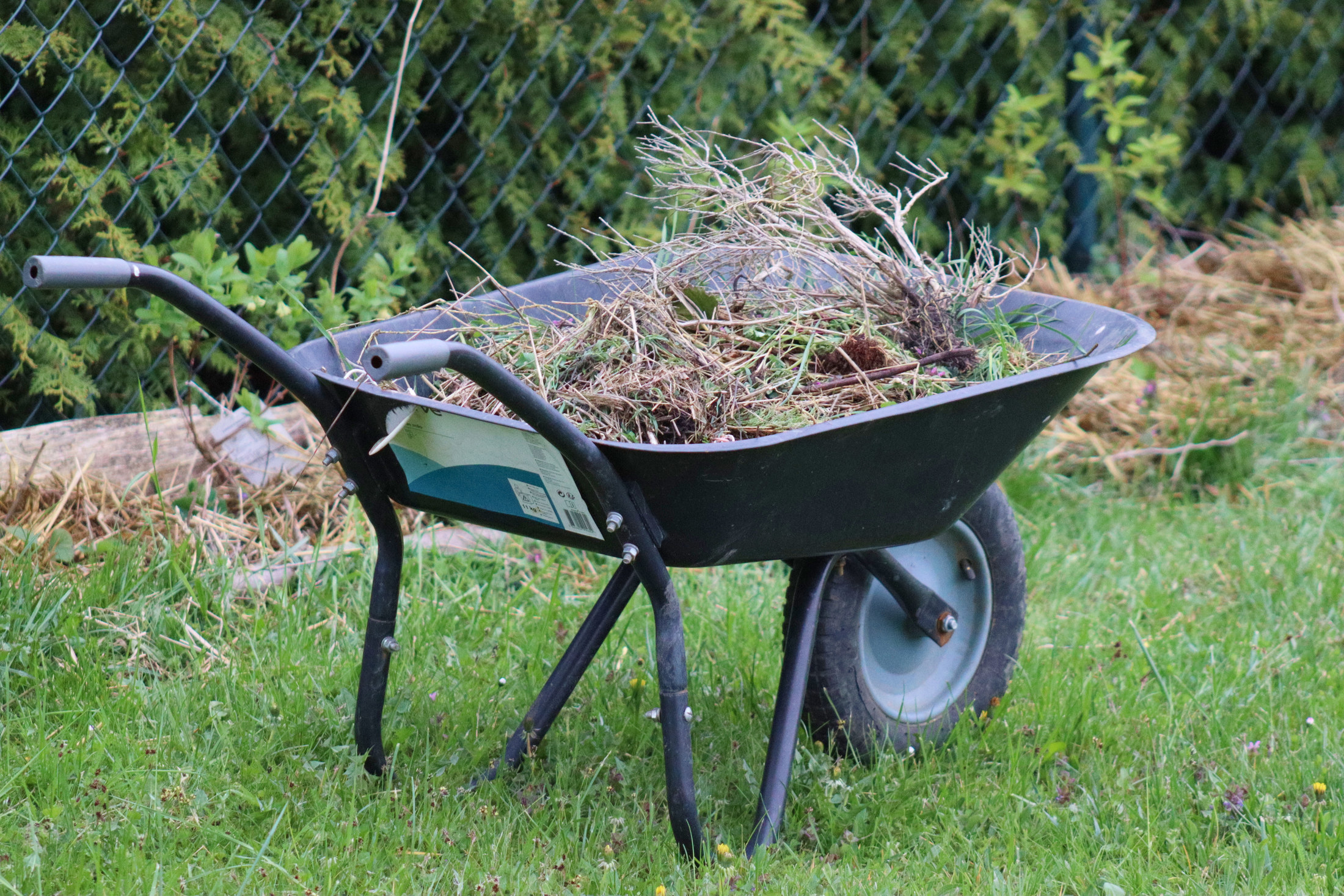
Loppers, a pruning saw, shears, a spade, a fork and a rake will clear most gardens. A wheelbarrow and a tarpaulin move the waste. Buy or borrow good ones; cheap loppers bend on the first thick stem.
Long grass and soft weeds are cut quickly with a strimmer, or with a brushcutter fitted with a blade for tougher growth. Cut everything down to a manageable height first, working in rows, so you can see what is underneath.
Clearance waste is bulky and heavy. Count on garden waste bins, trips to the household waste recycling centre, a skip or a registered waste carrier. A skip on the road may need a council permit; ask the hire firm.
Japanese knotweed and other invasive plants have legal rules on spreading and disposal; nesting birds are protected while their nests are in use; a tree may be protected. Check before you cut, not after.
THE PART THAT DECIDES THE FINISH
Before you start — by what the garden is hiding
Overgrown gardens all look similar from the back door. What is under the growth decides the method. Find what yours has.
Long grass and soft weeds
A lawn or bed that has been left for a season or two.
- Walk it first with a stick and mark stones, holes and hidden objects with canes
- Cut everything down to around 15 cm, in stages if it is very tall
- Rake up the cuttings straight away so they do not mat
- Then mow or fork out weeds, depending on whether it is staying as lawn
Brambles and woody scrub
Thorny thickets, self-sown shrubs and saplings.
- Wear heavy gloves and long sleeves; brambles are worse than they look
- Cut stems into short lengths with loppers from the outside in, and bag as you go
- Dig out the bramble crowns and roots, or they regrow within weeks
- Check for nests in thickets before cutting in spring and summer
Rubbish, rubble and old structures
Old sheds, slabs, pots, wire and builders' leftovers.
- Collect loose rubbish into a barrow or bags as you walk round
- Look at old roofing, cladding and pipes before touching them; anything that might be asbestos stays where it is until it is checked
- Separate rubble, metal, wood and green waste; recycling centres take each in a different place
- Take nothing apart by force that you have not identified
Overgrown shrubs and hedges you want to keep
Plants worth saving that have got out of hand.
- Cut out dead, broken and crossing branches first
- Reduce gradually; many shrubs can take a hard cut over two or three years better than in one go
- Check hedges for active nests before trimming
- Leave tree work above head height for a professional
Invasive or problem plants
Japanese knotweed, giant hogweed, Himalayan balsam.
- Learn what they look like before you clear; knotweed has hollow, bamboo-like canes with purple speckles
- Do not cut, strim, dig or compost knotweed; fragments regrow and spread
- Do not touch giant hogweed; its sap burns skin in sunlight
- Read the government guidance and use a specialist for removal and disposal
THE JOB
How to clear an overgrown garden, in order
Survey, mark and plan
1 hrWalk the whole garden with a stick, pushing growth aside. Mark every plant you want to keep with a cane or tape, and every hazard — holes, buried wire, broken glass, old foundations — with a different marker. Look for nests, invasive plants and anything that might be asbestos. Sketch the garden, then decide where the waste is going before you cut anything.
- Take photos of the whole garden before you start
- Book the skip or carrier, or check the recycling centre's opening times, now
- Divide the garden into sections and number them in the order you will clear
Mistake to avoid: Wading in with the strimmer. You cut down the plants you meant to keep and strim straight into the hazards.
Clear loose rubbish
1 hrGo round with a barrow and bags and pick up everything that is not growing: pots, plastic, glass, wire, timber, toys. Sort it as you go into rubble, metal, wood and general rubbish, because the recycling centre will want them separated. Leave anything you are not sure about, especially sheeting or boarding, for a closer look.
- Wear gloves and lift glass carefully into a box, not a bag
- Old paint tins and chemicals go to the recycling centre's hazardous area, not the skip
- Keep a separate pile for anything worth reusing
Mistake to avoid: Throwing everything into one skip. Mixed waste costs more to take away, and some of it is not allowed in a skip at all.
Cut down the long growth
2 hrCut long grass and soft weeds down to around 15 cm with a strimmer, a brushcutter or shears, working systematically in rows from one side to the other. Rake the cuttings into piles and bag them as you go. Stay well clear of the canes marking keepers and hazards.
- Cut tall growth in stages from the top down
- Work across a slope, not up and down it
- Stop and check anything the strimmer hits
Mistake to avoid: Strimming invasive plants such as knotweed. Every fragment can grow into a new plant, and you have spread it across the garden.
Cut back brambles and scrub
2 hrCut brambles and woody scrub from the outside of the thicket inwards, in short lengths that go straight into bags. Use loppers for stems and a pruning saw for anything thicker. Cut saplings low, leaving a short stump to dig out later.
- Hook brambles towards you with a rake or a forked stick while you cut
- Cut long stems into pieces before bagging so they do not puncture the sack
- Check every thicket for nests in spring and summer
Mistake to avoid: Pulling bramble stems out with your hands. The thorns go through gloves and the stems spring back into your face.
Dig out roots and crowns
3 hrWith the growth gone, dig out bramble crowns, weed roots, sapling stumps and unwanted shrubs. Loosen the soil around each with a fork, then lift it out with the root ball. Perennial weeds and brambles regrow from roots left behind, so dig them whole.
- Moist soil gives up roots far more easily than dry
- Rock a sapling stump to find the roots still holding it
- Keep roots in their own bag; they are not for the home compost heap
Mistake to avoid: Cutting everything to ground level and calling it cleared. Brambles and perennial weeds are back within weeks.
Prune what you are keeping
1 hrNow that you can see them, prune the shrubs and hedges you are keeping. Remove dead, broken and crossing branches first, then reduce for shape, gradually rather than all at once. Anything needing a ladder or a chainsaw is a separate job.
- Cut back to a bud or side shoot, not mid-stem
- Many shrubs recover better from a hard cut spread over two or three years
- Check timing for each plant before cutting hard
Mistake to avoid: Hacking everything back hard in one go. Some shrubs never recover, and flowering ones lose a year or two of flowers.
Level and tidy the ground
1 hrFill the holes left by roots, rake the soil roughly level and remove stones. On areas you will not plant for a while, put down a mulch or membrane to stop weeds re-colonising the bare soil.
- Firm filled holes by treading
- Keep good topsoil; it is worth more than you would pay for it
- Cover bare soil quickly; weeds arrive within weeks
Mistake to avoid: Leaving cleared ground bare for the summer. Weed seed blows in and you start again.
Move and load the waste
2 hrBarrow the waste to wherever it is going, or load the car, skip or carrier's vehicle. Put heavy items at the bottom of a skip and keep within its fill line. Lift with your knees slightly bent and the load close to your body; get a second person for anything heavy or awkward.
- Half-fill rubble sacks; full ones are too heavy to lift safely
- Lay boards over the lawn for the barrow route
- Do not overfill a skip; most hire firms will not take one loaded above the sides
Mistake to avoid: Filling sacks with soil and rubble to the top. They are too heavy to lift without injury and split on the way.
Dispose of everything lawfully
VariesGreen waste to the council's garden waste collection, your compost heap or the household waste recycling centre; rubble, metal and wood to their own areas at the recycling centre. If someone takes it away, they must be a registered waste carrier: in England and Wales you have a legal duty to hand household waste only to an authorised person, and if it is fly-tipped and traced to you, you can be fined.
- Check the carrier's registration and keep a receipt
- Ask the recycling centre about limits on soil and rubble
- Invasive plants need their own disposal route
Mistake to avoid: Paying a man with a van in cash who will not say where the waste goes. If he tips it, the problem can come back to you.
Look after the tools
20 minClean soil and sap off everything, dry the blades and oil the loppers' pivot. Check the strimmer line and guard, and sharpen the spade's edge with a file.
- A sharp spade cuts roots instead of bouncing off them
- Fold the saw blade away dry
- Hang tools up so the edges stay sharp
Mistake to avoid: Leaving tools out overnight in an overgrown garden. You will not find them again until next spring.
The mistakes that make a clearance twice the work
- Starting without a plan for the waste
- Strimming or digging invasive plants and spreading them
- Cutting everything to ground level and leaving the roots
- Handing waste to an unregistered carrier
Stop here and get a garden clearance service
- You find Japanese knotweed or another invasive plant, or suspect asbestos in sheeting, a shed or rubble
- Trees need felling, or branches need cutting from height or with a chainsaw
- The waste runs to several skips, or there is no vehicle access
- The ground needs a machine: stumps too big to dig, slabs to break, levels to change
| WHAT YOU SEE | WHY, AND THE FIX |
|---|---|
| Brambles regrowing after clearance | The crowns and roots were left in. Dig out every crown with a fork; pull new shoots with as much root as possible. |
| Weeds back within weeks | Bare soil left uncovered and roots left behind. Fork out perennial roots and cover cleared ground with mulch or membrane. |
| Lawn under the growth is dead | Grass smothered for too long. Rake it out, fork the soil and reseed or turf once the area is clear. |
| Recycling centre turned you away | Trade-sized load, a van without a permit, or soil and rubble over its limit. Check the council's rules before the next trip. |
| Skip overflowing | Too much waste, or bulky material loose. Break down and stack the waste, keep within the fill line, and book a second skip if needed. |
| Rash or blisters after clearing | Contact with irritant sap, giant hogweed or nettles. Wash the skin, keep it out of sunlight, and get medical advice for blistering. |
| Bamboo-like canes coming up in the cleared area | Possibly Japanese knotweed. Stop disturbing it, check the government guidance, and get it identified. |
| Found broken sheeting in the undergrowth | Old cement sheeting can contain asbestos. Leave it, do not break it, and have it checked before anyone moves it. |
WHAT YOU SAVE
What it costs to do it yourself
| Wheelbarrow | £60–£78 |
|---|---|
| Loppers | £19–£37 |
| Digging spade | £11–£24 |
| Rake | £11–£16 |
| Heavy-duty sacks | £3.50–£8.50 |
| Gloves and safety glasses | £4–£7 |
| Total, first time | £109–£171 |
| DIY total | £109–£171 |
Guide prices compiled by the Locufy team from published Irish and UK provider price lists and 2026/27 cost guides. Updated 2026.
Tools you keep. The real variable is the waste: free if your bins and car trips cope, more for a skip or a registered carrier, which you should price before starting.
RATHER NOT?
Garden clearance firms near you, with prices shown
The ones who cover your area, nearest first, with one score from every review. No account needed to look.
Or post the job free and let them come to you.
Mulch, membrane, turf or new planting within a few weeks stops weeds taking it back.
Green waste to the council's garden waste collection or the household waste recycling centre; rubble, metal and wood to their own areas; a registered carrier for anything else, with the registration number kept.
Fork out bramble and weed shoots as they appear through the first season.
Clean, dry, sharpen and oil; replace any strimmer guard or line that took a beating.
Clearing an overgrown garden: questions people ask
With a walk round and a plan. Mark what you are keeping and any hazards, decide where the waste will go, then clear rubbish first, cut down long growth, dig out roots, prune what stays and tidy the ground.
For a big clearance, often. For a small one, garden waste bins and trips to the household waste recycling centre may be enough. A skip on the road may need a council permit, which the hire firm can usually arrange.
Garden bonfires are not banned, but smoke can be a statutory nuisance the council can act on, and you can be fined if smoke drifts across a road. Composting and the council's garden waste service are the better routes.
Only a registered waste carrier. In England and Wales you have a legal duty to hand household waste to an authorised person; check the carrier's registration and keep a receipt.
Stop. Do not cut, strim, dig or compost it. Allowing it to spread into the wild is an offence, and it may be controlled waste. Read the government guidance and get specialist help.
The Locufy UK price guide puts garden clearance at £150–£600 per job, typically £300. Waste disposal is the part that moves the price most; ask whether it is included.
MORE GUIDES
More DIY guides
Sources — checked October 2026
- HSE — manual handling: good handling technique
- HSE — asbestos: buildings from before 2000
- STIHL — tackling an overgrown garden, step by step
- GOV.UK — how to stop Japanese knotweed from spreading (England)
- Wildlife and Countryside Act 1981, section 1 — wild birds and their nests
- Environmental Protection Act 1990, section 34 — duty of care
- GOV.UK — register as a waste carrier, broker or dealer
- GOV.UK — garden bonfires: the rules
- GOV.UK — dispose of garden waste
- Wickes — price check: wheelbarrows
- Wickes — price check: loppers
- Wickes — price check: spades
- Wickes — price check: rakes
- Wickes — price check: garden and rubble sacks
- Wickes — price check: gardening gloves
- Wickes — price check: safety glasses