HOW TO HIRE · PLUMBING & HEATING · CHECKED OCTOBER 2026
How to hire a leak detection specialist in Ireland
The checks, the questions and the paperwork.
A leak detection in Ireland costs €150–€700 per survey, typically around €350. Here is how to check that in a minute, what to ask before you book, and what you must be handed when the job is done.
- Search and compare — no account needed
- Nearest to you first
- One score from Google, Trustpilot and Locufy reviews
THE 60-SECOND VERSION
Hiring a leak detection specialist in five steps
- Are you a trader, and can I see that in writing?No register covers leak detection specialist work, so trader status is what your consumer rights hang on — dye Testing — dye testing involves adding a non-toxic dye to the water supply to trace leaks.
- How does complexity of the job change the price?Detail is where the hours disappear on a job like this. — ask before the quote rather than after.
- How does location of the leak change the price?The distance is worked out before the quote is given. — ask before the quote rather than after.
- How does methods used for detection change the price?A small difference here makes a large difference to the total. — ask before the quote rather than after.
- What is not included?Thermal Imaging — using thermal imaging cameras, professionals can detect temperature variations that indicate moisture presence — get the exclusions named in the quote, because a leak detection specialist job is priced on what was agreed and not on what was assumed.
BEFORE YOU BOOK
Check before you book
No register applies
NO REGISTER APPLIES TO PLUMBING ITSELF. Anyone may trade as a plumber. The line that does exist is gas: any work on a gas appliance or gas pipework is restricted to the Registered Gas Installer scheme, and a plumber who is not on it may not touch the gas side of a boiler however competent they are at everything else. Ask which side of that line your job falls on before you book.
Look for the trader badge and the ID-checked badge on the Locufy profile — both are checked by us, not claimed by the provider.
What to check instead
Whether any part of the job touches gas — if it does, the gas register applies and a plumbing qualification is not a substitute; A trade qualification or apprenticeship, which is voluntary but checkable; Public liability insurance, and who the insurer is; Whether they carry the parts or price them separately; A written scope naming what is isolated, drained and reinstated; How a leak discovered mid-job changes the price, agreed in advance.
Ask for each of these before you agree a price, and get the answers in the same message as the quote.
Insurance
Expect public liability, and ask specifically about water-damage cover. From a company, ask for the insurer, the limit and the VAT number, and ask who actually attends: the team that turns up may be employed, subcontracted or both, and only one of those is supervised by the firm you are paying.
Ask to see the current certificate of insurance — the insurer's name, the limit and the date it runs to.
Trader or private seller
Under the Consumer Rights Act 2022 a trader must tell you they are a trader, and your consumer rights — work carried out with reasonable skill and care, and a cooling-off period on a contract agreed in your home or online — apply to traders and not to private sellers. On Locufy the trader status is shown on the profile.
Look for the trader badge on the Locufy profile, and ask anyone else for it in writing before you agree a price.
VAT
VAT at 13.5%, the reduced rate Revenue publishes for this service. Ask whether the price you were given includes it. A trader under the €42,500 registration threshold does not charge it; one over it must, and must show it separately.
Ask whether the figure you were given includes it, and for the VAT number if they are registered — Revenue publishes the rate for this service. revenue.ie →
A good answer: No register covers leak detection specialist work, so trader status is what your consumer rights hang on — dye Testing — dye testing involves adding a non-toxic dye to the water supply to trace leaks.
A good answer: Detail is where the hours disappear on a job like this. — ask before the quote rather than after.
A good answer: The distance is worked out before the quote is given. — ask before the quote rather than after.
A good answer: A small difference here makes a large difference to the total. — ask before the quote rather than after.
A good answer: Thermal Imaging — using thermal imaging cameras, professionals can detect temperature variations that indicate moisture presence — get the exclusions named in the quote, because a leak detection specialist job is priced on what was agreed and not on what was assumed.
A good answer: Expect public liability, and ask specifically about water-damage cover — pressure Testing — pressure testing involves checking the plumbing system for leaks by introducing air or water under pressure.
A good answer: A written scope and a price before the leak detection specialist starts, and an itemised invoice after — visual Inspection — A thorough visual inspection of the property can help identify obvious signs of leaks, such as water stains or damp patches.
Getting the quote right
- Complexity of the job — detail is where the hours disappear on a job like this.
- Location of the leak — the distance is worked out before the quote is given.
- Methods used for detection — a small difference here makes a large difference to the total.
- Size of your property — the area covered is what the day rate is set against.
- In writing before anyone starts — a message on Locufy counts
- What is NOT included, named
- Who actually attends, and whether they are employed or subcontracted
- The VAT number, and whether it checks out on the Revenue register
Walk away if
- They will not talk about it: complexity of the job — detail is where the hours disappear on a job like this
- They will not talk about it: location of the leak — the distance is worked out before the quote is given
- They will not talk about it: methods used for detection — a small difference here makes a large difference to the total
- A price for the leak detection specialist before anyone has asked the size, the access or the condition of what they are working on
- Cash only, or a large deposit before anything at all has started
- No written quote, or one that moves once the leak detection specialist has begun
What a leak detection specialist costs: €150–€700 per survey
The figures are for the job, per survey, and a quote for your own is the only number that binds anyone. Residential leak detection and Commercial leak detection each carry their own band. Leak Detection price guide →
Guide prices compiled by the Locufy team from published Irish and UK provider price lists and 2026/27 cost guides. Updated 2026.
KNOW WHAT TO LOOK FOR? NOW FIND ONE
Leak detection specialists near you, with the badges that matter shown
ID checked, trader status and one score from every review — on the card, before you message anyone. Nearest first. No account needed to look.
Or post the job free and let them come to you.
- Look firstComplexity of the job — detail is where the hours disappear on a job like this — that is what the leak detection specialist is judging on the first visit, and a price given without it is a guess.
- Agree what is being doneLocation of the leak — the distance is worked out before the quote is given — put in writing before anyone starts, because it is the document you both read back at the end.
- The work itselfMethods used for detection — a small difference here makes a large difference to the total — and anything found on the day that was not in that is priced before it is started.
- Check it togetherSize of your property — the area covered is what the day rate is set against — walked against the written scope rather than against the feeling of it, while the leak detection specialist is still there.
- What you are handedThe itemised invoice and any guarantee on the workmanship and the parts, condition of existing plumbing — heavy soiling needs stronger products and more passes.
- Visual Inspection
- A thorough visual inspection of the property can help identify obvious signs of leaks, such as water stains or damp patches.
- Pressure Testing
- Pressure testing involves checking the plumbing system for leaks by introducing air or water under pressure.
- Thermal Imaging
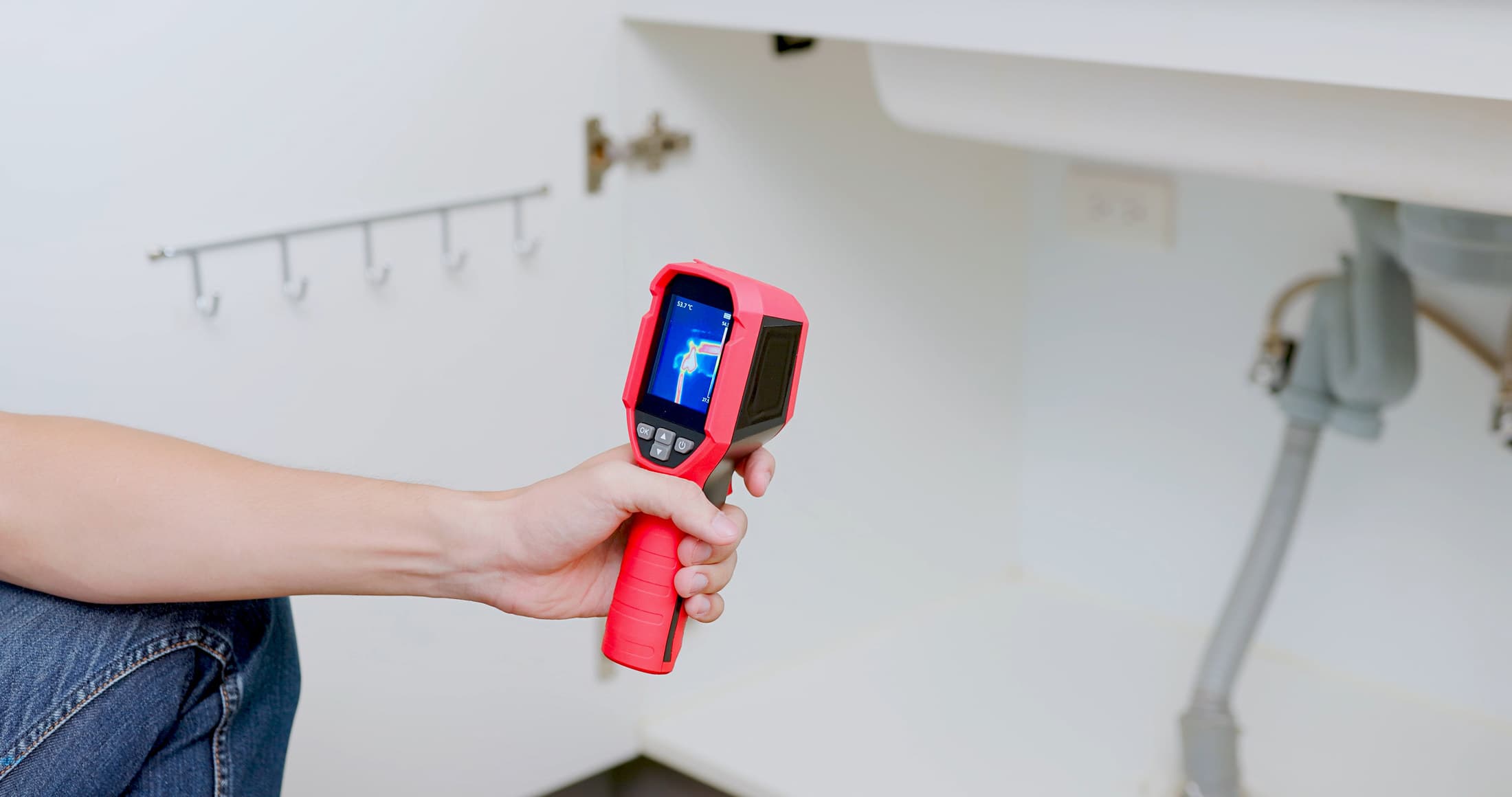
- Using thermal imaging cameras, professionals can detect temperature variations that indicate moisture presence.
- Dye Testing
- Dye testing involves adding a non-toxic dye to the water supply to trace leaks.
- Residential Leak Detection
- Identifying leaks in homes, including walls, ceilings, and floors, to prevent further damage.
- Commercial Leak Detection
- Specialised leak detection services for commercial properties to minimise disruption and loss.
AFTER
When the job is done
Hiring a leak detection specialist: questions people ask
The cost of leak detection can vary based on the complexity of the job, the location of the leak, and the methods used for detection. For instance, advanced techniques like thermal imaging may incur higher costs compared to basic visual inspections.
The duration of a leak detection service can range from one to several hours, depending on the severity and location of the leak. Simple inspections may be completed quickly, while more complex cases requiring extensive testing could take longer.
While general plumbers can often handle leak detection, hiring a qualified specialist with experience in advanced techniques may be beneficial for more complex issues. This is especially true for leaks involving gas or electrical systems, which require regulated professionals.
Many plumbing services offer emergency or same-day leak detection for urgent situations. However, availability may vary, and it's advisable to check with the service provider to confirm if they can accommodate immediate requests.
Yes, many plumbing services allow for the booking of multiple related jobs, such as repairs following leak detection. This can often lead to cost savings and a more efficient service experience.
Leak detection services typically focus on identifying leaks rather than performing repairs. Any necessary repairs or extensive plumbing work would be considered a separate service and may incur additional charges.
MORE GUIDES
More hiring guides in plumbing & heating
Leak detection specialists near you
Sources — checked October 2026
- CRU — RGI and Safe Electric schemes
- CCPC — your rights when you buy a service
- Consumer Rights Act 2022
- Courts Service — small claims
- Revenue — PLUMBING SERVICES (Private dwellings/Non-residential immovable goods) — Reduced rate
- Revenue — current VAT rates (effective 1 January 2026)
- Revenue — VAT thresholds: €42,500 for a person supplying services only