DIY GUIDE · GARDEN & OUTDOOR · CHECKED OCTOBER 2026
How to clear an overgrown garden yourself
A weekend or two for a typical back garden. €135–€235 in tools and skip bags.
Survey first, cut it down, get the roots out, sort the waste, and get rid of it legally.
- Every step, start to finish
- Checked October 2026 — sources at the end
- Honest about when to call a pro
FIRST, THE HONEST ANSWER
Do it yourself, or get a clearer?
Do it yourself if…
- The growth is grass, brambles, nettles, weeds and shrubs with stems you can cut with loppers and a bow saw
- You can do the work outside the nesting months, or the growth has no active nests in it
- You are fit for a couple of days of heavy, dirty work and have a helper for the lifting
- You have a plan for the waste: brown bin, skip bags, a permitted collector or the civic amenity site
Get a pro if…
- There are trees to fell, or stems that need a chainsaw
- Japanese knotweed, giant hogweed or another invasive plant is in the garden
- There is buried rubbish, old asbestos sheeting, broken glass or chemical containers on the site
- The volume of waste needs a skip or a truck and someone with a waste collection permit
Safety first
- Walk the garden before you cut anything and look for hazards: glass, needles, old wire, holes, wasp nests, broken paving and sharp metal hidden in the growth.
- Treat any old corrugated roofing, flat sheeting or pipe as possible asbestos and leave it alone; do not break it, cut it or bag it.
- Wear heavy gloves, safety glasses, long trousers, long sleeves and boots; with a strimmer or brushcutter add ear protection and a visor, and keep anyone else a long way back.
- Lift with your legs and share heavy loads; the HSA's manual handling guidance is that twisting while holding a load sharply raises the stress on the lower back, and that lifts starting at floor level are where lifting capacity is lowest.
- Take regular breaks from a strimmer or brushcutter and keep your hands warm; the HSA warns that hand-held power tools cause hand-arm vibration, which with regular, long exposure is linked to vibration white finger.
- Do not burn the waste. Householders may not burn garden waste under the 2009 waste burning regulations.
| MATERIAL | COVERAGE | FOR THIS JOB |
|---|---|---|
| Skip bags | Builder's bags for rubble, soil and bulky green waste | Several for a neglected back garden |
| Garden waste bags | Reusable bags for the brown bin and the car | A dozen or so |
| Strimmer line or a spare blade | Matched to your machine | A spare spool; brambles eat line |
| Weed membrane, optional | To cover cleared ground until you plant | Enough for any area you will leave bare |
How much waste you will have
36 m² of wall → 18 L for 2 coats. Buy about 18 L.
Rough volume = area × average height of growth ÷ 4 once it is cut and packed. A 10 m × 8 m garden with growth averaging 1 m high gives about 80 cubic metres of growth, which cuts and packs down to roughly 20 cubic metres. Count roots, soil and rubble separately.
Green waste shrinks hugely once chopped or chipped, and some of it can be composted on site. Soil and rubble are heavy and fill skip bags quickly; keep them apart from the green waste.
A line strimmer cuts long grass and soft weeds down quickly. A brushcutter, with a metal blade instead of line, cuts brambles and woody scrub as well, but throws debris harder and needs more care. For a garden, a strong strimmer and a pair of loppers usually beats a brushcutter in untrained hands.
Long-handled loppers deal with bramble stems and shrubs up to about thumb thickness. A bow saw takes thicker stems. A hand slasher or a hook clears brambles where a strimmer would tangle.
Cutting growth down is quick; the roots are the real work. A sharp spade, a strong fork and a mattock get bramble crowns, shrub roots and old stumps out. A strimmed garden with its roots left in looks just as bad again within a season.
Decide on the waste route before you start. Light green waste suits the brown bin and the compost heap; bulky green waste suits a civic amenity site or a skip bag. Anyone who takes your waste away must hold a waste collection permit.
Trees and thick stumps need a trained chainsaw user. Invasive plants and professional-only weedkillers need a specialist. Hand tools and a strimmer cover the rest.
THE PART THAT DECIDES THE FINISH
Before you start — by what is in the garden
What you find under the growth decides how you clear it. Do the checks for each before you cut.
Long grass and soft weeds
Knee-high grass, nettles, docks and thistles.
- Walk it slowly and pick out stones, wire and rubbish before any strimmer goes in
- Check for frogs, hedgehogs and nests in the long grass
- Strim in stages from the top down, not straight to the ground
- Rake the cut material off before you mow
Brambles and scrub
Thickets of bramble, gorse, elder or self-sown shrubs.
- Check for active nests; do the work between September and February if you can
- Cut the stems at the base with loppers and drag them out a piece at a time
- Dig out the bramble crowns, the knobbly root at the base of each plant
- Wear thorn-proof gloves and cover your arms
Overgrown shrubs and hedges
Shrubs and hedges that have grown out of shape.
- Decide what to keep before you cut; some old shrubs are worth renovating
- Check for nests before any cutting
- Cut back what you can reach from the ground
- Leave trees and anything needing a ladder or chainsaw for a professional
Buried rubbish and rubble
Old paving, bricks, glass, metal and builders' leftovers.
- Dig carefully; buried glass and metal are the injuries on this job
- Keep rubble and soil separate from green waste
- Treat old sheeting or pipe as possible asbestos and leave it untouched
- Bag rubble in builder's bags small enough to move
A plant you do not recognise
Tall, fast-spreading, hollow-stemmed or with huge leaves.
- Stop and identify it before you cut it
- Photograph the leaves, stems and flowers
- Japanese knotweed and giant hogweed must not be cut, moved or dumped
- Ask your local authority or a specialist; see the stop list below
THE JOB
The steps, in order
Survey the garden and plan the waste
1 hourStart with the checks above. Walk every part of the garden with gloves on and a stick in your hand, lifting growth to see what is under it. Mark hazards, plants worth keeping and anything you cannot identify with canes or tape. Then plan the waste: how much brown bin space you have, where skip bags will stand, how many trips to the civic amenity site you will need, and who, if anyone, will collect it.
- Take photographs before you start; you will be glad of them
- Check the site's accepted items and opening hours before you load the car
- Mark the boundary so you do not clear a neighbour's plants
Mistake to avoid: Starting with the strimmer and finding a broken bottle with the line.
Check for nests, wildlife and invasive plants
30 minLook into dense growth, shrubs and hedges for nests, especially between March and August, and leave any active nest and the growth around it until the young have flown. Move slowly through long grass and piles so frogs, toads and hedgehogs can get away. If you find Japanese knotweed, giant hogweed or another plant you suspect is invasive, stop work in that area entirely.
- Birds going in and out of the same spot give a nest away
- Clear long grass from the middle outwards so animals move to the edges
- Do not strim or cut a plant you think may be knotweed
Mistake to avoid: Strimming through a thicket of brambles in May and destroying a nest the law protects.
Cut the top growth down in stages
2–4 hoursStart with the soft growth. Strim long grass and weeds down in two passes: first to about knee height, then to ankle height, so the line is not wrapped up in a metre of grass at once. Hold the strimmer with both hands, the head level, and walk forwards slowly. Then cut bramble and shrub stems at their base with loppers, pulling each one out of the tangle with a gloved hand or a rake.
- Work across the garden in strips
- Stop and clear the strimmer head of wound grass with the engine off
- Keep anyone else well out of range of thrown stones
Mistake to avoid: Going straight to ground level in long grass and burning out the strimmer's motor.
Gather and sort the cut material
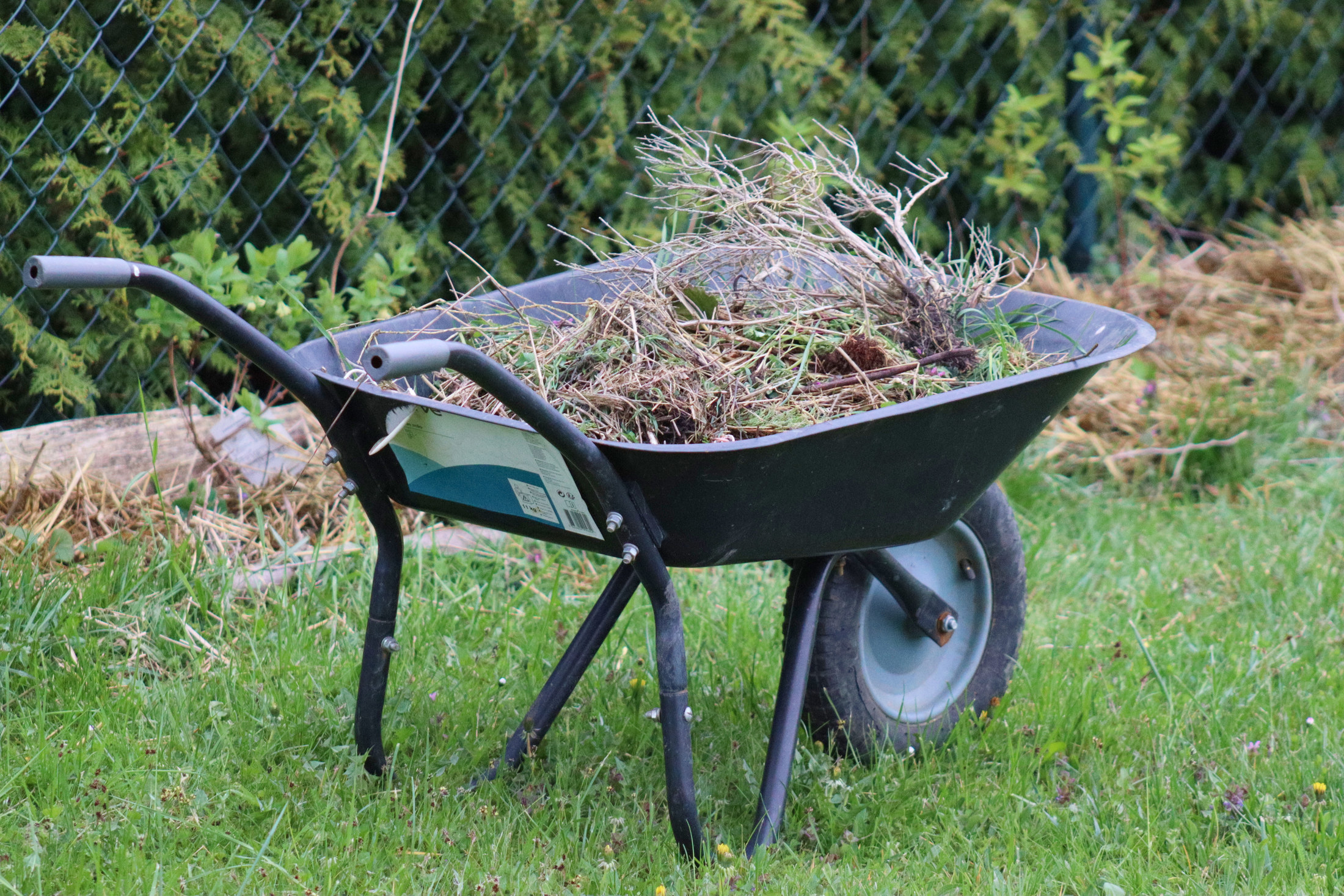
1–2 hoursRake the cut growth into piles and drag them onto a tarpaulin to move them. Sort as you go into four heaps: soft green material for the compost or brown bin, woody material for the civic amenity site or a skip bag, rubbish and rubble, and anything that needs special handling. Keep perennial weed roots and anything diseased out of the compost heap.
- Chop woody stems small and they bag far more easily
- Soft growth and grass make good compost mixed with drier material
- Keep the sorting heaps a good distance apart
Mistake to avoid: Throwing everything onto one pile and then having to sort it again at the skip.
Dig out the roots and crowns
3–6 hoursWith the ground visible, dig out the roots. For brambles, dig out the knobbly crown at the base of each plant with a spade or mattock; the stems regrow from it. For shrubs, dig round the base, cut the roots and lever the stump out. Fork through the soil for the white roots of couch grass, bindweed and other perennial weeds and pull them out whole.
- Work in short sections and rest often; this is the heaviest part
- Damp soil is easier to dig than dry or waterlogged
- Leave large stumps for a professional with a grinder
Mistake to avoid: Strimming the garden flat, leaving every root in, and watching it grow back by summer.
Clear the rubble and rubbish
1–3 hoursDig out buried rubble, bricks, broken paving and rubbish carefully with a fork, wearing gloves. Put rubble in builder's bags, filled only as full as you can move. Bag glass and sharp metal separately and wrap anything sharp. Leave anything that might be asbestos untouched and ask your local authority about it.
- Reuse clean bricks and paving for paths or edging
- Keep soil separate from rubble; sites treat them differently
- Do not overfill a skip bag; it may not be lifted
Mistake to avoid: Smashing an old roof sheet to fit it in a bag and filling the air with fibres.
Get rid of the waste legally
2–4 hoursFill the brown bin with light green waste each collection, and compost what you can at home. Take bulky green waste and rubble to a civic amenity site that accepts it. If someone else is taking the waste, check that they hold a waste collection permit on the National Waste Collection Permit Office register before they load a thing, and get a receipt. Never let waste go to a person who cannot show a permit.
- Look up the collector's permit number yourself on the register
- Keep receipts until you are sure the waste was disposed of
- Book skip bag collection when you order the bag
Mistake to avoid: Paying cash to a man with a van who dumps your waste in a lane, with your name in a letter in the bag.
Level and cover the cleared ground
1–2 hoursRake the cleared ground level and pick out the last stones and roots. If you are not planting or turfing straight away, cover bare soil with a permeable weed membrane, a thick mulch or a green manure, so weeds do not move straight back in. Leave the ground a few weeks and pull any regrowth before you plant.
- Bare soil grows weeds within weeks in an Irish summer
- Cardboard weighed down with bricks makes a cheap temporary cover
- Plan the new layout before you lay paths or plant
Mistake to avoid: Leaving the cleared ground bare for the summer and having to clear it all again.
Start the routine
1 hourA cleared garden only stays clear with regular care. Mow the new grass weekly in the growing season, hoe the beds, pull regrowth from roots you missed, and keep on top of brambles. The garden maintenance and weeding guides cover that routine.
- The first season after a clearance needs the most follow-up
- Pull bramble seedlings as soon as they appear
- Walk the garden every week, even when there is nothing obvious to do
Mistake to avoid: Walking away after the big clear and coming back to a jungle next year.
The mistakes that cost the most
- Handing waste to someone without a waste collection permit and being liable when it is dumped
- Burning the waste, which householders may not do
- Cutting into knotweed and spreading it across the garden
- Strimming it flat and leaving the roots to regrow
Stop here and get a garden clearance company
- There are trees to fell or stumps that need a grinder
- You find Japanese knotweed, giant hogweed or another plant you suspect is invasive
- You find possible asbestos, chemical containers, needles or a large amount of buried waste
- The waste is more than you can take to a civic amenity site, and needs a permitted collector
| WHAT YOU SEE | WHY, AND THE FIX |
|---|---|
| Brambles back within a few months | The crowns were left in. Dig out each crown at the base with a spade or mattock and pull seedlings as they appear. |
| Strimmer line keeps snapping | Hitting stones, wire or woody stems. Clear the area first, cut woody stems with loppers, and use a heavier line. |
| Weeds covering the cleared ground | Bare soil left exposed. Hoe the seedlings off and cover the ground with mulch or membrane until you plant. |
| Civic amenity site refused the load | Mixed waste, or a material that site does not take. Sort green waste, soil and rubble apart and check the site's list before you go. |
| Bamboo-like shoots coming up after clearing | Possibly Japanese knotweed. Stop, do not cut or dig it, photograph it, and get specialist advice. |
| Ground waterlogged after clearing | The growth was soaking up water, or there is a drainage problem. Dig in grit and organic matter, or get the drainage looked at before you lay a lawn. |
| Rashes on arms after clearing | Nettles, or sap from plants such as giant hogweed. Wash at once; for any blistering after sun exposure, see a doctor and stop work in that area. |
WHAT YOU SAVE
What it costs to do it yourself
| Grass trimmer | €39.99–€99.99 |
|---|---|
| Loppers and bow saw | €49.98–€73.98 |
| Thorn-proof gloves and safety glasses | €19.98 |
| Skip bags | €11.99–€19.99 each |
| Total, first time, with two skip bags | €134–€234 |
| DIY total | €135–€235 |
Guide prices compiled by the Locufy team from published Irish and UK provider price lists and 2026/27 cost guides. Updated 2026.
The tools stay with you; the waste is the running cost. A skip bag's collection is charged on top of the bag, and civic amenity sites charge for garden waste, rubble and bulky items by the load or the weight.
RATHER NOT?
Garden clearance firms near you, with prices shown
The ones who cover your area, nearest first, with one score from every review. No account needed to look.
Or post the job free and let them come to you.
Light garden waste, such as grass, weeds and twigs, goes in the brown bin or the compost heap. mywaste.ie says tree trunks and large branches should not go in the brown bin. Take those, and the rubble, to a civic amenity site whose list includes them.
If anyone takes your waste away, check their waste collection permit on the National Waste Collection Permit Office register and keep the receipt. Waste that is dumped can be traced back to the household it came from.
Walk the garden every week for the first season and dig out any regrowth from roots you missed.
Clean the strimmer head and blades, sharpen the loppers and saw, and store everything dry.
Clearing an overgrown garden: questions people ask
No. The 2009 regulations on burning waste do not allow a householder to burn garden waste. Compost it, use the brown bin, or take it to a civic amenity site.
Ask for their waste collection permit number and look it up on the National Waste Collection Permit Office register before they take anything. If your waste is dumped, it can be traced back to you.
Between September and February, outside the bird nesting season, when growth has died back and the ground is not frozen.
Stop work in that area. It is an offence to plant, spread or cause it to grow under regulation 49 of the Birds and Natural Habitats Regulations 2011. Do not cut, dig, move or dump it; get specialist help.
Dig out the crown, the knobbly root at the base of each plant, then pull any seedlings or regrowth as soon as they appear.
The Locufy Irish price guide puts garden clearance at €150–€700 per job, typically €350. Ask whether the price includes taking the waste away, and check the collector's permit.
MORE GUIDES
More DIY guides
Sources — checked October 2026
- Husqvarna — how to trim a hedge: renovating overgrown hedges
- Westland — top tips for home composting
- HSA — manual handling of loads, guide to the General Application Regulations
- HSA — control of vibration at work toolkit
- Waste Management (Prohibition of Waste Disposal by Burning) Regulations 2009
- European Communities (Birds and Natural Habitats) Regulations 2011 — regulation 49
- Wildlife Act 1976, section 22 — nests and eggs of wild birds
- National Waste Collection Permit Office — permit register
- mywaste.ie — garden waste
- mywaste.ie — rubble
- Woodie's — price check: grass trimmers
- Woodie's — price check: loppers and saws
- Woodie's — price check: gloves
- Woodie's — price check: safety glasses
- Woodie's — price check: skip bags