HOW TO HIRE · TRADES & CONSTRUCTION · CHECKED OCTOBER 2026
How to hire a water damage restorer in the UK
The checks, the questions and the paperwork.
No register applies to water damage restorers; wet electrics and older materials need care. The checks, the drying questions and the paperwork.
- Search and compare — no account needed
- Nearest to you first
- One score from Google, Trustpilot and Locufy reviews
THE 60-SECOND VERSION
Hiring a water damage restorer in five steps
- Stop the water and make safeTurn off the supply, and switch off electrics in wet areas.
- Tell your insurerBefore major work, with photos.
- Get a drying planMoisture readings, equipment and how long.
- Electrics checkedAn electrician tests wet circuits before they are used.
- Repair only when dryReadings recorded before plastering and flooring.
BEFORE YOU BOOK
Check before you book
No register applies
No licence or register applies to water damage restorers anywhere in the UK; the electrical and building work that follows the water damage repair is where the rules apply.
Before work starts, ask who will apply for any approval the water damage repair needs. gov.uk →
Wet electrics
Circuits that got wet should be tested by an electrician before use; any repairs that add a circuit or replace the consumer unit are notifiable in England and Wales, self-certified through the Registered Competent Person Electrical register or notified to building control.
Ask who will test the electrics before power is restored after the water damage repair. electricalcompetentperson.co.uk →
Asbestos
HSE allows only licensed contractors to remove sprayed asbestos, lagging and most asbestos insulating board, under the Control of Asbestos Regulations 2012 and Northern Ireland's 2012 Regulations — relevant whenever the water damage repair opens up an older building.
Ask how suspect materials will be identified before the water damage repair starts cutting or drilling. hse.gov.uk →
Insurance and trader status
Ask who insures the trader doing the water damage repair and for how much; public liability is standard. The Consumer Rights Act 2015 covers the water damage repair when the provider is a trader, and a contract made off-premises or online can usually be cancelled within 14 days under the Consumer Contracts Regulations 2013 — less what was done if you asked for an early start, and not at all for goods made to your specification.
Get a copy of the insurance before the water damage repair starts, and check the profile for the ID-checked and trader badges.
VAT
VAT on drying and restoring a water-damaged home is charged at the standard 20%, and any business turning over more than £90,000 a year in taxable sales has to register, add it to the price and set it out on its own line.
Ask for the VAT number, and look for VAT as its own line on the restoration quote, or the invoice sent to your insurer. gov.uk →
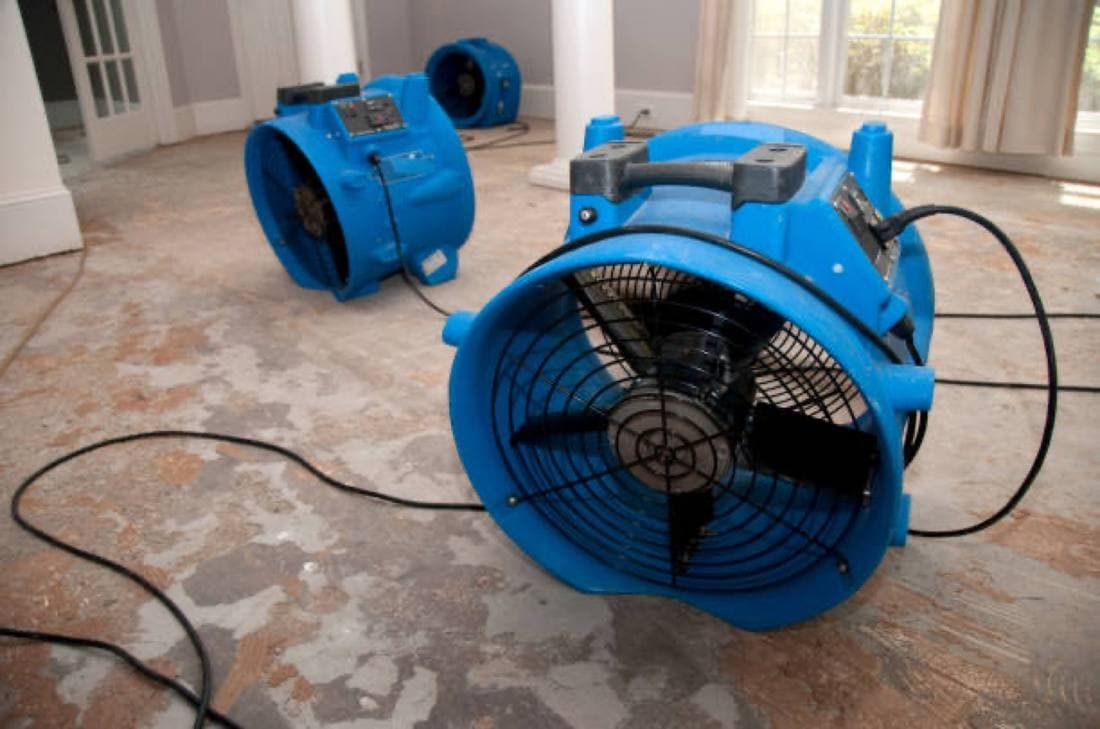
A good answer: Dehumidifiers and air movers, with moisture readings at the start and end.
A good answer: An estimate, checked with readings rather than days.
A good answer: Yes, with a report and photos the insurer can use.
A good answer: A qualified electrician before any wet circuit is used.
A good answer: Wet plaster, flooring or insulation that cannot be dried, listed.
A good answer: A cleaning and disinfection plan for contaminated water.
Getting the quote right
- Drying equipment and duration
- Moisture readings and reports
- Strip-out and disposal
- Repairs after drying
- Who actually attends — the technicians running the drying equipment, employed or subcontracted — and the business's VAT number, with VAT at 20% shown as its own line
Walk away if
- Replasters before the walls are dry
- No moisture readings
- Switches wet circuits back on without testing
- Pressure to sign over your insurance claim
- No written price
What a water damage restorer costs: £1,000–£7,000 per job
Water damage restoration is priced per job by the area affected, the drying time and the strip-out and repairs needed. Water Damage Restoration price guide →
Guide prices compiled by the Locufy team from published Irish and UK provider price lists and 2026/27 cost guides. Updated 2026.
KNOW WHAT TO LOOK FOR? NOW FIND ONE
Water damage restorers near you, with the badges that matter shown
ID checked, trader status and one score from every review — on the card, before you message anyone. Nearest first. No account needed to look.
Or post the job free and let them come to you.
- Make safeWater stopped, electrics isolated.
- AssessMoisture mapped and photos taken.
- Strip and dryUnsalvageable materials removed; drying equipment set up.
- Verify dryReadings confirm the structure is dry.
- RepairPlaster, flooring and decoration reinstated.
- Dehumidifier
- A machine that removes moisture from the air.
- Air mover
- A fan that speeds drying.
- Moisture map
- A record of where the building is wet.
- Category of water
- How clean the water was, which affects the clean-up.
- Strip-out
- Removing materials that cannot be dried.
- Drying certificate
- A record that readings show the building is dry.
AFTER
When the job is done
Hiring a water damage restorer: questions people ask
No licence or register applies anywhere in the UK.
Yes; have an electrician test wet circuits before use, and any notifiable repair certified.
£1,000–£7,000 a job, typically around £3,000. A small leak is cheapest; soaked rooms and dirty water push it up. Read the Water Damage Restoration price guide for what is in and out of the price, and use the postcode search above to find local water damage restorers.
Many policies cover escape of water; tell the insurer early and keep records.
Not until readings show the wall is dry.
In an older home, check before removing old materials.
MORE GUIDES
More hiring guides in trades & construction
Water damage restorers near you
Sources — checked October 2026
- Registered Competent Person Electrical register
- gov.uk — building work, replacements and repairs to your home (England)
- HSE — deciding if asbestos work must be done by a licensed contractor
- Consumer Rights Act 2015, section 49 — reasonable care and skill
- Consumer Rights Act 2015, section 54 — what you can ask for when a service falls short
- Consumer Contracts Regulations 2013, regulation 30 — the 14-day cancellation period
- Consumer Contracts Regulations 2013, regulation 28 — contracts the cancellation right does not cover
- Consumer Contracts Regulations 2013, regulation 36 — services started within the cancellation period
- Civil Procedure Rules Part 26 — the small claims track limit (England and Wales)
- Scottish Courts and Tribunals — making a claim under simple procedure
- nidirect — the small claims process (Northern Ireland)
- Buildings and construction (VAT Notice 708) — 2.1 Construction services: work to an existing building is normally standard-rated
- GOV.UK — VAT rates
- GOV.UK — Register for VAT: when to register