HOW TO HIRE · LESSONS & TUTORING · CHECKED OCTOBER 2026
How to hire a singing teacher in the UK
The checks, the questions and the paperwork.
No register lists singing teachers. Here is the vetting to ask for, what to ask about vocal health, and the terms to agree.
- Search and compare — no account needed
- Nearest to you first
- One score from Google, Trustpilot and Locufy reviews
THE 60-SECOND VERSION
Hiring a singing teacher in five steps
- Say what you want from singingMusical theatre, classical, pop, a choir, an audition or a wedding song. A singing teacher plans each differently.
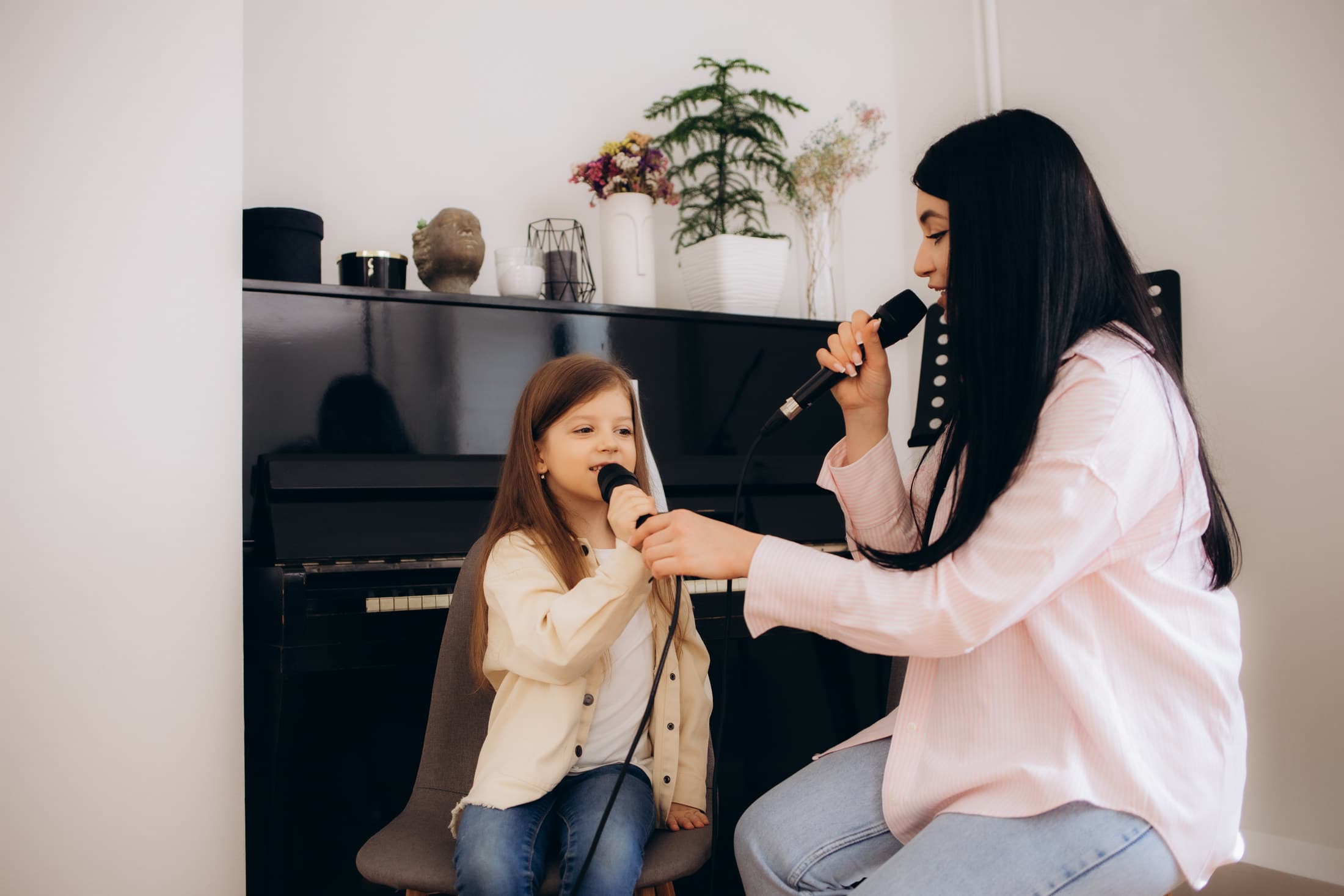
- Vetting firstBefore singing lessons at the teacher's studio, often by a piano, or online, see the enhanced DBS, PVG or AccessNI certificate that fits your nation.
- Ask what they have taught, and to whomAges, levels and how many pupils now. A singing teacher who plays well is not always one who teaches well.
- Start with one lessonOne singing lesson at the teacher's studio, often by a piano, or online tells you more than any profile; commit to a term or a block in advance only afterwards.
- Agree the terms in writingThe notice to stop, accompanist fees, and missed lessons — in writing before the first payment. A message on Locufy counts.
BEFORE YOU BOOK
Check before you book
No register applies
There is no register of singing teachers anywhere in the UK, and there is no protected title, so anyone may teach singing at the teacher's studio, often by a piano, or online. Exam boards award grades and diplomas, but there is no register of teachers to check them against.
Ask the singing teacher what they hold, where they trained, and for two people they teach now.
The check for teaching your child
A singing teacher who works with your child for thirty minutes to an hour a week is in regulated activity in England and Wales once it passes three days in any 30 (or any overnight session), and should hold an enhanced DBS check that includes the children's barred list. Supervision used to take some roles outside the rule; since 1 September 2026 it does not, whoever a singing teacher works alongside. In Scotland the equivalent is membership of the PVG scheme, which mygov.scot says to expect for tutors or instructors a parent hires for a child. In Northern Ireland, a singing teacher working for themselves applies for an enhanced AccessNI check through an Umbrella Body.
Parents cannot request the check themselves: a singing teacher applies and shows you the certificate. Note the date on it; in Scotland ask for proof of current PVG membership, in Northern Ireland the shared AccessNI certificate. gov.uk →
Grades, diplomas and teaching experience
Graded music exams and teaching diplomas are awarded by exam boards, not by a licensing body, and no register lists singing teachers. Singing grades, a music degree or conservatoire training, and professional performing are the evidence; ask about training in vocal health.
Ask the singing teacher where they trained, and what their current pupils are working on.
The terms for a term or a block in advance
The Consumer Rights Act 2015 requires a singing teacher who trades to provide the teaching with reasonable care and skill. Do not count on 14 days to cancel: regulation 28 of the Consumer Contracts Regulations 2013 usually excludes leisure services booked for a specific date or period, which covers most singing lessons, so the cancellation terms a singing teacher gives you in writing are what count. Agree in advance what happens about lessons that pushed a young voice too hard.
Before paying for a term or a block in advance, ask a singing teacher to set out the notice to stop, accompanist fees, and missed lessons in a message. legislation.gov.uk →
VAT
Singing lessons are exempt when a singing teacher gives them personally as a sole trader or partner, music being ordinarily taught in schools; a music school company or its employed teachers are standard-rated. Below the £90,000 registration threshold an individual tutor charges no VAT in any case, and has no VAT number to give.
Ask whether you pay the singing teacher directly or a music school; an individual under £90,000 adds no VAT. gov.uk →
A good answer: A specific answer naming the check for your nation, offered before you ask twice — a singing teacher who teaches for thirty minutes to an hour a week hears this question often.
A good answer: Repertoire in a comfortable range, short lessons for young singers, and no forcing the top notes.
A good answer: An honest answer — classical, musical theatre or pop technique are taught differently.
A good answer: A singing teacher who works gently and suggests seeing a doctor for persistent problems, not one who sings through it.
A good answer: Often yes; the cost is separate from the lesson.
A good answer: A plan with dates, and any exam fee shown separately.
A good answer: Notice periods that fit a term or a block in advance, written down, with the singing teacher's own cancellations made up.
Booking by the hour
- The rate per hour or per half hour, and any extra for an accompanist or an evening slot
- The minimum booking — often 30 minutes — and whether a lesson that ends early is charged in full
- What each side brings: your songs and backing tracks, water, the teacher's piano and exercises
- The goal agreed before the first hour: an audition, a grade exam, a choir, a first gig
- ID checked and the rating, and vetting for a learner under 18
Walk away if
- They brush off the DBS, PVG or AccessNI question for singing lessons with your child
- Pressure to buy an instrument or equipment through the singing teacher before the first lesson
- They push a child to belt or strain beyond a comfortable range
- No refund rule for a term or a block in advance, or one that changes after you pay
What a singing teacher costs: £20–£50 per hour
Singing teachers charge per lesson; audition coaching and accompanists cost more. Singing Lessons price guide →
Guide prices compiled by the Locufy team from published Irish and UK provider price lists and 2026/27 cost guides. Updated 2026.
KNOW WHAT TO LOOK FOR? NOW FIND ONE
Singing teachers near you, with the badges that matter shown
ID checked, trader status and one score from every review — on the card, before you message anyone. Nearest first. No account needed to look.
Or post the job free and let them come to you, or book by the hour.
- First lessonRange, breathing and what the singer wants to sing.
- Warm-upsBreath and gentle exercises at the start of every lesson.
- RepertoireSongs chosen for the voice and the goal.
- PracticeShort daily practice with a recording to sing along to.
- ReviewA recording at term's end compared with the first.
- Range
- The span of notes a singer can sing comfortably.
- Belting
- A loud, chest-voice sound used in musical theatre and pop.
- Head voice
- The lighter, higher part of the voice.
- Accompanist
- A pianist who plays for lessons, exams or auditions.
- Repertoire
- The songs a singer is working on.
- Vocal health
- Habits that keep the voice from strain.
AFTER
When the job is done
Hiring a singing teacher: questions people ask
The law does not require it of every singing teacher. What it does say is that a barred person must not work with children in regulated activity, which across England and Wales includes teaching a child on more than three days in 30 — so ask to see an enhanced DBS check, PVG membership in Scotland or an AccessNI check in Northern Ireland.
The law in all four nations is silent on who may teach singing. Singing grades, music training and professional experience are the evidence to ask about.
£20–£50 an hour, with £38 typical; vocal coaches preparing auditions cost most. For what moves the figure, see the singing lessons price guide; your town in the search box above shows singing teachers near you.
Usually not. Music is a school subject, so a singing teacher working as a sole trader or partner is exempt; lessons from a music school company or its employed teachers are standard-rated, with VAT once over £90,000.
For technique and repertoire, often yes; sound delay makes singing along live harder.
Many start around seven or eight with short, gentle lessons.
MORE GUIDES
More hiring guides in lessons & tutoring
Singing teachers near you
Sources — checked October 2026
- gov.uk (DBS) — regulated activity with children
- gov.uk — change to the definition of regulated activity with children from 1 September 2026
- mygov.scot — who needs PVG scheme membership (personal employers)
- nidirect — AccessNI checks for the self-employed and personal employees
- gov.uk — Education and vocational training (VAT Notice 701/30)
- Consumer Contracts Regulations 2013, regulation 28 — contracts excluded from cancellation
- Consumer Rights Act 2015, section 49 — reasonable care and skill
- Consumer Contracts Regulations 2013, regulation 30 — cancellation period
- Citizens Advice — deciding whether to make a small claim (England and Wales)
- Scottish Courts and Tribunals — guide to simple procedure
- nidirect — small claims process (Northern Ireland)
- Education and vocational training (VAT Notice 701/30) — 6.1 The treatment of private tuition
- GOV.UK — VAT rates
- GOV.UK — Register for VAT: when to register