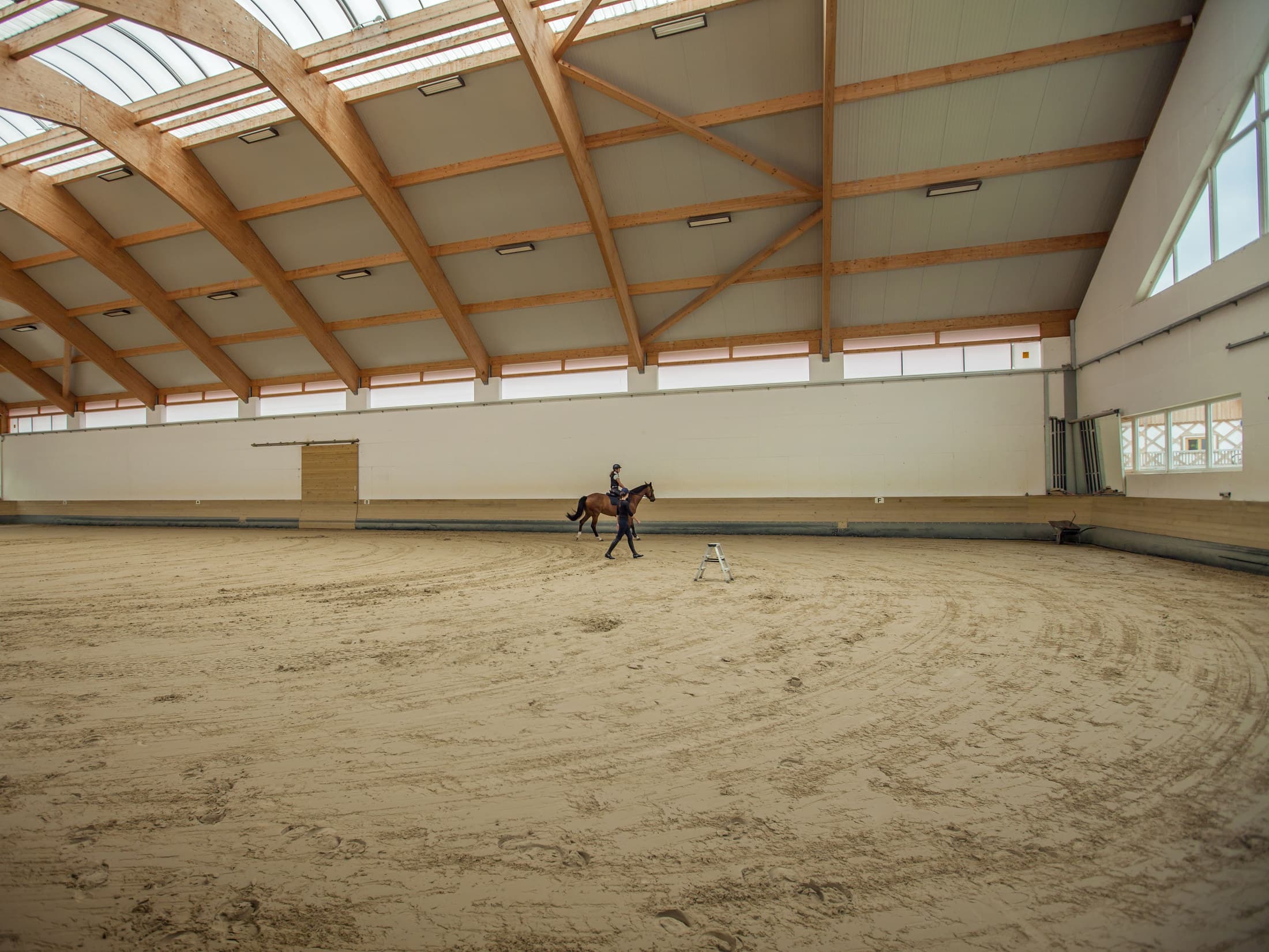
HOW TO HIRE · LESSONS & TUTORING · CHECKED OCTOBER 2026
How to hire a riding instructor in the UK
The checks, the questions and the paperwork.
No register lists riding instructors, but riding schools in England and Wales need a council licence. Here is what to check.
- Search and compare — no account needed
- Nearest to you first
- One score from Google, Trustpilot and Locufy reviews
THE 60-SECOND VERSION
Hiring a riding instructor in five steps
- Say the level and the goalFirst lessons, cantering, jumping or a nervous adult returning. A riding instructor matches the horse and lesson to it.
- See the criminal record checkFor riding lessons with a child, ask for an enhanced DBS check in England and Wales, PVG membership in Scotland or AccessNI in Northern Ireland. A riding instructor applies and shows you.
- Ask about their coachingThe award a riding instructor holds, who gave it, and the level of the people they coach now.
- Start with one lessonOne riding lesson in a riding school's arena tells you more than any profile; commit to a block of lessons only afterwards.
- Agree the terms in writingThe weather rule, hat hire, and the block refund rule — in writing before the first payment. A message on Locufy counts.
BEFORE YOU BOOK
Check before you book
No register applies
None of the four UK nations licenses or registers riding instructors; the title is not protected, and sessions run in a riding school's arena. Coaching qualifications are real but voluntary: ask for the certificate and check it with the awarding body. No statutory register covers riding coaching; the evidence is the riding instructor's certificate and the body that issued it. Ask about the instructor's teaching qualification and the yard's experience with riders at your level.
Ask the riding instructor for the award and the body that gave it, and for two people or families they coach now. Get the award name and awarding body from the riding instructor and confirm it there.
The check for teaching your child
A riding instructor who works with your child at a weekly lesson is in regulated activity in England and Wales once it passes three days in any 30 (or any overnight session), and should hold an enhanced DBS check that includes the children's barred list. Supervision used to take some roles outside the rule; since 1 September 2026 it does not, whoever a riding instructor works alongside. In Scotland the equivalent is membership of the PVG scheme, which mygov.scot says to expect for tutors or instructors a parent hires for a child. In Northern Ireland, a riding instructor working for themselves applies for an enhanced AccessNI check through an Umbrella Body.
Parents cannot request the check themselves: a riding instructor applies and shows you the certificate. Note the date on it; in Scotland ask for proof of current PVG membership, in Northern Ireland the shared AccessNI certificate. gov.uk →
Insurance and first aid
A self-employed riding instructor has no legal duty under the 1981 first-aid Regulations to give first aid to clients; HSE strongly recommends planning for it anyway. Public liability insurance pays if someone is hurt in a riding school's arena; it is a norm, not a legal requirement.
Ask the riding instructor for the insurer's name, the policy dates, and whether they hold a current first-aid certificate. hse.gov.uk →
Riding school licence (England and Wales)
In England, a business that hires out horses for riding or for riding lessons needs a council licence under England's 2018 animal activity licensing Regulations. In Wales, the Riding Establishments Act 1964 requires a riding establishment to hold a licence from the local authority. The Act does not extend to Northern Ireland.
Ask the riding school for its council licence and its date; your council can confirm it. legislation.gov.uk →
VAT
Riding lessons are standard-rated at 20%, hat and body protector hire included. Once its taxable turnover passes £90,000 a year it must register, charge VAT and print it as its own line.
Ask the riding school for its VAT number, and whether the lesson price already includes the 20%. gov.uk →
A good answer: The right one for your nation — enhanced DBS, PVG or AccessNI — with a date, shown before a riding instructor starts.
A good answer: In England or Wales, yes — and they can tell you its date.
A good answer: Matched to your size and level by the riding instructor.
A good answer: A properly fitted riding hat is essential; ask whether the yard lends one and how it is checked.
A good answer: Private for nervous or new riders; groups for practice at lower cost.
A good answer: An indoor arena, a rearranged lesson or a refund.
A good answer: Notice periods that fit a block of lessons, written down, with the riding instructor's own cancellations made up.
Getting the quote right
- Who actually attends the lesson — the riding instructor named, or a junior instructor, employed or subcontracted
- Price and length of each riding lesson, stated together
- Books, kit or materials: included, or extra and how much
- How a block of lessons works, and the refund if it is cut short
- Hat and body protector hire, and whether they are in the riding lesson price
- The cancellation rule in writing, because a leisure booking for a fixed date or period usually has no 14-day right to cancel (regulation 28 of the Consumer Contracts Regulations 2013)
- The VAT number if the riding school is registered, with VAT on the lessons as its own line
Walk away if
- No vetting shown, though the riding instructor would see your child at a weekly lesson
- No insurance, or a riding instructor who cannot name the insurer
- They offer injury treatment as a physiotherapist but are not on the HCPC Register
- No hat check before the lesson
- No council licence at a riding school in England or Wales
- A block of lessons demanded up front, with no written refund terms
What a riding instructor costs: £23–£53 per lesson
Riding schools charge per lesson; private and hour-long lessons cost more than short group lessons. Horse Riding Lessons price guide →
Guide prices compiled by the Locufy team from published Irish and UK provider price lists and 2026/27 cost guides. Updated 2026.
KNOW WHAT TO LOOK FOR? NOW FIND ONE
Riding instructors near you, with the badges that matter shown
ID checked, trader status and one score from every review — on the card, before you message anyone. Nearest first. No account needed to look.
Or post the job free and let them come to you.
- Tack and hatHat fitted and checked; the horse tacked up and checked.
- MountingGetting on safely, with help.
- Walk and trotPosition, balance and steering.
- New skillCanter, poles or a jump when ready.
- Cool-downWalking the horse and dismounting safely.
- Tack
- The saddle, bridle and other equipment on the horse.
- Rising trot
- Rising and sitting in the saddle in rhythm with the trot.
- Arena
- The enclosed area where lessons are ridden.
- Hack
- A ride out on tracks or roads.
- Body protector
- A padded vest worn for jumping or by children.
- Licensed riding school
- A yard licensed by the council to hire out horses for riding.
AFTER
When the job is done
Hiring a riding instructor: questions people ask
The law does not require it of every riding instructor. What it does say is that a barred person must not work with children in regulated activity, which across England and Wales includes teaching a child on more than three days in 30 — so ask to see an enhanced DBS check, PVG membership in Scotland or an AccessNI check in Northern Ireland.
In England, a business hiring out horses for riding or lessons needs a council licence under the 2018 Regulations; in Wales, a riding establishment needs one under the Riding Establishments Act 1964. The 1964 Act does not extend to Northern Ireland.
£23–£53 a lesson, with £35 typical for a thirty-minute group lesson. See the horse riding lessons price guide for the full range; type your town above for real riding schools nearby.
Yes, at 20%, from a VAT-registered riding school or instructor: riding lessons are standard-rated. An instructor under the £90,000 threshold is not registered and adds nothing.
Not for the first lessons at most yards, but a properly fitted hat of your own is a good early purchase.
Many riding schools take children from about four or five on a lead rein.
MORE GUIDES
More hiring guides in lessons & tutoring
Riding instructors near you
Sources — checked October 2026
- gov.uk (DBS) — regulated activity with children
- gov.uk — change to the definition of regulated activity with children from 1 September 2026
- mygov.scot — who needs PVG scheme membership (personal employers)
- nidirect — AccessNI checks for the self-employed and personal employees
- HSE — first aid FAQs (first aid for the public)
- HSE — get insurance for your business
- HCPC — check the Register
- Consumer Contracts Regulations 2013, regulation 28 — contracts excluded from cancellation
- Consumer Rights Act 2015, section 49 — reasonable care and skill
- Consumer Contracts Regulations 2013, regulation 30 — cancellation period
- Citizens Advice — deciding whether to make a small claim (England and Wales)
- Scottish Courts and Tribunals — guide to simple procedure
- nidirect — small claims process (Northern Ireland)
- Animal Welfare (Licensing of Activities Involving Animals) (England) Regulations 2018, schedule 1
- Riding Establishments Act 1964, section 1
- Riding Establishments Act 1964, section 9 — extent
- VAT rates — VAT rates for goods and services: standard rate 20% on most goods and services
- GOV.UK — Register for VAT: when to register