HOW TO HIRE · PERSONAL & LIFESTYLE · CHECKED OCTOBER 2026
How to hire a declutterer in the UK
The checks, the questions and the paperwork.
No register applies to declutterers in the UK, but anyone taking items away must be a registered waste carrier. Here is how to check, and what to ask.
- Search and compare — no account needed
- Nearest to you first
- One score from Google, Trustpilot and Locufy reviews
THE 60-SECOND VERSION
Hiring a declutterer in five steps
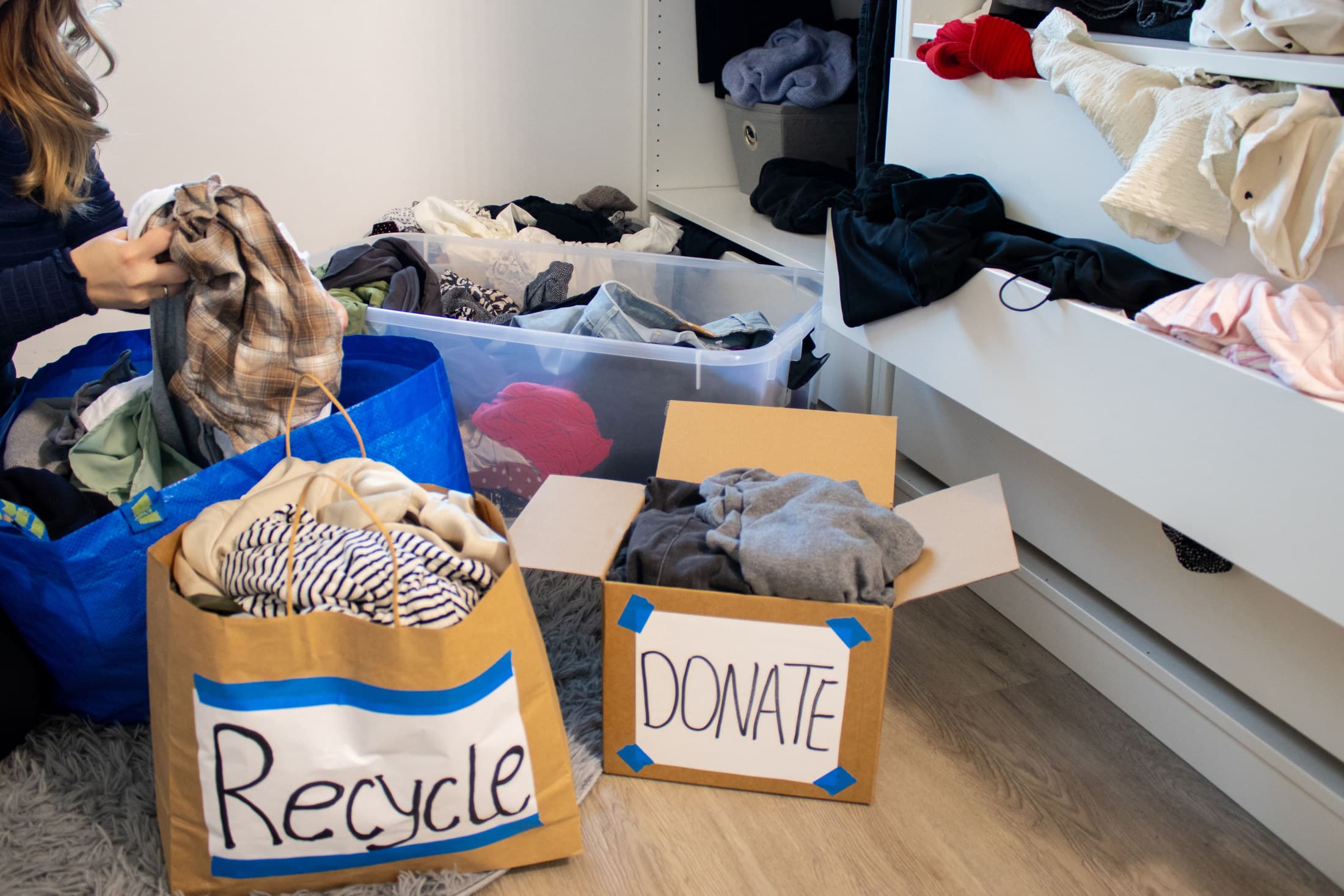
- Agree what happens to thingsKeep, donate, sell, recycle, bin — decided by you, item by item or category by category.
- Check the waste carrier numberIf the declutterer takes anything away, search the number on the public register.
- Set the scope and hoursWhich rooms, how many sessions, what the price covers.
- Lock away what is not in scopeValuables, documents and sentimental items you are not ready to sort.
- Get receipts for donations and disposalWhere things went, in writing.
BEFORE YOU BOOK
Check before you book
No register applies
Sorting a home with its owner is unregulated in England, Wales, Scotland and Northern Ireland — there is no declutterers' register. Trust is the issue: they work through your belongings, so references and clear written scope matter most.
Ring two recent clients and agree the scope in writing.
Waste carrier registration if they take things away
A declutterer who takes away rubbish or unwanted items as part of the job is transporting waste and must be registered as a waste carrier: with the Environment Agency in England, Natural Resources Wales, SEPA in Scotland, or the NIEA in Northern Ireland. In England and Wales, section 34 of the Environmental Protection Act 1990 puts a duty on you to hand household waste only to an authorised person.
Ask for the waste carrier number and search it on the regulator's public register. environment.data.gov.uk →
Basic criminal record check (self-requested)
No law requires a declutterer to hold one. Someone working through your belongings can request their own basic check — DBS in England and Wales, a Level 1 disclosure from Disclosure Scotland, or an AccessNI basic check in Northern Ireland — and show it to you.
Ask to see a recent certificate in their name. gov.uk →
Public liability insurance
No register sets insurance for declutterers. Ask whether they hold public liability cover for damage in your home and for lifting and carrying.
Ask for the insurer's name.
VAT
Decluttering sessions are standard-rated, so a declutterer who is VAT-registered adds 20% to the session fee and to any disposal runs they bill. A business over the £90,000 threshold must charge it and show it separately; a sole declutterer below that usually charges none.
Ask for the declutterer's VAT number and for VAT shown apart on the invoice. gov.uk →
A good answer: You do, always; a declutterer guides, never throws away without your say.
A good answer: A number you can check on the public register — or a clear statement that they do not carry waste.
A good answer: Named charities and a list or receipt.
A good answer: An estimate by room, with a review after the first session.
A good answer: Slowly, with a separate box to decide later, and nothing shredded without asking.
A good answer: Names and numbers offered readily.
A good answer: A certificate with the insurer's name.
Getting the quote right
- The rooms and estimated sessions, with the session length
- Disposal and donation runs priced separately
- Skip, van or waste charges, and the waste carrier number
- Storage products, if any, as a separate line
- Travel outside their area
- Who actually attends: the declutterer you met, or a team brought in for a large house, and whether those helpers are employed or subcontracted
- The declutterer's VAT number on the estimate, with VAT apart from the session and disposal charges
Walk away if
- Taking items away with no waste carrier registration
- Throwing things out without asking
- No list of what was donated or disposed of
- Pressure to keep going beyond what you agreed
- Full payment for many sessions up front
- No references
What a declutterer costs: £60–£350 per session
Declutterers price by the session or the room, with donation runs, waste disposal and storage products charged on top. Decluttering Service price guide →
Guide prices compiled by the Locufy team from published Irish and UK provider price lists and 2026/27 cost guides. Updated 2026.
KNOW WHAT TO LOOK FOR? NOW FIND ONE
Declutterers near you, with the badges that matter shown
ID checked, trader status and one score from every review — on the card, before you message anyone. Nearest first. No account needed to look.
Or post the job free and let them come to you.
- AssessmentA look at the rooms and your goals; a plan and an estimate.
- SortingKeep, donate, sell, recycle, bin — your decisions.
- RemovalDonations and waste taken by a registered carrier.
- ResetKept items put back in a workable way.
- Wrap-upThe record of what went where, and tips to keep it clear.
- Waste carrier
- A business registered to transport waste.
- Duty of care
- The householder's legal duty to give waste only to an authorised person (England and Wales).
- Keep pile
- Items you have chosen to keep.
- Donation run
- Taking items to charity.
- Session
- A booked block of hours.
- Public register
- The regulator's searchable list of waste carriers.
AFTER
When the job is done
Hiring a declutterer: questions people ask
No licence applies to decluttering in any UK nation. But a declutterer who takes items away must be a registered waste carrier.
Yes. In England and Wales, section 34 of the Environmental Protection Act 1990 requires householders to hand waste only to an authorised person. Search the number on the regulator's register.
No law requires one, but they can request their own basic check — DBS, Disclosure Scotland or AccessNI — and show you.
£60 to £350 a session, typically around £160. Rooms, volume and disposal move the price. Room-by-room and whole-house session prices are in the decluttering service price guide; enter your town above for local declutterers.
You. Agree that in writing before the first session.
Raise it in writing at once. A trader must use reasonable care and skill under the Consumer Rights Act 2015.
MORE GUIDES
More hiring guides in personal & lifestyle
Declutterers near you
Sources — checked October 2026
- gov.uk — register as a waste carrier, broker or dealer (England)
- Environmental Protection Act 1990, section 34 — duty of care
- gov.uk — request a basic DBS check
- mygov.scot — Level 1 (basic) disclosure
- nidirect — apply online for a basic check (AccessNI)
- Consumer Rights Act 2015, section 49 — reasonable care and skill
- Citizens Advice — more help with a consumer issue
- gov.uk — make a court claim for money: court fees
- VAT rates — VAT rates for goods and services: standard rate 20% on most goods and services
- GOV.UK — Register for VAT: when to register