DIY GUIDE · HOME REPAIRS & HANDYMAN · CHECKED OCTOBER 2026
How to fix a window that sticks, drops or will not lock yourself
An hour or two. £10–£45 in a hinge pair, a handle or seals.
Diagnose the hinge, the handle or the seal, renew what has worn, and stop at the glass and at windows out of reach.
- Every step, start to finish
- Checked October 2026 — sources at the end
- Honest about when to call a pro
FIRST, THE HONEST ANSWER
Do it yourself, or get a repairer?
Do it yourself if…
- A uPVC or aluminium casement drops, drags on the frame or will not lock because the hinges have worn
- A window handle is loose, broken or will not turn
- A timber casement sticks with paint or swelling
- The window is on the ground floor, or you can work on it safely from inside the room
Get a pro if…
- The glass is cracked, broken, or misted between the panes
- The frame is rotten, split, or the window is coming away from the wall
- The window is upstairs and the work needs a ladder outside
- A sash window needs new cords and weights and you have not taken one apart before, or it has lead paint you would disturb
Safety first
- Work from inside the room. HSE's ladder guidance limits leaning ladders to light, short work with three points of contact, and window repairs need both hands; upstairs outside work is for someone with proper access.
- Support the sash before removing a hinge screw, with a helper or wedges, so it cannot fall.
- Never remove or repair glass yourself; broken or loose panes cut badly, and replacement glass in some positions must be safety glass.
- In an older house, assume old paint on timber windows may contain lead. HSE advises wet abrasion and keeping children and pregnant women away.
- Keep escape windows escape windows: egress hinges stay egress, and restrictors must release easily.
Stop here: Glass, sealed units and replacing the window
Replacement glass in doors, low windows and next to doors must be safety glass under the building regulations' safety glazing requirements, and a heavy sealed unit is dangerous to handle. Replacing the whole window is building work: in England and Wales it must meet the Building Regulations, usually shown by a certificate from a competent person scheme installer, while repairs that leave the frame in place are not covered. Scotland and Northern Ireland have their own building standards. Book a glazier or a window specialist. How to hire a window repairer →
| MATERIAL | COVERAGE | FOR THIS JOB |
|---|---|---|
| Friction hinges | Same type, length and stack height | One pair per window |
| Window handle | Matching spindle length and screw centres | One |
| Replacement seal | Matched gasket profile, or a draught strip | Enough for the window's perimeter |
How much seal
Seal length = the window's perimeter: 2 × (sash height + sash width), plus a little for the corners. A casement 1,050 mm high and 600 mm wide needs 2 × (1,050 + 600) = 3,300 mm, so about 3.5 m of seal. Three such windows need about 10.5 m.
Measure the sash, not the frame opening, and buy a single length per window so there are no joins mid-side.
A casement that sags and catches on the bottom of the frame on the opening side has worn hinges. One that closes but whose handle will not lock usually has a misaligned keep or a dropped sash. A handle that turns freely without moving the locking points has failed inside. A draught with the window locked is the seal. A stiff timber window in damp weather is swelling, and in dry weather paint.
uPVC casements hang on friction hinges — sliding stays — fitted top and bottom on side-hung windows or at the sides on top-hung ones. They come in lengths and stack heights, and hinge makers sell standard, restricted and egress versions. An egress hinge opens wide for escape in a fire and must be replaced with another egress hinge where one is fitted.
Measure the hinge's length along its track, closed, and its stack height — how thick it is when shut. Retailers list friction hinges by length and stack height, such as a top-hung 414 x 13.5mm pair. Buy the same type, length and stack, and replace hinges in pairs.
uPVC window handles fit a square spindle into the espagnolette lock inside the sash, and come with spindles of different lengths, offset or inline, and locking or non-locking. Take the old one off to see its spindle length and screw spacing before buying. A replacement handle should be at least as secure as the old one, and on a bedroom window a child-restricting or lockable handle is worth considering.
uPVC windows seal on gaskets in grooves; timber windows can take self-adhesive or routed draught strips. Match the profile of a gasket to the groove, and choose a seal thick enough to fill the gap but not so thick that the window will not close.
THE PART THAT DECIDES THE FINISH
Before you start — the window and the fault
Find your window and its fault. Each case starts with you working from inside, with the window open and supported.
uPVC casement dropping or dragging
Catches the frame when closing; handle hard to lock.
- Open the window and lift its free corner gently: play in the hinges means they are worn
- Look at the hinge tracks for bends, broken rivets or missing screws
- Measure the hinge length and stack height
- Check whether it is a standard, restricted or egress hinge
Handle loose or not locking
The handle wobbles, droops or turns freely.
- Turn the cover plate on the handle base to reveal the screws
- Tighten them and test
- If the handle turns but the locking points do not move, the handle spindle or the lock is broken
- Check the keeps on the frame line up with the locking points
Timber casement sticking
Binds in the frame, worse in damp weather.
- Check the hinges are tight before you plane anything
- Mark where it binds with a pencil while it is stuck
- Expect layers of paint at the edges in an older house
- If the paint is old, assume it may contain lead
Draughts with the window shut
Cold air, whistling, condensation at the edges.
- Close the window on a sheet of paper all round; it should grip
- Look at the gaskets for flattening, splits and gaps
- Check the handle locks fully and the sash sits square
- On timber, look for gaps between sash and frame
Sash window not staying up
Drops when opened, or is stuck shut.
- Check for a broken cord at the side of the sash
- Look for paint sealing the sash into the frame
- Look for the pocket covers in the side of the frame, which give access to the weights
- In an older house, assume the paint may contain lead before you disturb it
Glass or the frame itself
Misted panes, cracks, rot, movement in the wall.
- Wipe both faces: mist between the panes is a failed seal
- Press the frame and cill with a screwdriver for soft timber
- Look at the joint between frame and wall for cracks or gaps
- These are for a specialist; note what you find for the quote
THE JOB
How to fix a window, in order
Work from inside and support the sash
10 minDo everything from inside the room. Open the window and support the sash at the right height with wedges on the frame, or with a helper holding it, before you touch a hinge screw. Put a dust sheet down. If the window is upstairs and the work needs you to lean out or go outside on a ladder, stop. Read the case above that matches your window.
- Close and lock other windows in the room so they cannot swing in a gust
- Keep children and pets out of the room while a window is open and unattended
- Have a box for the screws
Mistake to avoid: Removing hinge screws with nobody holding the sash. A glazed sash is heavy and falls out of an upstairs window as soon as the last screw is out.
Clean and lubricate first
15 minWash the frame, the hinges and the locking points, and clear the drainage slots at the bottom of a uPVC frame. Spray a little silicone lubricant onto the hinge tracks and every locking point and keep, then open and close the window several times and work the handle. A surprising number of stiff windows run freely after this.
- Avoid oil and grease; they gather dirt
- Wipe off the excess so it does not mark the glass
- Check the handle locks with less effort afterwards
Mistake to avoid: Replacing hinges on a window that only needed cleaning. The new hinges go on, and the grit in the keeps is still there.
Replace a pair of friction hinges
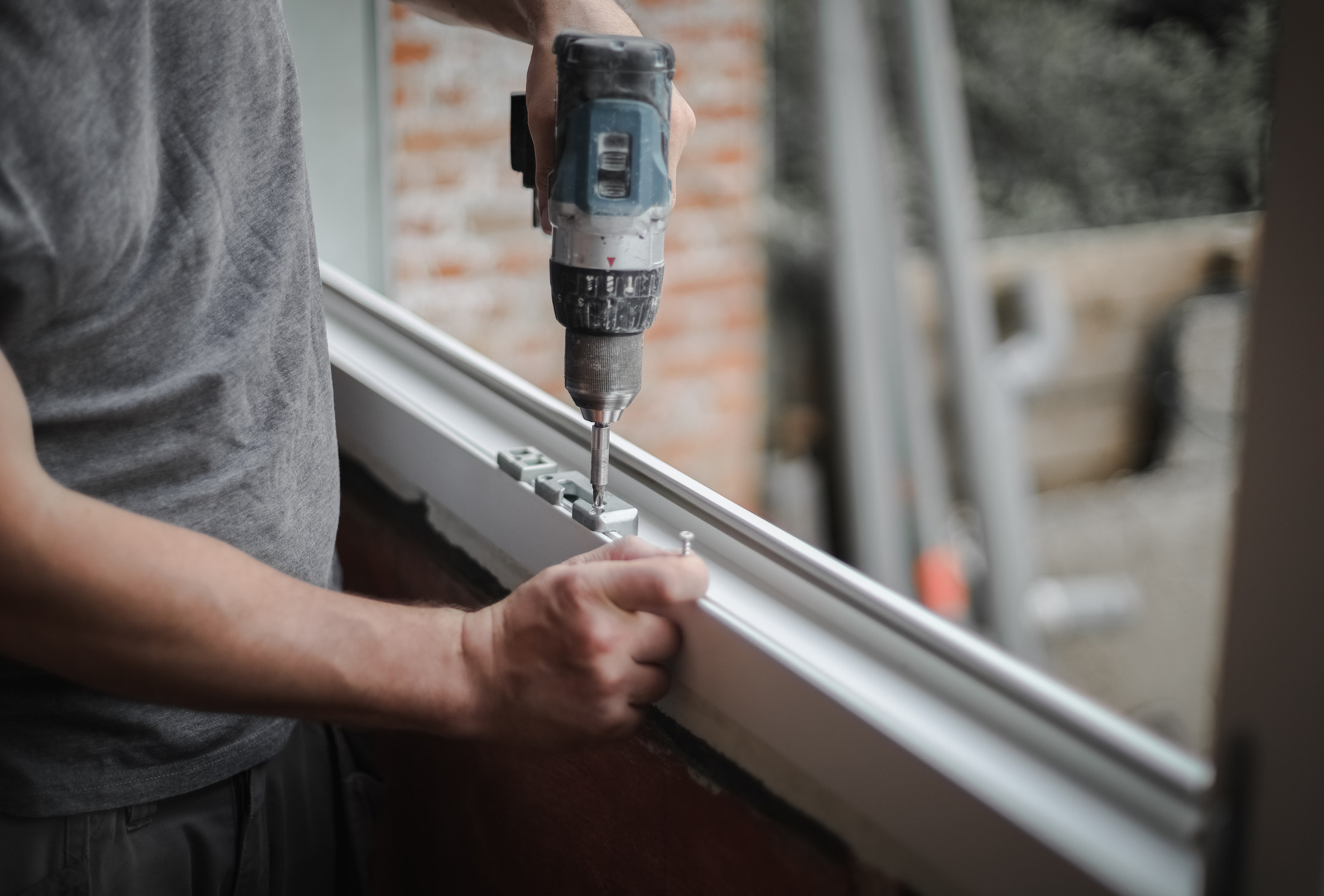
1 hrWith the sash open and held, undo the screws fixing the top hinge to the sash, then to the frame, and lift it out; repeat with the bottom hinge while your helper takes the weight. Fit the new hinges to the frame first, in the same position, using the old holes where they line up. Then offer the sash up and screw it to the new hinges. Close the window and check it seats squarely and locks easily.
- Replace both hinges, not just the worn one
- Use screws of the same size; longer screws can foul the glazing
- If the old screw holes are stripped, use the next size up or fill and redrill
Mistake to avoid: Fitting a standard hinge in place of an egress hinge on an escape window. The window then no longer opens wide enough to climb out in a fire.
Fix or replace the handle
15 minTurn the handle to the open position, rotate the cover plate at its base to expose the screws, and undo them. Pull the handle out with its spindle. Check the spindle length and the screw spacing. Fit the new handle in the same position, with the window open, so the spindle engages the lock. Tighten the screws evenly, refit the cover and test the handle locks and unlocks smoothly.
- Match offset or inline handles to the old one
- A key-locking handle is a good choice on ground-floor windows
- Keep the key somewhere everyone in the house can find in an emergency
Mistake to avoid: Fitting a handle with too short a spindle. It looks fine and slips out of the lock the first time it is forced.
Align the keeps
15 minIf the window closes but the handle is stiff to lock, look at the keeps on the frame and the locking points on the sash for wear marks. With the window open, loosen the keep that drags, move it a millimetre towards the mark, and retighten it. Test after each move. If every keep is out the same way, the sash has dropped and the hinges are the cure.
- Small moves; a millimetre often does it
- Tighten keep screws firmly; they take the force of a locked window
- Check the window still seals on a sheet of paper
Mistake to avoid: Moving keeps to compensate for worn hinges. The window locks for a month, then the sash drops further and nothing lines up.
Ease a sticking timber casement
1 hrTighten the hinge screws, using longer ones where the holes are worn. If the window still binds, mark where with a pencil, take the sash off if you can, and plane or sand the binding edge back to bare wood, a little at a time. Prime and paint the bare edge straight away, and let it dry before closing the window, or it will stick shut again. If the paint is old, use wet abrasive and keep the dust down.
- Plane the hinge side, not the lock side, if possible, so the lock still meets
- Seal every bare edge, or the timber takes up damp and swells
- Wait for a dry day; a damp window swells and you take off too much
Mistake to avoid: Dry-sanding layers of old paint in an older house. HSE warns that lead paint was in use until the early 1980s, and the dust is toxic.
Renew the seals
30 minOn uPVC, pull the old gasket out of its groove from a corner, take a sample to match, and press the new one in with your thumbs without stretching it, cutting the ends square at a corner. On timber, clean the frame rebate and fit a self-adhesive draught strip of the right thickness, or a routed seal. Close the window on a sheet of paper at several points to check it grips but still locks easily.
- Do not stretch gaskets; they shrink back and leave gaps
- Fit timber strips to the frame, not the sash, where the window closes onto them
- Too thick a seal stops the window locking
Mistake to avoid: Fitting a seal that is too thick to make sure. The window will not close fully, and the lock and hinges strain every time.
Test, and know when to stop
10 minOpen and close the window several times, lock and unlock it, and check it opens to its full stop. On an escape window, check it opens wide enough to climb out. If the glass is misted, cracked or loose, the frame is soft, or the window needs working on from outside above ground level, that is where this guide stops.
- Lubricate the hinges and locks twice a year
- Check bedroom window restrictors can be released by an adult in an emergency
- Note the hinge sizes for next time
Mistake to avoid: Ignoring a misted pane because the window now opens. A failed sealed unit loses most of its insulation and only gets worse.
The mistakes that make windows worse
- Taking a sash off with nobody holding it
- Fitting standard hinges where egress hinges belong
- Moving keeps to hide worn hinges
- Dry-sanding old paint on timber windows
- Working outside on a ladder at an upstairs window
Stop here and get a window repairer
- Glass is cracked, broken or misted between the panes
- The frame or cill is rotten, split or moving in the wall
- The work can only be done from outside above the ground floor
- The espagnolette lock inside the sash has failed
| WHAT YOU SEE | WHY, AND THE FIX |
|---|---|
| uPVC window dropped and catching the frame | Worn friction hinges. Replace both hinges with the same type, length and stack height. |
| Window handle stiff to lock | Dirty or misaligned keeps, or a dropped sash. Clean and lubricate, then align the keeps; if the sash has dropped, replace the hinges. |
| Window handle turns but does not lock | The handle spindle or the espagnolette lock has failed. Try a new handle; if that does not cure it, the lock inside the sash needs a specialist. |
| Draught round a closed window | Perished or flattened gaskets. Replace them with the matching profile. |
| Condensation between the panes | The sealed unit has failed. It needs replacing; the frame is usually fine. |
| Timber window stuck shut | Paint or swelling. Score along the paint line, ease it open, and plane and repaint the binding edge on a dry day. |
| Sash window will not stay open | A broken sash cord. New cords mean taking out the beads and the sash; a confident DIYer can do it, otherwise call a sash specialist. |
| Window will not open far enough to escape | A restrictor engaged, or a non-egress hinge fitted. Release the restrictor; refit egress hinges where the window is an escape route. |
| Window rattles in the wind when locked | The sash is not pulled tight onto its seals. Move the keeps a fraction towards the inside so the locking points draw the sash in, or renew flattened gaskets. |
| Black mould on the seals and frame | Condensation running down the glass every morning. Clean with a mould remover, open the trickle vents, and wipe the glass dry on cold mornings. |
WHAT YOU SAVE
What it costs to do it yourself
| Friction hinges, pair | £8–£10 |
|---|---|
| Window handle | £12–£14 |
| Window seal | £7–£9 |
| Silicone lubricant | £4–£8 |
| Total, a typical window repair | £10–£45 |
| DIY total | £10–£45 |
Guide prices compiled by the Locufy team from published Irish and UK provider price lists and 2026/27 cost guides. Updated 2026.
Hinges, handles and seals are cheap; a window repairer's price is for glass, locks inside the sash and anything at height.
RATHER NOT?
Window repairers near you, with prices shown
The ones who cover your area, nearest first, with one score from every review. No account needed to look.
Or post the job free and let them come to you.
Clean and lubricate the hinges and locking points twice a year, and clear the drainage slots.
Make sure everyone knows which windows open wide for escape and where any keys are kept.
Old hinges and handles go to the metal skip at the household waste recycling centre; old seals go in the general waste. Broken glass goes to the recycling centre wrapped and labelled, never in a bottle bank.
Write the hinge length and stack height on the inside of the window board for the next time.
Fixing a window that sticks, drops or will not lock: questions people ask
The friction hinges have worn. Replace both with the same type, length and stack height, working from inside with the sash supported.
Measure its length along the track when closed and its stack height — its thickness when shut — and note whether it is standard, restricted or egress.
Not by venting or drying it. The sealed unit has failed and needs replacing by a glazier.
Dirty or misaligned keeps, a dropped sash, or a failed handle or lock. Clean and lubricate, align the keeps, and replace the handle if it turns freely.
Replacing a window is building work. In England and Wales, use an installer registered with a competent person scheme so it is certified; Scotland and Northern Ireland have their own rules.
On the Locufy UK price guide window repair costs £55–£300 per window, typically £145. Glass and locks sit at the top.
MORE GUIDES
More DIY guides
Sources — checked October 2026
- Mila — friction hinges for windows (standard, restricted and egress)
- HSE — types of ladder and using them safely
- HSE — construction hazardous substances: lead (old paint until the early 1980s)
- GOV.UK — building regulations approval: replacing windows and doors
- FENSA — homeowners: replacement windows against the Building Regulations; repairs not covered
- GOV.UK — dispose of household waste
- Wickes — friction hinges (414 x 13.5mm and other sizes), price check October 2026
- Wickes — window handles, price check October 2026
- Wickes — window seals, price check October 2026
- Wickes — lubricants, price check October 2026