HOW TO HIRE · BEAUTY & GROOMING · CHECKED OCTOBER 2026
How to hire a tattoo artist in Ireland
The checks, the questions and the paperwork.
A tattoo artist in Ireland costs €80–€200 per hour, typically around €120. Here is how to check that in a minute, what to ask before you book, and what you must be handed when the job is done.
- Search and compare — no account needed
- Nearest to you first
- One score from Google, Trustpilot and Locufy reviews
THE 60-SECOND VERSION
Hiring a tattoo artist in five steps
- Are you a trader, and can I see that in writing?No register covers tattoo artist work, so trader status is what your consumer rights hang on — cover-ups and Touch-ups — many tattoo artists also offer cover-up services for existing tattoos that a client may want to modify or hide.
- How does artist's experience change the price?Certification costs the provider money, and it shows in the rate. — ask before the quote rather than after.
- How does complexity of the design change the price?It is checked on the visit because it changes the method. — ask before the quote rather than after.
- How does size of the tattoo change the price?The larger the job, the more hours it takes to finish. — ask before the quote rather than after.
- What is not included?Services such as laser removal of tattoos, piercing, or extensive skin preparation are generally not included in tattooing services — get the exclusions named in the quote, because a tattoo artist job is priced on what was agreed and not on what was assumed.
BEFORE YOU BOOK
Check before you book
No register applies
NO REGISTER APPLIES TO HAIRDRESSERS, BARBERS, BEAUTICIANS OR NAIL TECHNICIANS. Anyone may trade. The line that does exist is medicines: anything involving a PRESCRIPTION-ONLY MEDICINE — botulinum toxin above all — may only be prescribed by a registered prescriber, and that is a medical matter rather than a beauty one. A clinic offering injectables with no named prescriber is the single clearest warning sign in this family.
Look for the trader badge and the ID-checked badge on the Locufy profile — both are checked by us, not claimed by the provider.
What to check instead
For injectables, WHO PRESCRIBES — a named, registered prescriber who has seen you, not a prescription arranged remotely for someone they have never met; For any treatment that breaks the skin, what is single-use and what is sterilised; A patch test before colour or lash work, and enough time before an event; The training and the insurer for the specific treatment, not the salon generally; What the aftercare is and who you call out of hours if something goes wrong; Photographs of their own work on hair or skin like yours.
Ask for each of these before you agree a price, and get the answers in the same message as the quote.
Insurance
Expect treatment-specific professional indemnity — a policy for facials may exclude needles entirely. From a company, ask for the insurer, the limit and the VAT number, and ask who actually attends: the team that turns up may be employed, subcontracted or both, and only one of those is supervised by the firm you are paying.
Ask to see the current certificate of insurance — the insurer's name, the limit and the date it runs to.
Trader or private seller
Under the Consumer Rights Act 2022 a trader must tell you they are a trader, and your consumer rights — work carried out with reasonable skill and care, and a cooling-off period on a contract agreed in your home or online — apply to traders and not to private sellers. On Locufy the trader status is shown on the profile.
Look for the trader badge on the Locufy profile, and ask anyone else for it in writing before you agree a price.
VAT
VAT at 13.5%, the reduced rate Revenue publishes for this service. Ask whether the price you were given includes it. A trader under the €42,500 registration threshold does not charge it; one over it must, and must show it separately.
Ask whether the figure you were given includes it, and for the VAT number if they are registered — Revenue publishes the rate for this service. revenue.ie →
A good answer: No register covers tattoo artist work, so trader status is what your consumer rights hang on — cover-ups and Touch-ups — many tattoo artists also offer cover-up services for existing tattoos that a client may want to modify or hide.
A good answer: Certification costs the provider money, and it shows in the rate. — ask before the quote rather than after.
A good answer: It is checked on the visit because it changes the method. — ask before the quote rather than after.
A good answer: The larger the job, the more hours it takes to finish. — ask before the quote rather than after.
A good answer: Services such as laser removal of tattoos, piercing, or extensive skin preparation are generally not included in tattooing services — get the exclusions named in the quote, because a tattoo artist job is priced on what was agreed and not on what was assumed.
A good answer: Expect treatment-specific professional indemnity — a policy for facials may exclude needles entirely — tattoo Application — the main service involves the actual tattooing process, where the artist uses a tattoo machine to apply ink to the skin.
A good answer: A written scope and a price before the tattoo artist starts, and an itemised invoice after — consultation and Design — A tattoo artist typically begins with a consultation to discuss design ideas and placement.
Getting the quote right
- Artist's experience — certification costs the provider money, and it shows in the rate.
- Complexity of the design — it is checked on the visit because it changes the method.
- Size of the tattoo — the larger the job, the more hours it takes to finish.
- Condition of the skin — what is already there often has to be removed first.
- In writing before anyone starts — a message on Locufy counts
- What is NOT included, named
- Who actually attends, and whether they are employed or subcontracted
- The VAT number, and whether it checks out on the Revenue register
Walk away if
- They will not talk about it: artist's experience — certification costs the provider money, and it shows in the rate
- They will not talk about it: complexity of the design — it is checked on the visit because it changes the method
- They will not talk about it: size of the tattoo — the larger the job, the more hours it takes to finish
- A price for the tattoo artist before anyone has asked the size, the access or the condition of what they are working on
- Cash only, or a large deposit before anything at all has started
- No written quote, or one that moves once the tattoo artist has begun
What a tattoo artist costs: €80–€200 per hour
Most tattoo artists quote the job rather than the hour; the hourly rate is what the small jobs are priced from. Custom tattoo design and Cover-up tattoos each carry their own band. Tattoo Artist price guide →
Guide prices compiled by the Locufy team from published Irish and UK provider price lists and 2026/27 cost guides. Updated 2026.
KNOW WHAT TO LOOK FOR? NOW FIND ONE
Tattoo artists near you, with the badges that matter shown
ID checked, trader status and one score from every review — on the card, before you message anyone. Nearest first. No account needed to look.
Or post the job free and let them come to you, or book by the hour.
- Look firstArtist's experience — certification costs the provider money, and it shows in the rate — that is what the tattoo artist is judging on the first visit, and a price given without it is a guess.
- Agree what is being doneComplexity of the design — it is checked on the visit because it changes the method — put in writing before anyone starts, because it is the document you both read back at the end.
- The work itselfSize of the tattoo — the larger the job, the more hours it takes to finish — and anything found on the day that was not in that is priced before it is started.
- Check it togetherCondition of the skin — what is already there often has to be removed first — walked against the written scope rather than against the feeling of it, while the tattoo artist is still there.
- What you are handedThe itemised invoice and any guarantee on the workmanship and the parts, materials used — the grade you choose changes the bill more than the labour does.
- Consultation and Design
- A tattoo artist typically begins with a consultation to discuss design ideas and placement.
- Tattoo Application
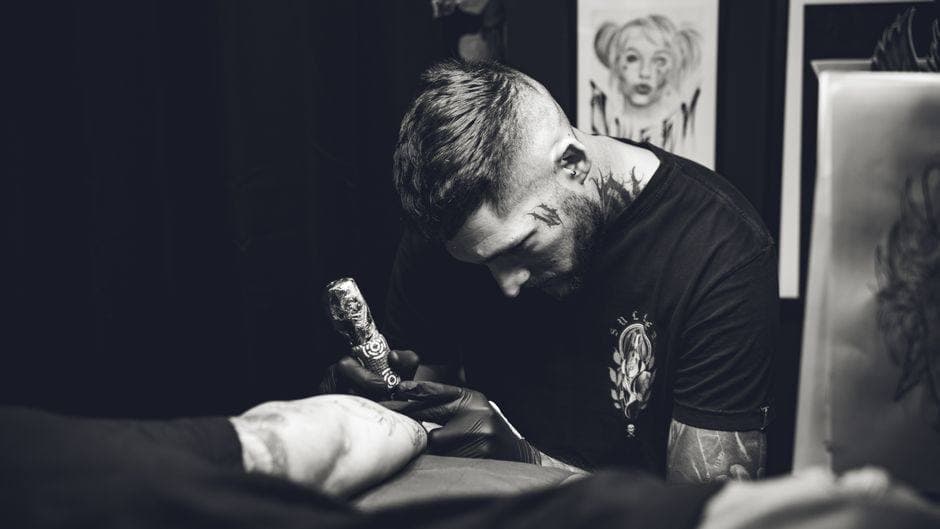
- The main service involves the actual tattooing process, where the artist uses a tattoo machine to apply ink to the skin.
- Cover-ups and Touch-ups
- Many tattoo artists also offer cover-up services for existing tattoos that a client may want to modify or hide.
- Custom Tattoo Design
- Creating unique, personalised tattoo designs based on client specifications and preferences.
- Cover-Up Tattoos
- Redesigning or covering existing tattoos to create a new, aesthetically pleasing piece.
- Traditional Tattoos
- Applying classic tattoo styles that often feature bold outlines and vibrant colours.
AFTER
When the job is done
Hiring a tattoo artist: questions people ask
The cost of a tattoo can vary based on factors such as the artist's experience, the complexity of the design, and the size of the tattoo. Additionally, location and studio reputation can also impact pricing.
A typical tattoo session can last anywhere from one to several hours, depending on the size and detail of the design. Larger or more intricate tattoos may require multiple sessions.
For intricate or specialised designs, it is advisable to seek a qualified tattoo artist who specialises in that style. While general tattoo artists can handle most designs, specialists may offer better results for specific techniques.
Same-day appointments may be available, but they often depend on the artist's schedule and the complexity of the tattoo. It’s best to contact the studio in advance to check availability.
Yes, many tattoo artists offer the option to book multiple sessions at once, especially for larger projects. This can sometimes lead to a discount or a more streamlined process.
Services such as laser removal of tattoos, piercing, or extensive skin preparation are generally not included in tattooing services. Always confirm with the artist what is covered in your session.
MORE GUIDES