HOW TO HIRE · ELECTRICAL

How to hire a fault-finding electrician in Ireland
The checks, the questions and the paperwork.

An electrical fault finding in Ireland costs €100–€350 per job, typically around €180. Here is how to check that in a minute, what to ask before you book, and what you must be handed when the job is done.

  • Search and compare — no account needed
  • Nearest to you first
  • One score from Google, Trustpilot and Locufy reviews

THE 60-SECOND VERSION

Hiring a fault-finding electrician in five steps

  1. Are you on the Safe Electric register, and what is your number?A number you can look up yourself before you agree a price — repair Recommendations — once faults are identified, the electrician will recommend necessary repairs or replacements.
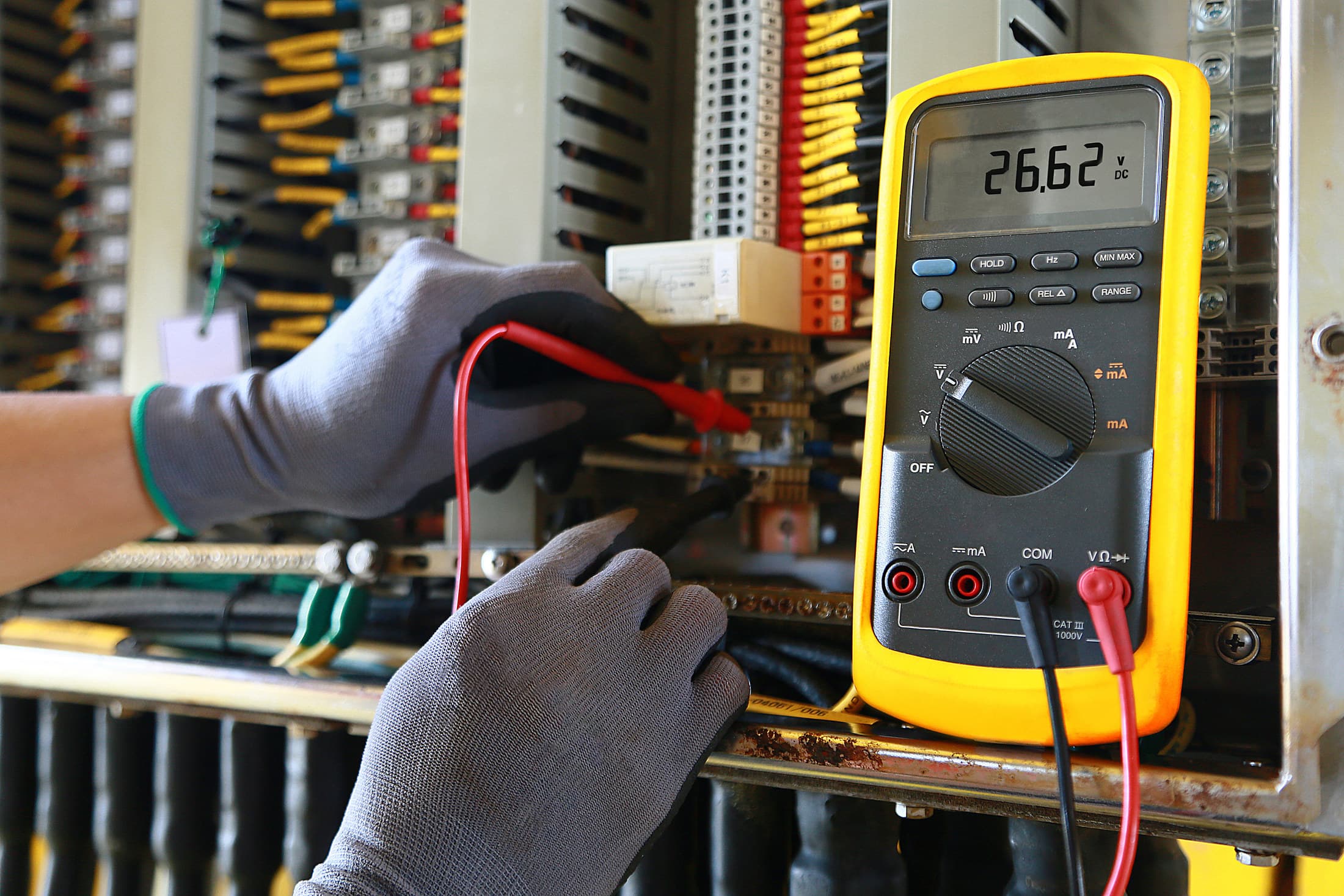
  2. Will I get completion Certificate, and when?On the day the work is finished and tested, not posted on later — diagnostic Testing — electricians use various diagnostic tools to pinpoint issues, such as multimeters to measure voltage and continuity.
  3. How does complexity of the issue change the price?Special requirements add steps the standard job does not have. — ask before the quote rather than after.
  4. How does time required for diagnostics change the price?A short booking leaves no room for anything unexpected. — ask before the quote rather than after.
  5. How does electrician's experience level change the price?Specialists charge for knowing which shortcuts are safe. — ask before the quote rather than after.

BEFORE YOU BOOK

Check before you book

Safe Electric

Restricted to Registered Electrical Contractor (REC): a new circuit; a rewire; a new or replacement distribution board; work at the meter; a new supply to a bathroom or an outdoor area. Not restricted: replacing a light fitting like for like; replacing a socket front like for like.

Search the Safe Electric register for the name or the registration number before you agree a price. safeelectric.ie →

Completion Certificate

Issued by the Registered Electrical Contractor on completion of restricted works, once tested. It matters because it records that the work met the national wiring rules and was tested, and it is asked for on sale, remortgage and insurance.

Agree before the work starts that you will be handed completion certificate, and keep it with the house papers.

Insurance

Expect public liability; ask who the insurer is and for the policy number. From a company, ask for the insurer, the limit and the VAT number, and ask who actually attends: the team that turns up may be employed, subcontracted or both, and only one of those is supervised by the firm you are paying.

Ask to see the current certificate of insurance — the insurer's name, the limit and the date it runs to.

Trader or private seller

Under the Consumer Rights Act 2022 a trader must tell you they are a trader, and your consumer rights — work carried out with reasonable skill and care, and a cooling-off period on a contract agreed in your home or online — apply to traders and not to private sellers. On Locufy the trader status is shown on the profile.

Look for the trader badge on the Locufy profile, and ask anyone else for it in writing before you agree a price.

VAT

VAT at 13.5%, the reduced rate Revenue publishes for this service. Ask whether the price you were given includes it. A trader under the €42,500 registration threshold does not charge it; one over it must, and must show it separately.

Ask whether the figure you were given includes it, and for the VAT number if they are registered — Revenue publishes the rate for this service. revenue.ie →

“Are you on the Safe Electric register, and what is your number?”

A good answer: A number you can look up yourself before you agree a price — repair Recommendations — once faults are identified, the electrician will recommend necessary repairs or replacements.

“Will I get completion Certificate, and when?”

A good answer: On the day the work is finished and tested, not posted on later — diagnostic Testing — electricians use various diagnostic tools to pinpoint issues, such as multimeters to measure voltage and continuity.

“How does complexity of the issue change the price?”

A good answer: Special requirements add steps the standard job does not have. — ask before the quote rather than after.

“How does time required for diagnostics change the price?”

A good answer: A short booking leaves no room for anything unexpected. — ask before the quote rather than after.

“How does electrician's experience level change the price?”

A good answer: Specialists charge for knowing which shortcuts are safe. — ask before the quote rather than after.

“What is not included?”

A good answer: Initial Assessment — the process begins with a thorough assessment of the electrical system to identify any visible signs of faults — get the exclusions named in the quote, because a fault-finding electrician job is priced on what was agreed and not on what was assumed.

“Who insures you, and what is the policy number?”

A good answer: Expect public liability; ask who the insurer is and for the policy number — thermal Imaging Inspection — uses infrared cameras to detect hotspots and potential electrical failures in circuits.
Getting the quote right

  • Complexity of the issue — special requirements add steps the standard job does not have.
  • Time required for diagnostics — a short booking leaves no room for anything unexpected.
  • Electrician's experience level — specialists charge for knowing which shortcuts are safe.
  • Complexity of the issues identified — fine work is checked more often, and checking takes time.
  • In writing before anyone starts — a message on Locufy counts
  • What is NOT included, named
  • Who actually attends, and whether they are employed or subcontracted
  • The VAT number, and whether it checks out on the Revenue register

Walk away if

  • They are not on the Safe Electric register, or the number does not resolve to the name on the quote
  • No Completion Certificate is offered, or you are told you do not need one for work of this kind
  • They will not talk about it: complexity of the issue — special requirements add steps the standard job does not have
  • They will not talk about it: time required for diagnostics — a short booking leaves no room for anything unexpected
  • They will not talk about it: electrician's experience level — specialists charge for knowing which shortcuts are safe
  • A price for the fault-finding electrician before anyone has asked the size, the access or the condition of what they are working on
LOW
€100
TYPICAL
€180
HIGH
€350

What a fault-finding electrician costs: €100–€350 per job

The figures are for the job, per job, and a quote for your own is the only number that binds anyone. Circuit testing and Appliance testing each carry their own band. Electrical Fault Finding price guide →

Guide prices compiled by the Locufy team from published Irish and UK provider price lists and 2026/27 cost guides. Updated 2026.

KNOW WHAT TO LOOK FOR? NOW FIND ONE

Fault-finding electricians near you, with the badges that matter shown

ID checked, trader status and one score from every review — on the card, before you message anyone. Nearest first. No account needed to look.

Or post the job free and let them come to you.

  1. Look firstComplexity of the issue — special requirements add steps the standard job does not have — that is what the fault-finding electrician is judging on the first visit, and a price given without it is a guess.
  2. Agree what is being doneTime required for diagnostics — a short booking leaves no room for anything unexpected — put in writing before anyone starts, because it is the document you both read back at the end.
  3. The work itselfElectrician's experience level — specialists charge for knowing which shortcuts are safe — and anything found on the day that was not in that is priced before it is started.
  4. Check it togetherComplexity of the issues identified — fine work is checked more often, and checking takes time — walked against the written scope rather than against the feeling of it, while the fault-finding electrician is still there.
  5. What you are handedCompletion Certificate, the invoice and any guarantee on the workmanship and the parts, size of the property — size sets the hours, and the hours set most of the price.

Initial Assessment
The process begins with a thorough assessment of the electrical system to identify any visible signs of faults.
Diagnostic Testing
Electricians use various diagnostic tools to pinpoint issues, such as multimeters to measure voltage and continuity.
Repair Recommendations
Once faults are identified, the electrician will recommend necessary repairs or replacements.
Circuit Testing
Involves checking the integrity of electrical circuits to identify any faults or weaknesses.
Appliance Testing
Focuses on diagnosing issues with specific appliances that may be causing electrical problems.
Wiring Inspection
Entails a thorough examination of the home’s wiring to detect deterioration or faults.

AFTER

When the job is done

Keep Completion CertificateCompletion Certificate is issued by the trader, not asked for later — repair Recommendations — once faults are identified, the electrician will recommend necessary repairs or replacements, because it is what a buyer's solicitor, an insurer or a lender asks for long after the fault-finding electrician has gone.
Test what was doneDiagnostic Testing — electricians use various diagnostic tools to pinpoint issues, such as multimeters to measure voltage and continuity — and something that does not work on the day is theirs to put right there and then.
Ask what the guarantee isOn the workmanship and on the parts, and for how long each one runs — they are usually different. initial Assessment — the process begins with a thorough assessment of the electrical system to identify any visible signs of faults — under the Consumer Rights Act 2022 what was agreed is what can be relied on.
Leave the reviewOnly a booked job can be reviewed on Locufy, which is why the score on a fault-finding electrician's card means something — thermal Imaging Inspection — uses infrared cameras to detect hotspots and potential electrical failures in circuits.

MONEY BACK

Grants that may apply

Two public schemes touch electrical work in a home. Neither pays for the job itself; both are claimed for the equipment and its installation, and the amounts and the dates are SEAI's own.

SEAI · GRANTVerified October 2026

EV Home Charger Grant

Up to €300100% of the installation cost to a maximum of €300, covering the charger and the work.

Who: A homeowner, or anyone with off-street parking at the property. You do not have to own an electric vehicle to apply.

  • The charger must be a smart charger on SEAI's Smart Charger Register.
  • The grant is claimed for the charger and its installation together, not for the unit alone.
Official details on seai.ie →
SEAI · GRANTVerified October 2026

Solar Electricity (PV) Grant

Up to €1,800€700 per kWp to 2 kWp, then €200 for each additional kWp to 4 kWp, capped at €1,800.

Who: The owner of a home built and occupied before 2025.

  • From 6 October 2026 a further €600 towards battery storage is added to the solar grant.
  • From 6 October 2026 the eligibility date moved to homes built and occupied before 2025.
Official details on seai.ie →

Schemes change. The amounts above were checked on the dates shown; the official page is the one that counts.

STEP 1Say it in writing, firstSay what is wrong and what you want done. Under the Consumer Rights Act 2022 the work must be carried out with reasonable skill and care, and defective work put right.
STEP 2Use the make-it-right step on LocufyUnder four stars you are asked whether to send it to the provider first; we follow it through. Then review.
STEP 3Escalate to the body that regulates itReport it to Safe Electric.
STEP 4Small claimsSmall claims covers €2,000, once you have asked in writing and given them a chance to put it right.

Hiring a fault-finding electrician: questions people ask

The cost can vary based on the complexity of the issue, the time required for diagnostics, and the electrician's experience level. More intricate faults or extensive wiring issues typically result in higher costs.

The duration can range from one to several hours, depending on the nature of the fault. Simple issues may be resolved quickly, while complex problems could require more extensive investigation.

Yes, it is essential to hire a qualified electrician for fault finding, as they possess the necessary training and knowledge to safely diagnose and repair electrical issues. This is especially important for regulated work.

Many electricians offer emergency services for urgent issues. However, this may come at a premium rate, and availability can vary based on the time of day and location.

Yes, booking multiple related jobs can often lead to cost savings, as electricians may offer a discount for combined services. It's advisable to discuss this when scheduling the appointment.

Out of scope items typically include extensive rewiring or installations that go beyond simple fault diagnostics. If major renovations or new installations are needed, these would require a separate quote and scope of work.